Introduction
Specify the wrong valve, and the consequences show up fast. A body that can't handle the pressure class. Trim that erodes within months. A delivery date that blows past your turnaround window.
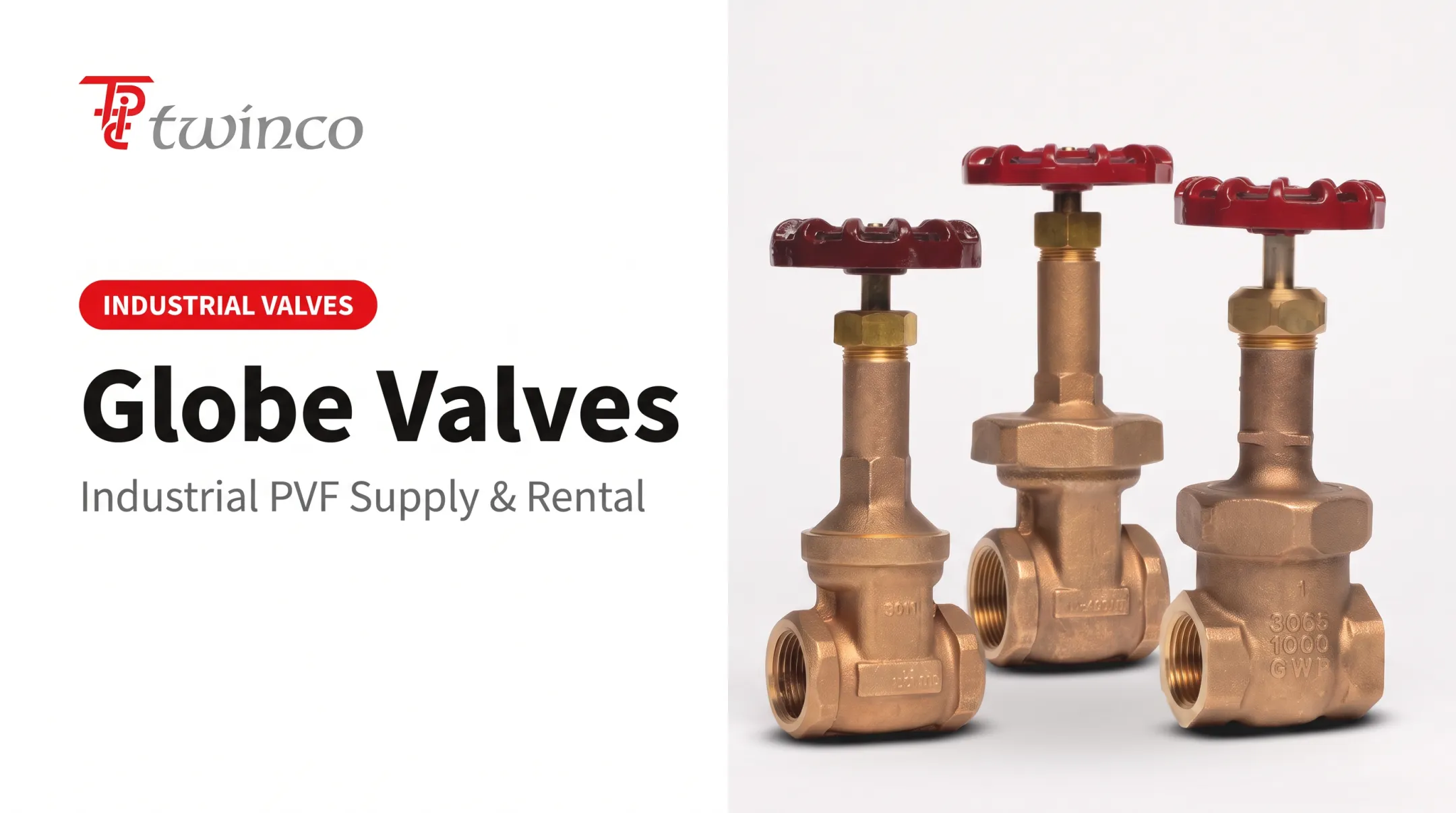
For flow control applications, the forged T-pattern globe valve is a common answer to those problems, but only when it's matched correctly to the service.
A forged T-pattern globe valve gets its name from two separate things. "Forged" describes how the body is manufactured (from a solid billet, not poured into a mold). "T-pattern" describes the conventional internal flow path, where the seat sits at the center of a T-shaped body cavity.
This article covers how these valves operate, what forged construction means for performance, where they fit in industrial service, how to specify one correctly, and what to watch for after installation.
If you're procuring valves for a Gulf Coast refinery turnaround or a pipeline construction project, this is the practical breakdown you need.
Key Takeaways
- A forged T-pattern globe valve uses a moving disc or plug against a stationary seat to start, stop, and throttle flow.
- Specify forged construction and T-pattern geometry separately—one is how the body is made, the other is how flow turns.
- T-pattern globe valves throttle well but create more pressure loss than gate or ball valves.
- Match pressure class, temperature, materials, end connections, and governing standards to the service.
What Is a Forged T-Pattern Globe Valve?
Inside a globe valve, a stem drives a disc (or plug) straight down toward a seat ring. As the disc approaches the seat, the opening narrows, and flow slows proportionally. Back the stem out, and the opening widens again. That's the entire mechanism behind precise throttling, and it's what separates globe valves from simple on/off designs.
The T-pattern refers to how the body is shaped around that seat. Fluid enters, changes direction to pass over the seat, then changes direction again on its way out, forming a T-shaped internal path. Some engineers describe this as a "Z-pattern" design, but manufacturer documentation, including Bonney Forge's forged steel globe valve catalog, consistently uses the term T-pattern for this conventional configuration.
Forged construction means the body is formed under high pressure rather than cast, which suits higher-pressure, smaller-bore process piping where strength and integrity matter.
Core Components
Regardless of manufacturer, a forged T-pattern globe valve typically includes:
- Body and bonnet – the pressure-containing shell, bolted or welded together
- Stem – transmits handwheel or actuator motion to the disc
- Disc or plug – the moving element that meets the seat
- Seat – fixed ring the disc closes against, screwed-in or integral depending on design
- Packing – seals the stem against leakage
- Backseat (where present) – protects packing during full-open operation
- Handwheel or actuator – provides manual or automated stem drive
- End connections – flanged, threaded, or welded
Why Flow Direction Matters
Because the internal geometry is directional, these valves have a specified flow orientation. Installing one backward can distort seating force and shutoff performance. Always follow the arrow cast into the body and the manufacturer's installation instructions.
Exact port sizing, trim options, and pressure-temperature limits vary by manufacturer, size, and material grade. Confirm details against current product documentation before finalizing a spec.
Forged Construction, Components, and Flow Pattern
Forging vs. Casting
Forging shapes the body from a solid billet under compressive force, while casting pours molten metal into a mold. Walworth's forged globe valve line notes that its compact forged design uses forgings for all pressure-bearing components, including the body and hood.
Manufacturers often position forged bodies for demanding pressure, temperature, or cycling conditions, particularly in smaller bore sizes. But that's a design-and-testing question, not an automatic rule. Suitability comes down to:
- Material grade and heat treatment
- Wall thickness for the rated class
- Applicable pressure-temperature testing
- The manufacturer's documented size range
Bonney Forge's forged steel globe line, for example, spans NPS 1/4 through 42 and Classes 150 through 4500 — a wide catalog range, not a universal ceiling for every forged valve on the market.

Flow Path and Trim
The T-pattern's directional changes are exactly what enable throttling, but that same turbulence creates pressure drop and, in severe service, erosion risk. Trim geometry matters here:
- Standard trim – general-purpose throttling and shutoff
- Needle trim – used for low-Cv, low-flow applications requiring fine control
- Multi-step or blow-down trim – designed to reduce noise, cavitation, vibration, and erosion under high differential pressure
Bonnet, Stem, and Materials
Buyers typically choose bolted bonnets for easier maintenance access, or welded bonnets for high-pressure and corrosive service. Outside-screw-and-yoke (OS&Y) stem arrangements keep threads out of the process fluid.
Trim and packing selection should be confirmed against:
- Fluid compatibility and corrosion potential
- Temperature and pressure limits
- Emissions requirements (fugitive emissions packing, where applicable)
- Body, seat, disc, and gasket material compatibility
Those material choices still have to line up with the right body pattern for the piping layout. Twinco Industrial's globe valve offering covers straight (T-pattern), angle, and stop-check configurations when service calls for a different flow arrangement than the conventional T-pattern.
Where Forged T-Pattern Globe Valves Are Used
Globe valves earn their place where operators need repeatable, precise flow adjustment, not just open/closed control. Common applications include process lines, steam and boiler systems, fuel and oil systems, and general utility piping.
When a T-Pattern Globe Valve Makes Sense
- Manual throttling where an operator adjusts flow periodically
- Bypass regulation and system balancing
- Applications requiring frequent operation and reliable shutoff
- Services where the acceptable pressure drop is already budgeted into the system design
When It's Not the Best Fit
A T-pattern globe valve isn't the right call everywhere:
- Fully open isolation service where minimal pressure drop matters most — a gate valve wins here
- Highly erosive or cavitating conditions without appropriately sized trim
- Quick, infrequent shutoff where a quarter-turn ball valve is faster and simpler
Refinery and petrochemical maintenance teams, pipeline and fitting contractors, and power plant operations use this valve type regularly for throttling and regulation. The correct configuration still depends on the specific service.
Manual Adjustment vs. Automated Control
A handwheel-operated globe valve is a manual throttling device. If the application needs automated, repeatable regulation—such as holding a setpoint without operator intervention—that is a control-valve application. It requires an actuator, positioner, and control-loop review, not a standard manual globe valve.
Selection and Specification Checklist
Getting this right starts with process data, not a part number.
Step 1: Document Process Conditions
- Fluid composition and phase
- Normal and maximum flow rate
- Normal and maximum operating pressure
- Temperature range and required shutoff class
- Acceptable pressure drop
- Corrosion, erosion, and cavitation risk
Step 2: Confirm Size, Class, and Materials
- Verify nominal size and pressure class against the manufacturer's pressure-temperature rating table
- Select body, bonnet, stem, disc, seat, and packing materials for fluid, temperature, and sour-service compatibility
Step 3: Confirm Installation Details
- End connections: flanged, threaded, socket-weld, or butt-weld
- Face-to-face dimensions and available clearance
- Orientation, support, and insulation needs
Step 4: Confirm Governing Standards
| Standard | Covers |
|---|---|
| ASME B16.34 | Pressure-temperature ratings, materials, testing |
| ASME B16.10 | Face-to-face and end-to-end dimensions |
| ASME B16.5 | Flange dimensions and ratings, NPS 1/2–24 |
| API 598 | Valve inspection and testing procedures |
| MSS SP-61 | Shell and seat-closure pressure testing |
Always confirm the current edition and exact scope with your project specification before ordering.
Step 5: Request Procurement Documentation
Ask for datasheets, material certificates, seat-leakage results, hydrostatic test records, and traceability documentation.

Quick-quote checklist:
- Size, class, and material
- End connection
- Service fluid, pressure, and temperature
- Quantity and required standard
- Delivery location and deadline
Forged T-Pattern Globe Valves vs. Other Valve Options
Choosing between globe, gate, and ball valves comes down to what you're optimizing for: throttling precision or minimal resistance.
| Valve Type | Best For | Trade-Off |
|---|---|---|
| T-pattern globe | Precise throttling, frequent adjustment | Higher pressure drop even fully open |
| Gate | Full-open/full-closed isolation | Poor throttling control |
| Ball | Quick quarter-turn shutoff | Less gradual flow adjustment |
| Y-pattern / angle | Reduced pressure loss or directional piping change | Less common, different footprint |
Valve Magazine's globe valve overview explains why: a fully open globe valve retains substantial flow resistance because of its zigzag internal path, while a fully open gate or ball valve offers comparatively little resistance.
That's the fundamental trade-off. You gain throttling control; you give up some efficiency in the fully open position.
Forged versus cast bodies follow a similar logic: there's no universal winner. The right choice depends on the specific rating, inspection records, and size availability documented for that product line, not a blanket claim about one manufacturing method.
When piping layout matters more than conventional geometry, a Y-pattern or angle-pattern globe valve may reduce pressure loss or better accommodate a direction change than a standard T-pattern body.
Maintenance, Installation, and Failure Prevention
Installation Essentials
- Confirm flow direction against the body arrow before bolting up
- Remove all debris from piping and clean sealing surfaces
- Align piping without forcing the valve into place
- Use the correct gasket and bolt-torque sequence per manufacturer instructions
What to Check During Routine Inspection
- Packing or stem leakage
- Bonnet-joint leakage
- Difficult or stiff operation
- External corrosion or abnormal vibration
- Seat leakage and signs of erosion
What Shortens Service Life
These operating mistakes accelerate wear:
- Repeated throttling near the seat
- Incorrect flow direction
- Mismatched trim for the service
- Over-tightened packing
- Thermal cycling
- Operating outside the rated pressure-temperature envelope
Erosion is a particular concern in throttled, cavitating service. A NRC/ORNL report on valve cavitation and erosion documented meaningful erosion damage in both angle-globe and straight-globe valves operated under those conditions, immediately above the seat area.
Any repair, torque value, or test pressure should come from the manufacturer's procedure and the applicable standard, not a generic industry number. Site safety requirements govern the rest.
Sourcing Support for Industrial Valve Projects
Twinco Industrial has supplied industrial components and rental equipment since 1977, working out of Houston with a customer base spanning the USA, Canada, and Mexico. That includes petrochemical maintenance teams, pipeline contractors, power plant operators, and construction crews running on tight turnaround windows.
Twinco's team can help with:
- Reviewing your valve specification against project requirements
- Sourcing globe valves in angle, straight, and stop-check configurations, plus related PVF components
- Identifying hard-to-find or specialty sizes and classes
- Coordinating fulfillment against your delivery deadline
If you're specifying a forged T-pattern globe valve for an upcoming project, send Twinco's Inside Sales team your full specification: size, class, materials, end connection, and delivery requirement. They can run a quote or application review from there.
Reach the team at (713) 733-8946 or through the request a quote form.
Whatever valve you select, run the final choice past your project specification, the applicable standards, and manufacturer data before it goes on order.
Frequently Asked Questions
What is a socket weld and why is it used?
A socket weld joins a pipe or fitting that's inserted into a recessed socket, then welded around the circumference. It's often selected for smaller-bore, high-integrity connections, but suitability depends on size, pressure, temperature, and the valve manufacturer's design.
How much gap is allowed in a socket weld?
There's no single universal gap value. The required expansion gap comes from the applicable piping code, project specification, approved welding procedure, and the valve or fitting manufacturer's instructions.
What is the main advantage of a forged T-pattern globe valve?
It combines a pressure-containing forged body with the controllable throttling of a globe valve design. Actual performance still depends on the specific materials, pressure rating, trim, and service conditions.
Do T-pattern globe valves reduce pressure more than gate valves?
Generally, yes. The T-pattern's directional flow path creates more turbulence and pressure loss than a fully open gate valve. The trade-off is better throttling control.
Can a forged T-pattern globe valve be used for isolation?
Yes, when properly selected and maintained, it can provide shutoff. But where low pressure loss or infrequent full-open/full-closed cycling is the priority, a dedicated isolation valve like a gate or ball valve may be the better fit.
What information is needed to source the correct forged globe valve?
Provide size, pressure class, temperature, and fluid type; body and trim materials, end connection, and flow direction; actuation method, applicable standards, and testing documentation; plus quantity and delivery date.