Introduction
Pipeline operators need a valve that shuts off flow fast, seals tightly, and survives years of field service. That's why ball valves show up throughout oil, gas, petrochemical, and water pipeline systems — from gathering lines to compressor stations to terminal piping.
Specifying the right ball valve is the real challenge. The correct choice depends on the service medium, pressure and temperature, line size, flow requirements, how often the valve cycles, and the safety or code requirements that apply to your project.
Get any of those wrong, and you risk seat damage, leakage, or a valve that simply can't handle the job.
This guide covers pipeline ball valve designs, selection criteria, applications, limitations, testing, maintenance, and what to check before you place an order.
Key Takeaways
- Quarter-turn spherical closure gives rapid, dependable pipeline shutoff
- Floating and trunnion-mounted designs suit different pressure, size, and torque requirements
- Confirm materials, bore, pressure-temperature rating, seats, end connections, and standards before ordering
- Use standard ball valves for isolation, not sustained throttling, unless built for control service
What Is a Pipeline Ball Valve?
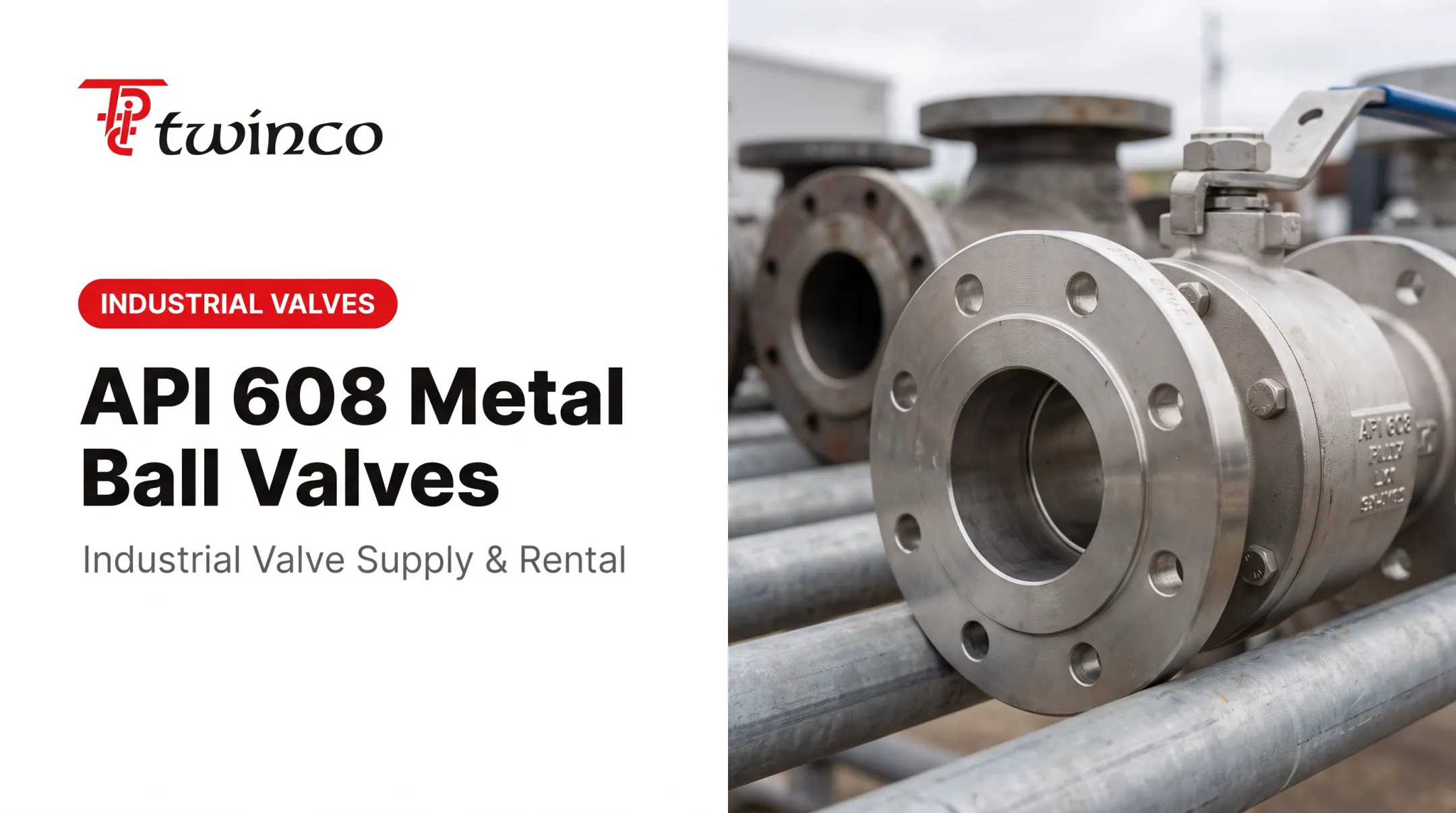
A pipeline ball valve is a quarter-turn isolation valve. A bored sphere sits inside the body and rotates to either align its bore with the pipeline (open) or turn perpendicular to it (closed). A lever, gearbox, or actuator transfers torque through the stem to move the ball between positions.
Most designs are built for fully open or fully closed service, not throttling at mid-stroke. Manufacturer installation and operation manuals are explicit on this point: the valve is bidirectional, and intermediate positioning is not the intended function.
Main Components and Their Roles
Component terminology varies somewhat by manufacturer, but a typical pipeline ball valve includes:
- Body and body cap (or bonnet): houses the ball and internal parts
- Ball: bored sphere that opens or blocks the flow path
- Stem: transmits torque from the operator to the ball
- Seats and seals: shut off against the ball and limit stem leakage
- End connections: flanged, butt-weld, or threaded to match the line
- Actuator or gearbox: manual, pneumatic, electric, or hydraulic operator
Seat and stem sealing quality directly affects internal isolation, external leak control, and how reliably the valve performs over its service life. A worn seat means the valve won't hold pressure tight; a failing stem seal means product escapes to atmosphere.
Full Bore vs. Reduced Bore
A full-bore valve has an internal diameter matching the connected pipeline, so the flow passage stays uninterrupted through the valve. ISO 17292:2015, the standard covering metal ball valves for petroleum, petrochemical, and natural-gas plant service, explicitly recognizes full-bore, reduced-bore, and double-reduced-bore configurations.
That distinction matters in practice:
- Full bore supports pipeline pigging, keeps pressure drop low, and handles solids-bearing flow without a bottleneck
- Reduced bore costs less and weighs less, but the narrower passage must be checked against velocity, pressure loss, and pig-passage requirements
Ball valves earn their place in pipeline service because they open and close quickly, seal tightly when properly specified, and use a compact quarter-turn actuation footprint. In a full-bore design, they also add minimal resistance to flow.
Pipeline Ball Valve Types and Configurations
Floating vs. Trunnion-Mounted Ball Valves
These two ball-support designs cover most industrial and pipeline applications.
Floating ball valves let the ball shift slightly downstream under line pressure, pressing it against the downstream seat to seal. It's a simpler, lower-part-count design. As size and pressure rise, operating torque climbs and the ball's weight gets harder to support. That limits floating designs to smaller, lower-pressure applications.
Trunnion-mounted ball valves add fixed support (bearings) that carry the ball's weight and hydraulic load independently of the seats. That cuts operating torque significantly. Trunnion designs therefore dominate larger pipeline sizes, higher pressure classes, and automated or remote-actuated service.
Twinco Industrial's range reflects the same split: floating ball valves typically run ½ inch through 24 inches, Class 150 through 1500, while pipeline trunnion ball valves extend to 2 inches through 60 inches, Class 150 through 2500, a size and pressure band built for transmission-line duty.

Body and Maintenance Configurations
Body construction affects weight, cost, and how easily the valve can be serviced:
- One-piece body — lowest cost, but the valve typically must be cut out of the line for internal repair
- Two-piece and three-piece bodies — bolted construction allows the body to be split apart without removing the entire valve from the pipeline
- Side-entry — internals are accessed by separating the body sections
- Top-entry — internals can be inspected or repaired from the top of the valve without pulling it from the line, which is critical on buried or hard-to-access pipeline sections
Seat Materials and Pipeline-Specific Features
Once body style is set, seat material drives temperature limits and media compatibility.
Soft-seated valves (PTFE, PFA, PEEK, and similar polymers) suit moderate temperatures and general hydrocarbon or water service. Metal-seated valves handle higher temperatures, abrasive media, or fire-safe conditions where a soft seat would fail.
Match the seat to temperature, pressure, chemical compatibility, and abrasion resistance. No single seat covers every service.
Pipeline-specific features worth confirming during specification:
- Fire-safe construction (tested to standards such as API 607)
- Anti-static provisions for consistent electrical continuity across the ball and stem
- Blowout-proof stem design to prevent stem ejection under pressure
- Cavity-pressure relief to manage pressure trapped in the body cavity
- Double-block-and-bleed (DBB) capability for isolation verification
- Emergency shutdown (ESD) actuation for automated response
Actuation depends on valve location and available utilities:
- Manual gearboxes for infrequent operation at accessible points
- Pneumatic or hydraulic actuators for fast stroke or remote sites
- Electric actuators where power is already available and control-system integration is required
How to Select the Right Pipeline Ball Valve
Start With the Service Conditions
Identify the medium first: crude oil, refined product, natural gas, water, chemical, slurry, or steam. Each brings different demands.
- Viscosity and solids content affect bore size and whether full-bore is necessary
- Corrosiveness and toxicity drive body, ball, and seat material choices
- Flammability may require fire-safe certification
- Cleanliness of the media affects seat wear and sealing longevity
Confirm Size, Pressure, and Temperature
The valve's rated pressure class and temperature range must meet or exceed actual system conditions. Never treat a rating as a best-case estimate.
Line size, design pressure, and maximum/minimum operating temperature should all be documented before you request a quote.
Define the Flow Path and Function
Is the valve for isolation, sectionalizing, diversion, mixing, emergency shutdown, pigging, or double-block-and-bleed service? Standard ball valves aren't built for sustained throttling.
If your application calls for continuous partial-open flow control, confirm the design is specifically engineered for that duty. Don't assume a standard isolation valve will hold up.
Review Materials and Sealing Components
Carbon steel, stainless steel, and alloy body materials each suit different media and corrosion environments. Seat and seal materials need the same scrutiny. Rather than relying on generic claims, check the manufacturer's compatibility data for your specific fluid, pressure, and temperature combination.
Confirm Connections and Installation Requirements
- Flanged, butt-weld, or threaded end connections, matched to your piping spec
- Face-to-face dimensions for pipeline alignment
- Above-ground or buried installation considerations
- Actuator orientation and clearance
Request the Right Documentation
Before ordering, ask for:
- Material certificates confirming body, ball, and trim materials
- Pressure and seat-leakage test records
- Traceability documentation for the heat and lot numbers
- Fire-safe test evidence, if applicable
- Compliance confirmation against API 6D, ASME, ISO, or your project's governing standard
Quote-Request Checklist
When requesting a quote, provide:
- Line size and face-to-face (or end-to-end) dimension
- Pressure class and design temperature
- Service medium
- Body and trim material
- Bore type (full or reduced)
- Seat material and actuation type
- Fail-safe position
- Applicable standards
- Quantity and required delivery date
- Documentation requirements
Twinco Industrial supplies pipeline ball valves in full-port, reduced-port, and high-pressure configurations, including floating-ball designs with flanged, threaded, and socket-weld end connections. Because specifications and lead times shift with material availability, confirm current stock and delivery windows with the Twinco team before finalizing a purchase order.
Pipeline Applications, Benefits, and Limitations
Where Pipeline Ball Valves Get Used
Ball valves show up across nearly every segment of pipeline infrastructure:
- Transmission and gathering systems
- Facility and station piping
- Refinery and petrochemical transfer lines
- Terminals and tank farms
- Compressor and pumping stations
- Hydrostatic testing and maintenance isolation
- Construction tie-ins
Valve Magazine reports that natural-gas compressor stations occur roughly every 40 to 100 miles along a transmission line, with pipeline shutdown and isolation valves spaced every 5 to 20 miles. Those stations rely heavily on ball valves for isolation duty.

Operational Benefits
- Fast quarter-turn operation for isolation and emergency response
- Tight shutoff when properly specified and maintained
- Low flow resistance through a full-bore valve, supporting throughput and pigging
- Flexible actuation for manual or remote control in a pipeline system
Ball Valves vs. Gate Valves
Ball valves and gate valves both isolate a line, but they fit different jobs:
- Ball valves: Best when you need fast quarter-turn shutoff, frequent cycling, emergency response, or remote actuation
- Gate valves: Sometimes chosen for specific large-line or full-flow service, since the gate lifts fully out of the flow path
Pick based on line size, cycling frequency, and project spec. There is no single default for every pipeline.
Limitations and Risks
- Seat damage from throttling a valve not designed for it
- Trapped cavity pressure that can push a seat away from the ball
- Solids or debris collecting around the ball or seats
- Temperature limits on soft-seated designs
- Actuator or utility failures in automated valves
- Installation errors, including incorrect flow-direction orientation
KITZ's manufacturer documentation notes that cavity pressure exceeding line pressure can push a seat away from the ball. That is why cavity-pressure relief and venting arrangements matter when you specify DBB and DIB valves.
Protecting Your Schedule
Emergency repairs, shutdowns, and construction tie-ins don't leave room for guesswork on lead time. Accurate specifications, verified traceability, and dependable delivery windows protect the schedule as much as the valve's design does. Twinco Industrial's deep inventory of valves, flanges, gaskets, and bolting, along with 24/7 availability for nights, weekends, and emergency calls, supports exactly that kind of time-sensitive procurement.
Installation, Testing, and Maintenance Considerations
Before Installation
Check the following before a valve goes into the line:
- Correct orientation and flow direction (where applicable)
- Internal cleanliness: free of shipping debris or contaminants
- Flange or weld-end preparation matches spec
- Adequate clearance for the actuator
- Pressure rating matches the line's design pressure
- No visible shipping damage
Commissioning and Testing
Typical commissioning steps, all documented against the project specification, include:
- Line flushing
- Functional cycling of the valve
- Pressure testing and seat-leakage verification
- Actuator or limit-switch checks
Valve World Americas notes that debris such as dust or leftover welding rod can collect at low points during hydrotesting and damage soft seats. Many commissioning procedures therefore fill the line with the valve fully open, then cycle it once full to clear trapped air.
Ongoing Maintenance
- Cycle infrequently used valves periodically to prevent sticking
- Inspect for external leakage at the stem and body joints
- Check actuator and gearbox condition
- Monitor operating torque for early signs of wear
- Protect exposed components from corrosion and debris
- Follow the manufacturer's specific maintenance procedure
Before any maintenance work, isolate, depressurize, drain, vent, and lock out the line. This is a baseline safety requirement. Always follow your site's specific procedures on top of it, not instead of it.

Seats, seals, packing, and actuator components eventually need replacement. Repairability depends heavily on body design: top-entry and multi-piece bodies are generally easier to service in place than one-piece designs. Always follow the manufacturer's repair instructions for your specific model.
Frequently Asked Questions
What are ball valves used for in piping?
Ball valves start, stop, and isolate liquid or gas flow. In pipelines, that means sectional isolation, maintenance shutoffs, emergency shutdown, and transfer operations between facilities.
Can ball valves be used in steam lines?
Only valves specifically rated for steam temperature, pressure, and the required seat materials should go into steam service. Confirm suitability with the manufacturer's data sheet and your project specification before ordering.
What are the four types of ball valves?
"Four types" isn't one fixed list. Ball valves are grouped separately by ball support (floating or trunnion), bore (full, reduced, or double-reduced), body construction, and actuation type.
What are the different types of valves used in pipelines?
Common pipeline valve families include ball, gate, check, globe, plug, butterfly, and pressure-control valves. The best choice depends on whether you need isolation, non-return protection, throttling, or flow-direction control.
What is a ball valve in piping?
It's a valve with a spherical, bored closure element that rotates a quarter-turn to open or close the flow path. Properly specified, it offers fast shutoff and tight isolation.
What is a ball drip valve?
A ball drip valve isn't a pipeline isolation valve at all. It's a fire-protection accessory used to drain or release water from fire-suppression piping, for code compliance, not pipeline flow control.