Maintenance crews, procurement teams, and construction supervisors often pick a gasket by nominal pipe size alone. That shortcut can bend a flange, create uneven gasket compression, or trigger a leak that shuts a line down mid-shift.
This article covers flat face flange characteristics, spiral wound gasket construction, where the two are compatible, how to select correctly, installation controls that prevent damage, and when a full-face or alternative gasket makes more sense.
Key Takeaways
- Confirm flange design, pressure class, and service before choosing a spiral wound gasket.
- Control bolt loading on flat face flanges to avoid deforming thinner materials.
- Match winding metal, filler, and rings to media, pressure, and temperature, not pipe size.
- Install a new gasket on clean, aligned faces with controlled cross-pattern tightening.
- Have qualified engineers confirm joint design for critical or uncertain applications.
What Are Flat Face Flanges and Spiral Wound Gaskets?
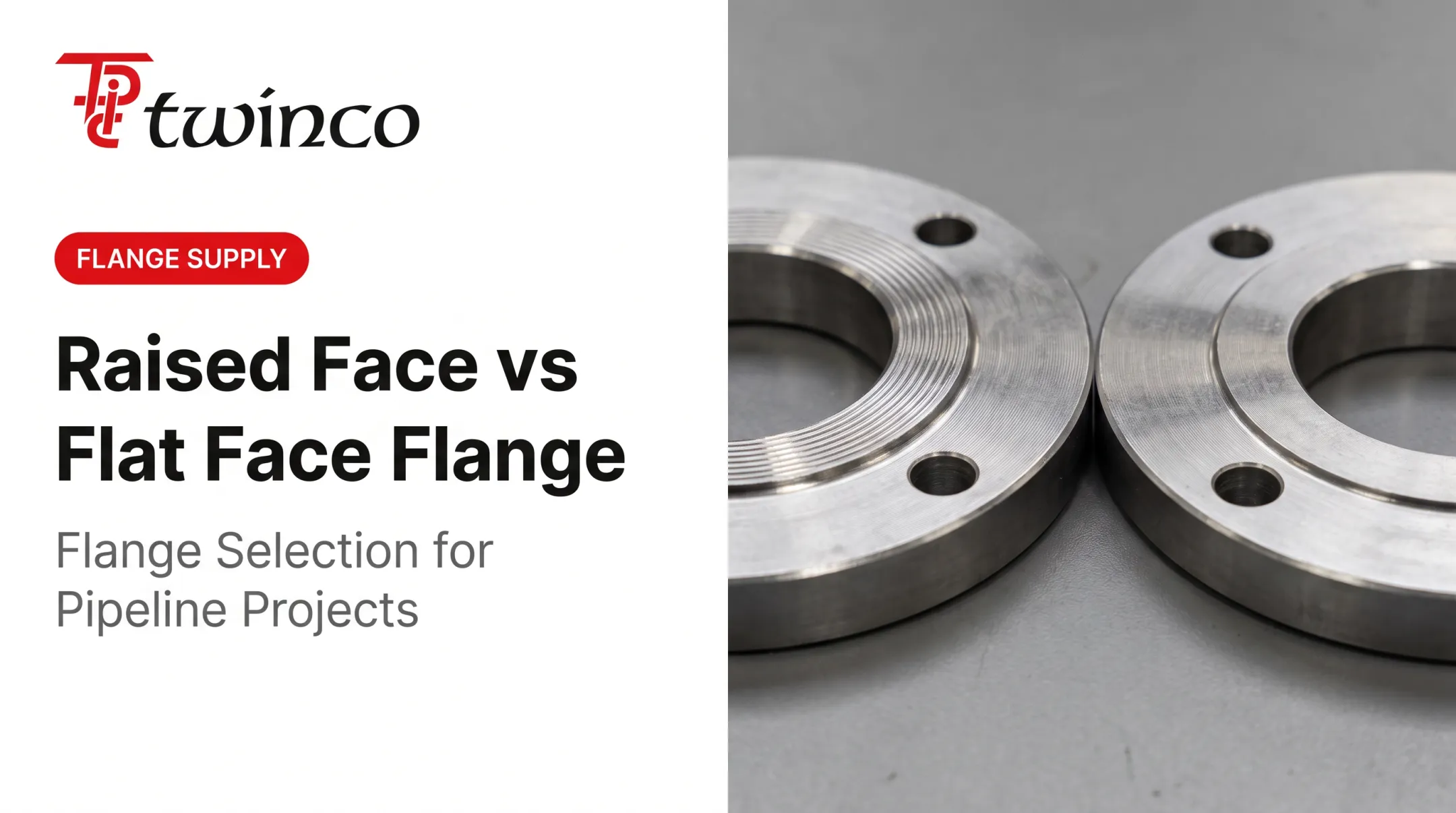
A flat face flange has a sealing surface that sits flush across the entire flange face, with no raised ring extending above the bolt circle area. This differs from a raised face flange, where a small elevated ring concentrates gasket compression inside the bolt holes.
Flat face designs show up across various pressure classes and materials, so don't assume every flat face application is low-pressure or low-severity. Always confirm the actual standard, material, and service conditions for the specific joint in front of you.
How Spiral Wound Gaskets Are Built
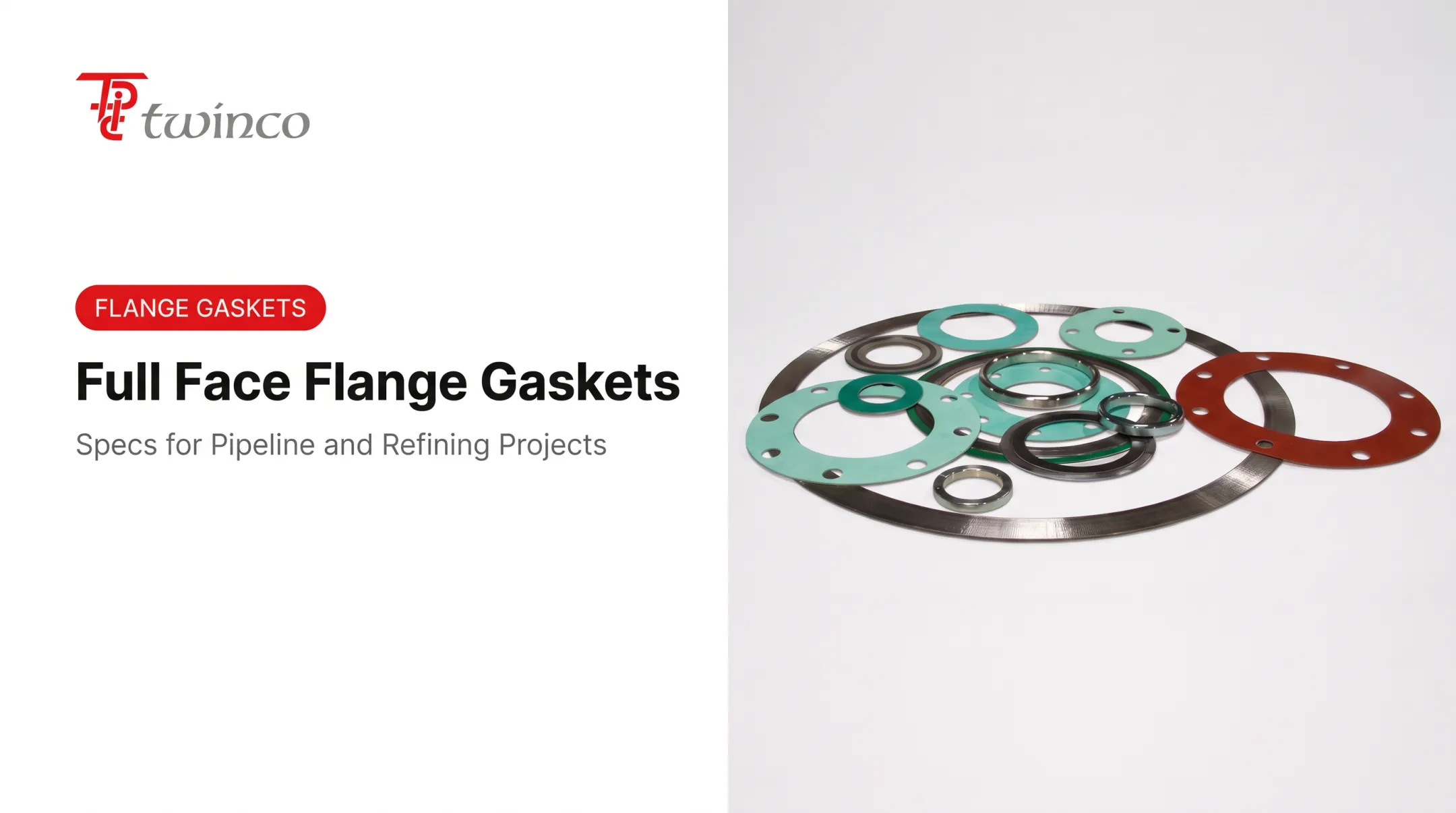
A spiral wound gasket pairs a metal strip with alternating layers of compressible filler, giving the joint both structural strength and sealability under fluctuating loads. Four components drive that performance:
- Metal windings — provide strength and spring-back recovery; the alloy must suit the process environment.
- Filler material — flexible graphite, PTFE, or mica govern temperature range and chemical resistance.
- Inner ring — supports the winding, limits inward buckling, and shields the sealing element from process flow.
- Outer or centering ring — locates the gasket correctly and acts as a compression stop during installation.
Twinco Industrial stocks spiral wound gaskets with graphite, PTFE, or mica filler for industrial flange joints, alongside matching flanges, bolting, and related PVF components used in high-load pressure and temperature service.
Gasket markings typically follow ASME B16.20, which covers materials, dimensions, tolerances, and identification requirements for metallic gaskets. That includes spiral wound designs used on both flat face and raised face flanges.
Markings usually show nominal size, pressure class, winding material, and filler type, so you can confirm compatibility before installation.
Can Spiral Wound Gaskets Be Used on Flat Face Flanges?
Yes, but only when the gasket dimensions and construction match the flange assembly, and the flange itself can safely handle the bolt load required to seat that gasket. That's the qualifier that gets skipped too often.
There's a real distinction between what a gasket can tolerate and what the flange joint can tolerate. A spiral wound gasket might handle demanding pressure and temperature swings just fine. A thin or flexible flat face flange bolted next to it may not survive the compression needed to seat that same gasket correctly.

Why Flange Deformation Is the Real Risk
According to the FSA Gasket Handbook, flat face flanges are commonly used with relatively fragile materials such as cast iron or plastic, and these flanges are often less robust than raised face equivalents. Overtightening or uneven bolt loading on this type of flange can cause:
- Uneven flange rotation during tightening
- Bending or dishing across the flange face
- Loss of uniform gasket compression
- Leakage at the seating surface once pressurized
Checking Gasket Fit and Application Variables
Before approving a spiral wound gasket for any flat face joint, verify the gasket's inner diameter, outer diameter, sealing width, and ring configuration against the flange's actual sealing area. Then confirm:
- Flange specs: nominal size, flange standard, pressure class, material, thickness, and facing condition.
- Operating conditions: internal pressure, operating and upset temperature, thermal cycling, vibration, and external loads.
- Process compatibility: media type, chemical exposure, emissions or containment requirements, and whether the joint sits on critical equipment.
- Bolting details: required bolt material, lubrication procedure, tightening method, and available bolt load.
Skip any universal pressure or temperature rule of thumb. Use the relevant flange and gasket standard, or the manufacturer's application data, for the joint you are working on.
How to Select the Right Gasket for a Flat Face Flange
Start with the flange and joint specification, not the pipe size on the work order. Gather these details before you open a gasket catalog:
- Flange facing
- Nominal size and pressure class
- Governing standard
- Flange material
- Any manufacturer requirements
Matching Filler and Winding to the Service
Filler choice depends on temperature and chemical exposure:
- Flexible graphite handles high temperatures well but shouldn't be paired with strong oxidizers like nitric or sulfuric acid.
- PTFE offers strong chemical resistance at lower temperatures and typically requires an inner ring under ASME B16.20 to protect the winding from radial buckling.
- Ceramic fiber or mica fits specialty high-temperature niches where graphite or PTFE isn't suitable—confirm manufacturer limits for your media.
A filler that works for one process fluid can be completely wrong for another, even when the gasket's dimensions match perfectly. The same logic applies to winding metal and rings: check corrosion resistance, temperature exposure, and galvanic compatibility with the pipe and process media before locking in a material.
Verifying Dimensions and Standards
Confirm gasket style, inside and outside diameter, thickness, and pressure class marking against ASME B16.20 or your project's governing spec.
If the joint calls for a full-face gasket because the flange is designed for broad contact or lower-pressure service, don't force a spiral wound style into that role.
Procurement checklist:
- Size and flange class
- Facing type and gasket style
- Winding material and filler
- Inner and outer ring materials
- Applicable gasket standard
- Quantity and required certificates
- Delivery deadline
Final selection for pressure-containing or hazardous service should go through your piping design documentation, the gasket manufacturer's guidance, and qualified engineering review, not a best guess at the counter.
When a Different Gasket May Be More Appropriate
Spiral wound and full-face flat gaskets each have a place, and neither is universally better. Spiral wound gaskets recover well under pressure and temperature cycling when the flange assembly is designed to support them.
Full-face gaskets cover more of the flange face and are often the better fit when:
- The joint is flat face and lower pressure
- Flange bending must be limited
- The flange is non-metallic or a lightweight metal design
According to Garlock's technical manual, lightweight flat face flanges made from cast iron, aluminum, bronze, or plate steel commonly use full-face gaskets specifically to avoid bending forces, with allowable torque limited to prevent cracking.
A raised face flange and a flat face flange are not interchangeable sealing situations. Gasket selection has to match the facing type and the manufacturer's installation requirements, every time.
A common mistake worth flagging: assuming a full-face gasket works on a raised face flange just because it worked on a flat face one. Problems show up fast from:
- Excess gasket area outside the raised face
- Uneven or inadequate bolt loading
- Dimensional mismatch at the sealing surface
Follow the applicable standard or engineering spec instead of assuming.

Other gasket families remain application-dependent options:
- Compressed non-metallic
- PTFE
- Kammprofile
- Ring-type joint (RTJ)
Twinco's inventory includes soft cut gaskets in non-asbestos, PTFE, graphite, and compressed fiber, plus RTJ gaskets in oval and octagonal cross-sections. Each still needs its own material and flange check.
Installation and Inspection Practices for Spiral Wound Gaskets on Flat Face Flanges
Good gasket selection means nothing if the installation is sloppy. Isolate, depressurize, drain, and make the equipment safe following your site's established procedure before breaking the joint.
Preparing the Flange Faces
Remove the old gasket carefully so you don't gouge the flange surface. Then clean and inspect both faces for:
- Corrosion or pitting
- Scratches and dents
- Warping or surface damage
- Parallelism and alignment gaps
Any offset that could create uneven compression needs investigation before you proceed. When the faces check out, install a new, undamaged gasket with the correct markings and dimensions. Never reuse a spiral wound gasket that's already been compressed once; it won't seal reliably a second time.
Controlled Tightening Sequence
Center the gasket carefully and avoid dragging the flange across the winding during assembly. Then tighten using an approved, controlled process:
- Hand-tighten bolts in a cross pattern to bring flanges into initial contact.
- Apply incremental torque passes using calibrated tooling and specified lubricant.
- Monitor for flange distortion, uneven gaps, or abnormal bolt behavior at each pass.
- Complete the final pass following the manufacturer or project-approved torque values.

Don't invent a torque number based only on nominal pipe size. That guess is exactly how flat face flanges end up cracked or dished.
After Installation
Inspect for visible leakage during the approved commissioning process. Follow your site's retightening rules, and never retighten a pressurized or hot joint unless the procedure explicitly permits it.
If leakage persists, investigate gasket damage, corrosion, or flange deformation directly. Adding more torque to a problem joint usually makes things worse, not better.
How Twinco Industrial Can Help Source the Correct Gasket
Twinco Industrial has supplied and rented industrial piping components since 1977. Inventory covers spiral wound gaskets, flanges, bolting, valves, fittings, and related equipment for maintenance, testing, construction, pipeline, and petrochemical projects across the US, Canada, and Mexico.
When requesting a quote for spiral wound gaskets on flat face flanges, provide the complete application picture:
- Size and pressure class
- Facing type and service media
- Operating temperature
- Gasket style, filler, winding, and ring materials
- Applicable gasket standard
- Quantity and delivery deadline
Twinco maintains a deep industrial inventory and handles specialty sourcing for hard-to-find components, though availability for any single specification isn't guaranteed. The team finds and fulfills what your project needs quickly, from stud bolts and nuts to spiral wound gaskets sized ½ inch through 60 inches.
For technical approval on a specific joint, especially anything pressure-containing or safety-critical, route that decision to your responsible engineer or qualified inspection professional.
For sourcing help, reach Twinco at 713-733-8946, after hours at 832-754-6831, or by email at info@twincoindustrial.com.
Frequently Asked Questions
What is a flat face flange?
A flat face flange has a sealing surface that's flush across the entire face, without the raised ring found on a raised face flange. The correct gasket still depends on the complete flange specification and service conditions.
What is a spiral wound gasket flange?
A spiral wound gasket flange is a flanged joint sealed with a spiral wound gasket. The gasket pairs alternating metal windings with a compressible filler such as graphite or PTFE, often backed by inner and outer rings.
Can you use a spiral wound gasket on a flat face flange?
Yes—if flange thickness and rigidity, gasket dimensions, pressure class, service conditions, bolt loading, and manufacturer or engineering requirements all support the match.
What gasket should you use on a flat face flange?
Match the gasket to the flange standard, service media, pressure, temperature, and project specification. Full-face and spiral wound designs are common options when those conditions allow.
Can a full-face gasket be used on a raised face flange?
Don't assume it's suitable. Confirm the gasket's dimensions, compression requirements, and compatibility with the raised face design through the applicable standard or qualified engineering guidance first.