Introduction: Severe Service Control and Ball Valves
Pick the wrong valve for a demanding application and the consequences show up fast: seat leakage, eroded trim, howling noise, and unplanned shutdowns that stop a unit cold. In worse cases, cavitation damage or a stuck actuator turns into a safety incident.
Here's the part many buyers miss: severe service isn't a valve category you can order off a spec sheet. It depends on how a specific valve interacts with process conditions such as pressure drop, temperature, solids content, and cycling frequency. A valve labeled "severe service" by a manufacturer can still fail if the application details don't match.
This guide covers how to identify severe service conditions, where ball valves fit (and where they don't), which design features actually matter, and what process information you need before specifying anything.
Key Takeaways
- Severe service depends on process conditions and valve design—not size or marketing claims.
- Cavitation, flashing, erosion, corrosion, high pressure drop, and frequent cycling drive premature valve failure.
- Isolation ball valves and control ball valves require different trim, actuation, and sizing approaches.
- Accurate specs on fluid properties, flow ranges, pressures, and cycling prevent over- and under-engineering.
What Makes a Valve "Severe Service"?
Severe service control valves are engineered to hold control, integrity, and service life when process conditions push past standard-duty limits.
Per Emerson's guidance on specifying severe service control valves, severity factors often include:
- Cavitation, flashing, outgassing, or two-phase flow
- Erosion, corrosion, entrained solids, or plugging
- High pressure, high temperature, or high pressure drop
- High velocity, noise, vibration, or cryogenic service
These factors can appear alone or stacked. Over-specify a severe service valve for mild duty and you add unnecessary cost. Under-specify one for genuinely harsh service and failure can show up in weeks.
Control, Isolation, and Check: Not the Same Job
| Function | Primary role | Example duty |
|---|---|---|
| Control | Continuously modulates or dissipates pressure | Throttling, pressure reduction, recycle |
| Isolation | Starts or stops flow (open/closed) | On/off shutoff, block valve |
| Check | Prevents reverse flow automatically | Backflow prevention |
A ball valve built for tight shutoff and on/off isolation is not automatically suitable for throttling or continuous control duty. The bore geometry, seat design, and actuator sizing are different problems.
Key inputs that determine severity include:
- Fluid phase, viscosity, and composition
- Flow rate range (minimum, normal, maximum)
- Upstream and downstream pressure, plus differential pressure
- Temperature range and vapor pressure
- Velocity, solids content, and corrosion potential
- Toxicity, flammability, and cycle frequency
Standards such as ASME B16.34, API 6D, the ISA-75 series, IEC 60534, and MSS SP-61 frame sizing, testing, and terminology. None replace manufacturer engineering review on your specific application.
Which Operating Conditions Make Control Service Severe?
Several mechanisms turn a control application into severe service. Most field failures involve two or more at once.
Cavitation and Flashing
In liquid service, pressure at the vena contracta (the narrowest point of flow) can drop below the fluid's vapor pressure and form vapor bubbles. If downstream pressure recovers above vapor pressure, those bubbles collapse violently—cavitation.
That collapse near solid surfaces removes material and leaves a rough, cinder-like finish on trim and seats.
If bubbles never collapse and pass through the system, the fluid has flashed instead. Flashing damage looks different: smooth, polished erosion concentrated where velocity peaks, typically near the plug or seat line, per the Emerson Control Valve Handbook.

Both mechanisms cause:
- Erosion of trim, seats, and body walls
- Vibration and unstable control
- Damage extending into downstream piping
Erosion, Corrosion, and Material Fit
High velocity plus entrained solids erodes internal surfaces. Common culprits include:
- Slurry and catalyst fines
- Sand or scale
- Other particulate in the flow stream
Trim geometry, hardness, and flow-path protection matter here—not just nominal pressure class.
Corrosion is a separate check. Evaluate together:
- Process chemistry and concentration
- Temperature
- Wetted materials (body, ball, stem, seat, seals)
A valve in the right pressure class can still fail chemically in months.
Pressure Drop, Temperature, and Cycling
These conditions each add stress on their own:
- High differential pressure
- High temperature
- Low-flow operation
- Two-phase flow
- Viscous media
- Frequent cycling
They compound quickly when several show up in the same service.
Noise and Vibration
Turbulence and abrupt flow changes generate noise that affects personnel safety and valve integrity alike. OSHA sets an 8-hour time-weighted average action level of 85 dB, with an exposure limit of 90 dBA over 8 hours under 29 CFR 1910.95. Project-specific noise limits and calculation methods (IEC 60534-8 series) should guide actual design decisions.
Across all of these mechanisms, size at minimum, normal, and maximum flow—not a single design point. That practice limits oversizing, poor rangeability, and excessive pressure recovery downstream.
How Ball Valves Handle Severe Service Conditions
A ball valve uses a rotating ball with a bore through it. Quarter-turn rotation opens or closes the flow path. Full-port, reduced-port, floating-ball, and trunnion-mounted designs each behave differently under pressure and flow—and those differences show up fast in severe service.
Isolation vs. Control Ball Valves
Isolation ball valves are selected for reliable shutoff and low resistance when fully open—a straightforward on/off job.
Control ball valves need more than on/off capability. Spec the flow curve, trim geometry, actuator/positioner package, and resistance to the pressure drop and wear in play. Treating a standard isolation ball valve as a control valve is a common and costly mistake.
Design Features for Severe Duty
Several features show up repeatedly in valves built for harsh conditions:
- Trunnion-mounted construction — bearings hold the ball fixed to limit axial float and seat load (trunnion design overview)
- Anti-blowout stems and fire-safe shutoff where specified
- Hardfaced or wear-resistant trim
- Protected flow passages and robust bearings
- Seat materials matched to chemical and thermal exposure
Specialized trim, multi-stage pressure reduction, tortuous paths, and anti-cavitation geometry cut damaging pressure recovery and velocity before they hit vulnerable surfaces.

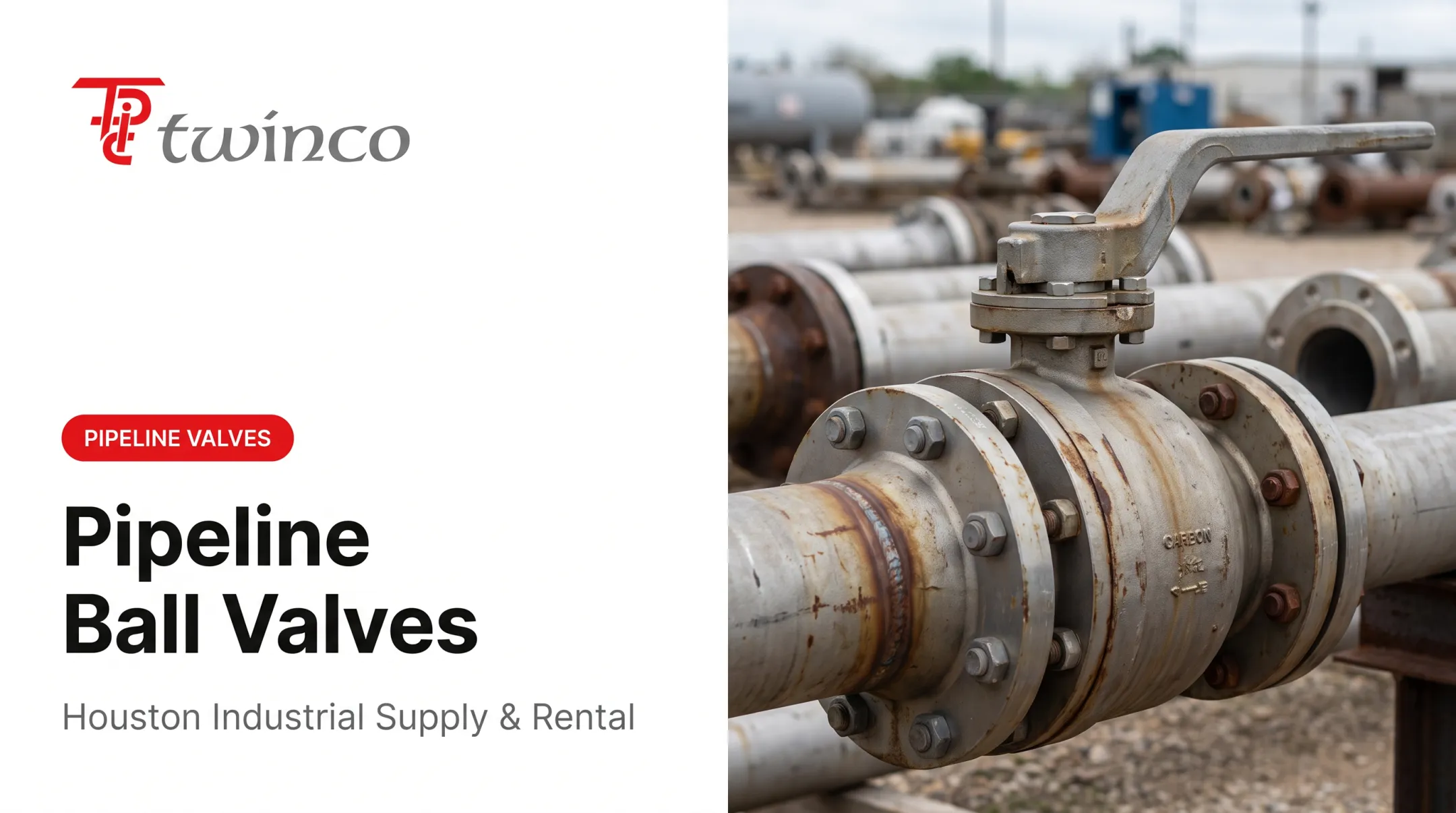
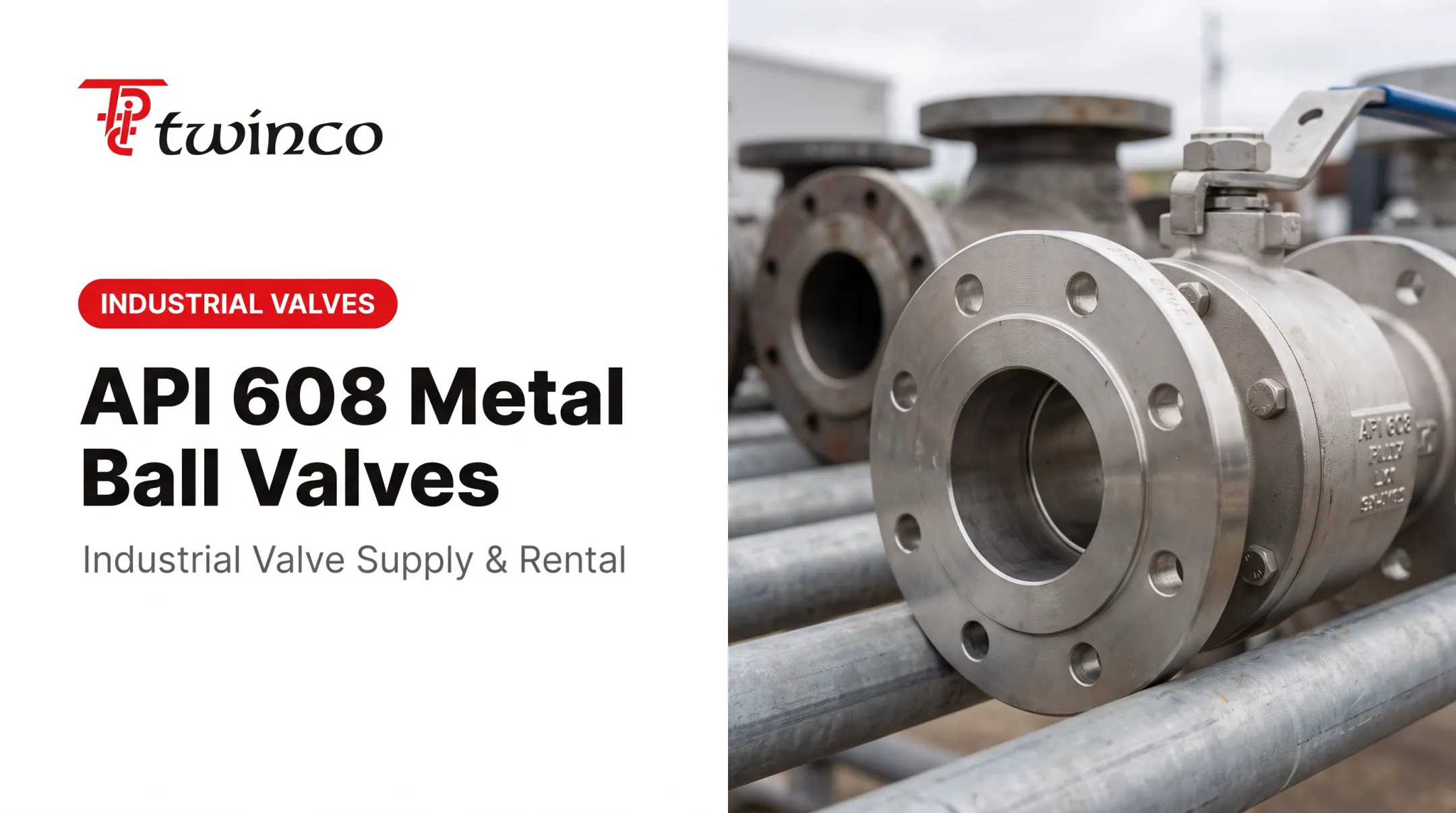
When those features are on the spec, supply range matters as much as design. Twinco Industrial stocks ball valves in full-port, reduced-port, and high-pressure configurations from ½ inch to 24 inches, Class 150 through 1500, in carbon steel, stainless steel, brass, and alloy materials. Pipeline trunnion ball valves in the same range support shutoff and flow control in oil and gas transmission and petrochemical service.
Materials and When to Look Elsewhere
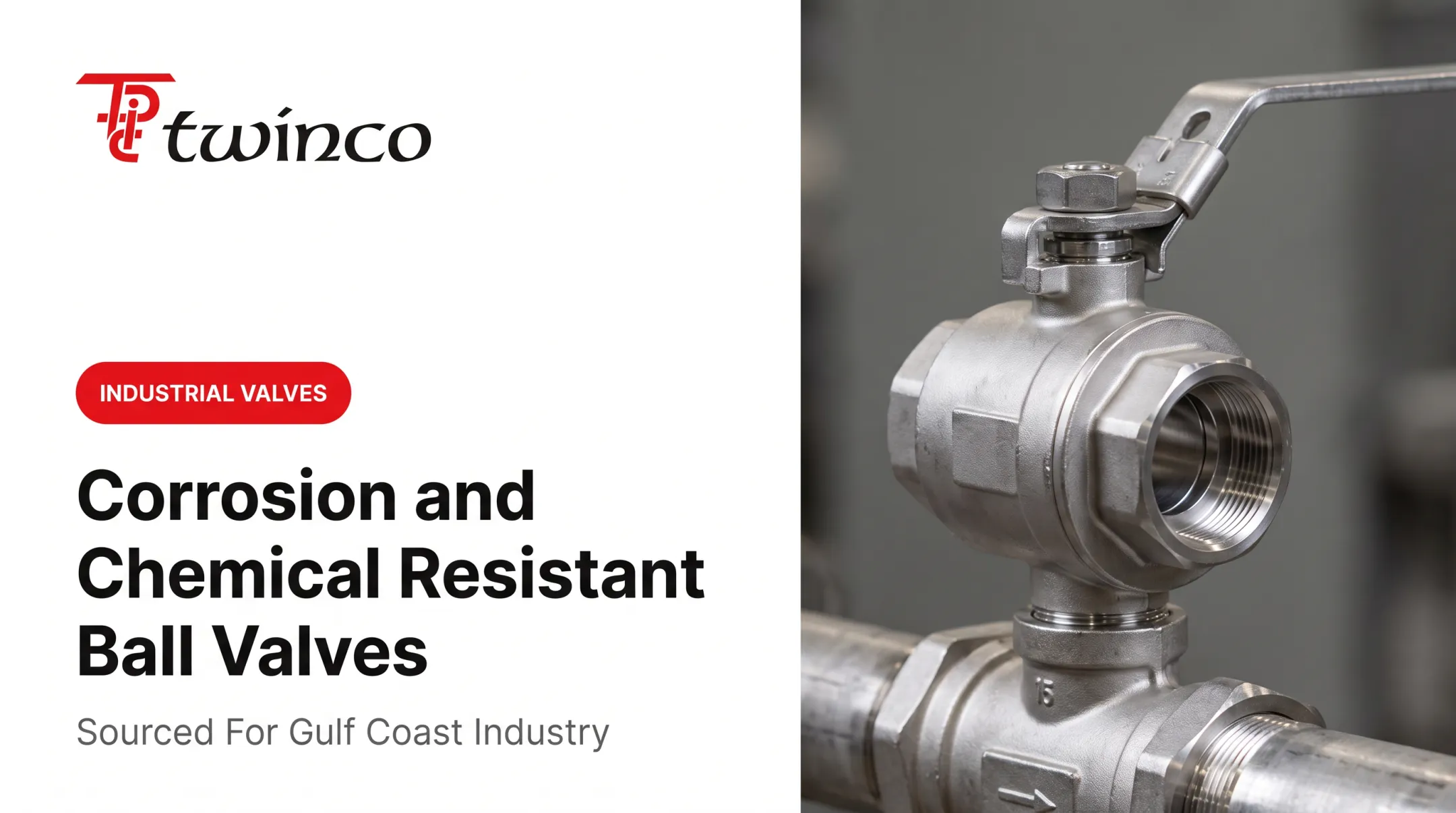
Hardened metal, ceramic or composite wear surfaces, and corrosion-resistant alloys each solve different problems. Check temperature range, thermal cycling, chemical compatibility, and solids content before locking a material set.
For actuation, confirm torque margin, fail-safe position, cycle-frequency rating, and positioner compatibility up front.
Not every severe-service job belongs on a ball valve:
- Globe valves — better throttling precision for frequent adjustment
- Pinch and butterfly valves — often less wear on abrasive slurries
- Plug valves — strong option for some high-solids isolation duty
Match the valve type to the duty, not the other way around.
How to Select and Specify a Severe Service Ball or Control Valve
Getting the specification right upfront avoids most severe-service failures. Here's what to collect before requesting a quote.
Process fluid data:
- Fluid name, composition, phase, and viscosity
- Solids or contaminants, corrosivity, toxicity, flammability
Operating conditions:
- Minimum, normal, and maximum flow rates
- Inlet/outlet pressures and differential pressure
- Temperature range, vapor pressure, velocity, and cycle frequency
Mechanical and performance requirements:
- Line size, pressure class, connection type, and face-to-face dimensions
- Installation orientation and available space
- Shutoff class, leakage criteria, flow coefficient, and rangeability
- Noise limits, emissions requirements, fire-safe requirements, and fail-safe position
Next, pin down the valve's actual duty. Isolation, modulating control, emergency shutdown, pressure reduction, anti-surge, and minimum-flow recycle each demand different sizing and trim choices.
Before finalizing an order, review:
- Sizing calculations at all operating points, not just design flow
- Predicted cavitation, flashing, noise, velocity, and torque margins
- Material certificates for body, ball, stem, seat, trim, gasket, and packing
- Pressure-temperature ratings and traceability documentation
- Fugitive-emissions requirements if applicable
Compare total lifecycle cost, not just purchase price. Factor in expected service life, inspection intervals, replacement parts, downtime exposure, and maintenance access. A cheaper valve that needs trim replacement every 18 months rarely wins long-term.

Twinco Industrial supplies ball valves and industrial piping components for petrochemical, pipeline, construction, and maintenance applications. The team also supports specialty sourcing when a project needs a hard-to-find size or material combination. Request availability and a project-specific quote when you're ready to order.
Common Failure Signs and Maintenance Considerations
Catching problems early keeps a maintenance issue from becoming an unplanned outage, especially under severe-service conditions.
Warning signs to watch for:
- Inability to reach the commanded position
- Hunting or unstable control
- Abnormal noise, vibration, or leakage when closed
- Rising actuator torque or reduced flow
- Damaged packing or excessive cycling
Before pulling a valve, rule out actuator, positioner, or instrumentation faults, plugging, and piping or process changes. A valve replaced unnecessarily doesn't fix an upstream problem.
Review these records first:
- Operating history and travel feedback trends
- Pressure and temperature trends over time
- Prior inspection and maintenance findings
- Any changes in fluid composition or process conditions

Preventive practices that extend service life:
- Correct installation and pre-startup flushing for cleanliness
- Proper actuator setup and calibration
- Regular seal, packing, and torque verification
- Seat-leakage testing on a defined schedule
- Timely replacement of worn trim or liners per manufacturer guidance
Pressure isolation, depressurization, hazardous-fluid controls, lockout/tagout procedures, and qualified personnel are required before any inspection or maintenance work begins. No exceptions.
Frequently Asked Questions
What are the types of PSV?
Common PSV types include spring-loaded, pilot-operated, and balanced-bellows designs. A pressure safety valve relieves overpressure; it does not regulate flow like a control valve or ball valve.
How do I know if a control valve is bad?
Watch for unstable control, abnormal noise, visible leakage, excessive actuator effort, and inconsistent travel feedback. Check instrumentation and upstream process conditions first since these often mimic valve failure.
What is considered severe service for a control valve?
Severe service typically involves cavitation, flashing, erosion, corrosion, high pressure drop, high velocity, extreme temperature, abrasive solids, excessive noise or vibration, or frequent cycling, often in combination.
Are ball valves suitable for severe service?
It depends on function, process conditions, sizing, materials, trim, and actuation. A standard isolation ball valve should never be assumed suitable for severe throttling duty without proper engineering review.
What causes cavitation in a control valve?
Local pressure drops below the liquid's vapor pressure at the vena contracta, forming vapor bubbles that collapse once downstream pressure recovers. This collapse causes noise, vibration, and surface erosion. Correct sizing or anti-cavitation trim can prevent it.
What information is needed to select a severe service ball valve?
Provide fluid properties, flow range, pressure/temperature, differential and vapor pressure, and any solids or corrosives. Also specify valve function, leakage class, cycle rate, materials, actuation, and applicable standards.