Introduction
A bolt failure on a pressurized flange can mean a leak, a shutdown, or worse. Industrial bolting carries load and seals the joint. Treat it as a critical component, not a line item you check off without thinking.
The wrong grade, coating, or nut pairing can compromise joint integrity, throw off maintenance schedules, and delay a project by weeks.
Carbon steel bolts, nuts, and stud bolts remain a common choice for piping, structural, fabrication, plant maintenance, pipeline, and construction work. They balance strength, machinability, availability, and cost in a way few other materials match.
This guide covers carbon steel fundamentals, strength grades, stud-bolt specifications, corrosion protection, and how to match fasteners to your application. We'll also flag what to confirm before you place an order, because the details you skip now tend to surface later, usually during a shutdown when there's no time to fix them.
Key Takeaways
- Specify grade, size, thread, finish, and nut; "carbon steel" alone is not a spec.
- Select fasteners based on load, temperature, pressure, and corrosion exposure, not strength alone.
- Verify ASTM, ASME, or SAE requirements before substituting grades or coatings.
- Confirm markings, documentation, and delivery timing during RFQ and receiving.
What Are Industrial Carbon Steel Bolts and Nuts?
Carbon steel is an iron-based alloy where carbon content and processing determine strength, hardness, ductility, machinability, and weldability. On its own, the term "carbon steel" tells you very little about whether a fastener will hold up in your application. It's a starting point, not a purchasing specification.
Bolt Types and How They're Used
Different bolt styles serve different installation methods and joint types:
- Hex-head bolts: general-purpose fasteners for structural and equipment connections
- Fully threaded studs: nuts on both ends, common in flanged piping
- Heavy hex bolts: larger wrench flats for higher-torque applications
- Machine bolts: square or hex head, often used in structural steel work
- Specialty bolting: custom lengths, thread forms, or end configurations for unique joints
Nuts, washers, and the clamped members work as a system. The nut develops and maintains preload; the washer distributes load and protects surfaces; the joint members determine how much clamping force is actually needed. Change one piece and you change how the whole assembly behaves.
Low, Medium, and High Carbon: What It Actually Means
Engineers commonly classify carbon steel as low carbon (up to about 0.25% carbon), medium carbon (0.25%–0.50%), and high carbon (above 0.50%). Higher carbon content generally increases attainable hardness and strength while reducing ductility and weldability. Commercial fastener grades and governing standards, not carbon percentage, determine whether a product is fit for your application. A grade marking tells you far more than a chemistry range ever will.
Carbon Steel vs. Stainless and Alloy Steel
No single material wins across every category:
| Factor | Carbon Steel | Stainless Steel | Alloy Steel |
|---|---|---|---|
| Cost | Lower | Higher | Moderate to higher |
| Corrosion resistance | Requires coating | Generally better | Varies by grade |
| Strength potential | Good, grade-dependent | Good, grade-dependent | Often higher |
| Availability | Broad | Broad | Application-specific |
Carbon steel gets specified often in industrial projects where strength, availability, and cost control matter most. In corrosive, marine, or high-purity environments, a different material or coating usually makes more sense.
Carbon Steel Bolt Grades and Fastener Specifications
Grade systems communicate mechanical performance, but you have to identify which system you're reading before a marking means anything. A "Grade 8" bolt and an "8.8" property class are not interchangeable just because the numbers look similar.
Common Grade Systems in Industrial Purchasing
SAE J429 covers inch-series bolts, screws, and studs through 1-1/2 inches, and it's one of the most frequently referenced systems in North American procurement:
| Grade | Size Range | Min. Tensile | Min. Yield |
|---|---|---|---|
| Grade 2 | 1/4"–3/4" | 74,000 psi | 57,000 psi |
| Grade 5 | 1/4"–1" | 120,000 psi | 92,000 psi |
| Grade 8 | 1/4"–1-1/2" | 150,000 psi | 130,000 psi |

These values come from SAE J429, and you should confirm the current edition against your purchase order before finalizing a spec.
Other systems buyers encounter regularly:
- ASTM A307 — general-purpose carbon steel bolts and threaded rod (Grade A general use; Grade B flanged cast-iron piping)
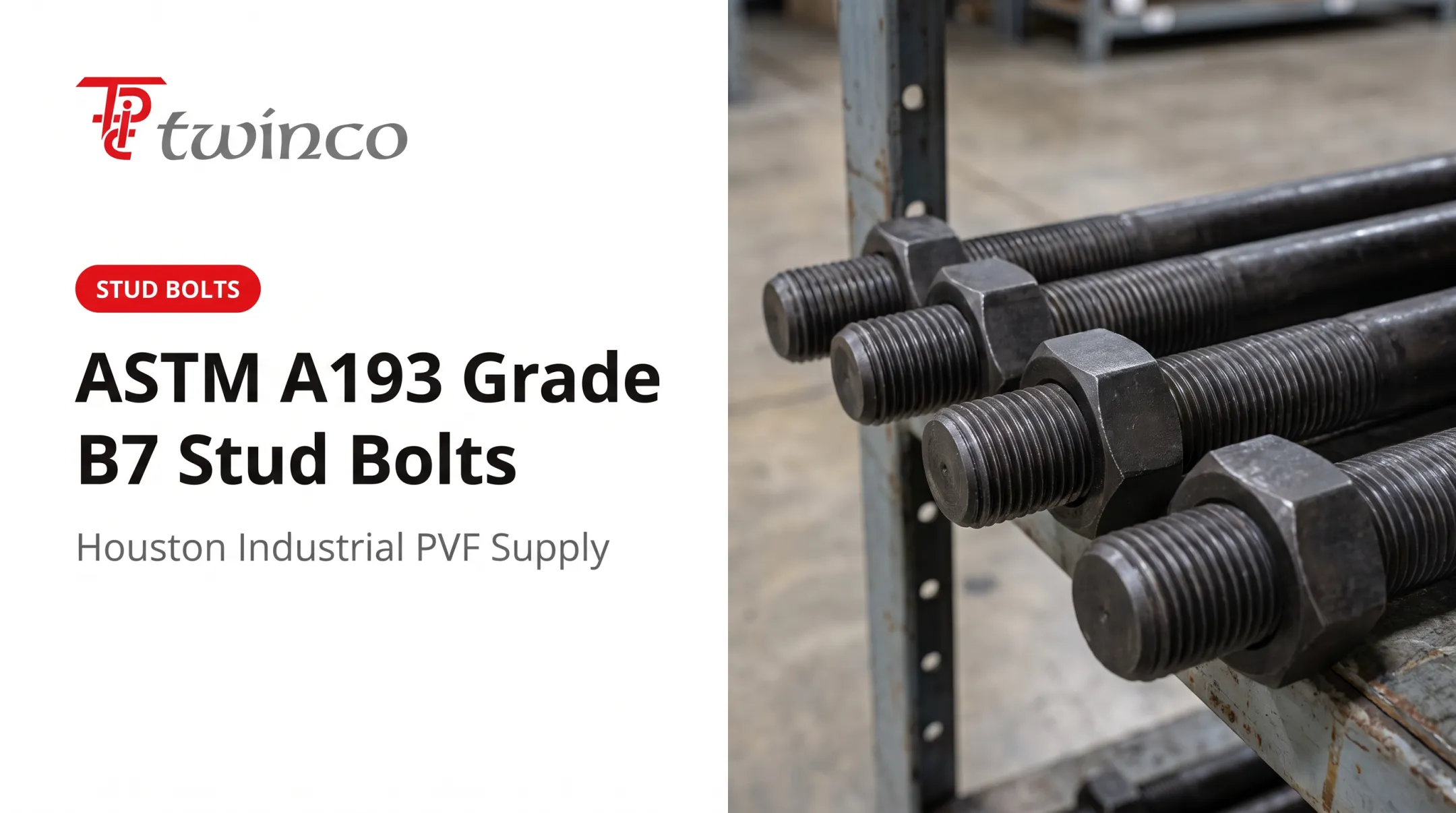
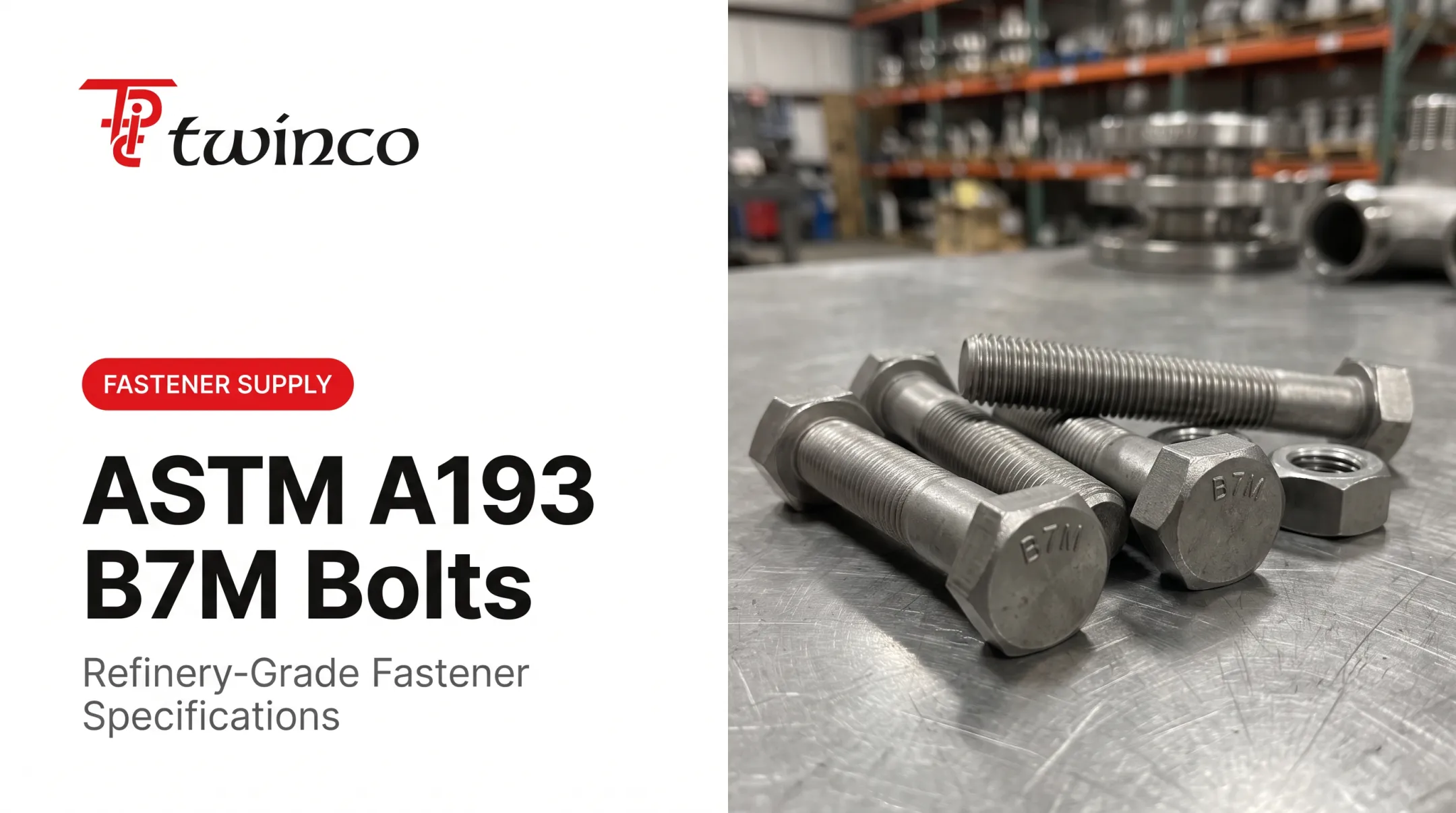
- ASTM A193 — high-temperature, high-pressure, or special-purpose bolting; choose by design and service conditions per ASTM A193
- ISO 898-1 metric property classes — the first number times 100 gives nominal tensile strength in MPa (an 8.8 bolt is 800 MPa tensile)
Don't cross-compare these systems informally. Chemistry, size ranges, test methods, and markings differ enough that an "equivalent" grade needs explicit engineering approval.
Specs to Confirm Before Ordering
For standard bolts, verify:
- Diameter, length, thread pitch, thread length, and head style
- Material grade, heat treatment, and surface finish
- Manufacturer markings and required test documentation
Stud bolts for flanged piping need a separate checklist:
- Diameter, overall length, thread form, and thread length
- End configuration, nut compatibility, and washer requirements
The assembly has to match the flange design, which typically means ASTM A193 for the stud, ASTM A194 for the nut, and the ASME piping code that governs the project.
Match the nut grade to the bolt or stud. An under-strength or incompatible nut can undermine preload even when the bolt itself is correctly rated. Common ASTM A194 nut grades include 2H, 2HM, 4, 7, and 8M.
Treat the current project specification, engineering drawings, governing code, and supplier documentation as the controlling references—not a generic grade chart.
How to Choose Carbon Steel Bolts and Nuts for an Industrial Application
Start with the joint, not the catalog. Identify the applied load, preload, vibration, cyclic loading, temperature range, pressure, and sealing requirement before you look at a single grade number.
Matching Strength to the Engineering Requirement
Tensile strength, yield strength, proof load, shear performance, hardness, and ductility all describe different things:
- Tensile strength — maximum load before fracture
- Yield strength — the point where permanent deformation begins
- Proof load — the load a fastener must withstand without lasting deformation
- Shear performance — resistance to forces acting across the fastener axis
- Hardness — resistance to surface wear, indentation, and thread damage
- Ductility — how much the fastener deforms before it fails
Don't automatically grab the highest available grade. Higher strength often means reduced ductility, more installation sensitivity, and greater risk of galling or brittle failure under the wrong conditions.
Evaluating the Environment
Check the service conditions before you lock a grade or finish:
- Moisture, washdown, and buried service
- Chemical or salt exposure
- Contact with dissimilar metals
Plain carbon steel in a wet, corrosive, or marine environment usually needs a coating, plating, or a different base material entirely.
Select the Whole Assembly, Not Just the Bolt
Match the full joint, not a single part number:
- Bolt or stud grade with the correct nut grade
- Washer type and thread fit
- Installation method: torque control, tensioning, or hydraulic tightening
Installation method affects how much clamping force you actually achieve in the field.

Procurement and Field Realities
Before submitting an RFQ, nail down:
- Use case: standard flange, custom fabrication, shutdown, pressure test, or emergency repair
- Quantity, allowable substitutions, and required certificates
- Packaging, traceability, and delivery deadline
When schedules tighten or a spec calls for something unusual, Twinco Industrial helps teams review bolting requirements and source industrial fasteners—including hard-to-find components—so a missing part does not stall the job.
Common Industrial Applications for Carbon Steel Bolts, Nuts, and Studs
Carbon steel fasteners are used in demanding industrial work, including:
- Pipeline construction and process piping
- Refinery and petrochemical maintenance
- Structural supports and industrial construction
Each job ties back to a specific joint or service condition.
Teams often select stud bolts for flanged piping and equipment connections. Nuts install from both ends, and the joint may need to come apart repeatedly for inspection or maintenance.
ASTM A193 B7 studs paired with ASTM A194 2H heavy hex nuts are one of the most common combinations for hydrostatic testing. The bolting has to hold full test pressure without leaking or failing.
During turnarounds and pressure-isolation work, those jobs depend on correct dimensions and compatible nuts:
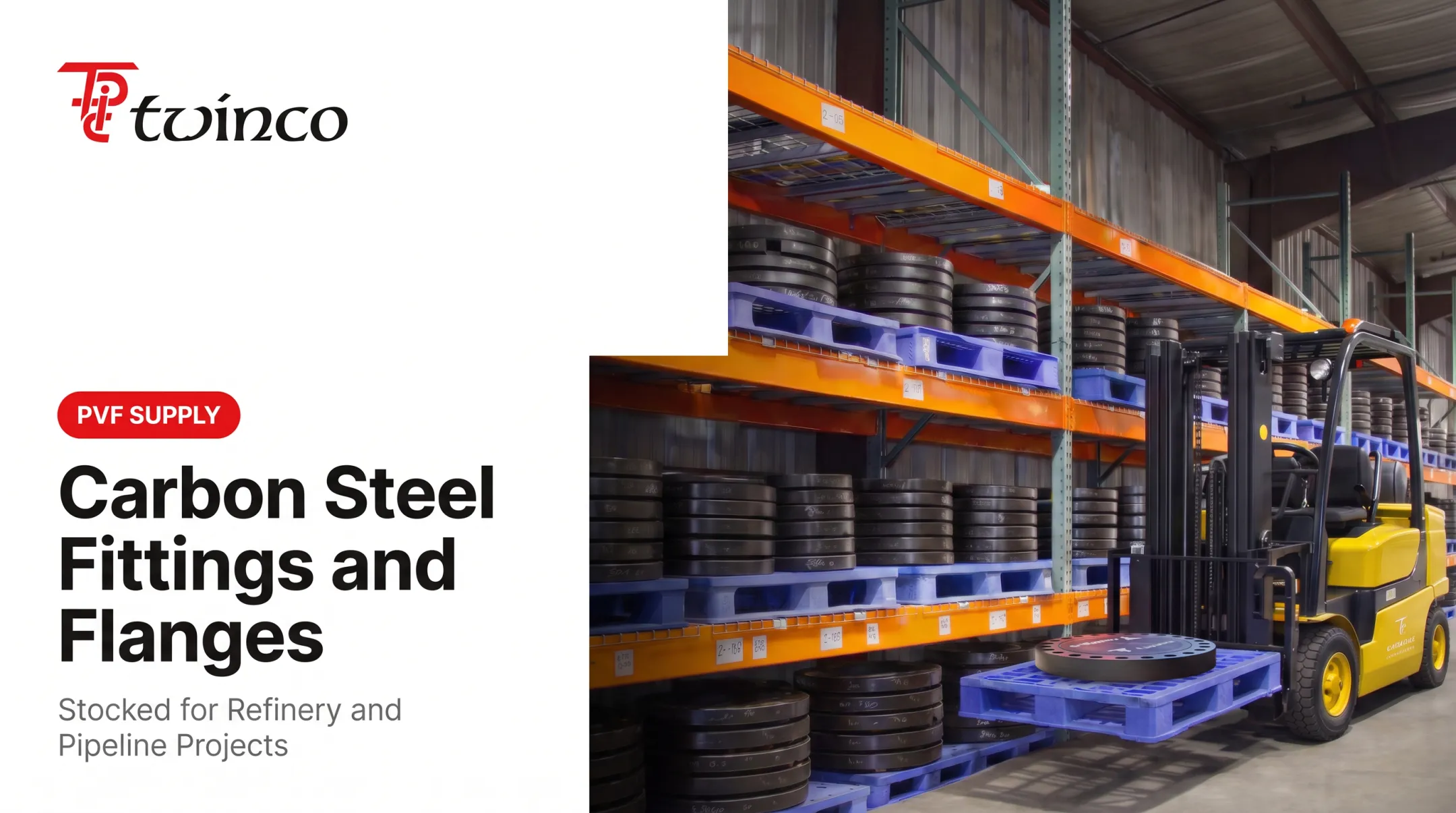
- Blind flange installation for line isolation
- Hydrostatic testing setups
- Emergency replacement during unplanned maintenance
Twinco stocks and rents A193 B7 studs and A194 2H nuts, along with washers, because these turnaround and testing jobs can't wait on a backorder.
Corrosion Protection, Coatings, and Carbon Steel Fastener Limitations
Unprotected carbon steel rusts in the presence of water and oxygen. That's basic chemistry, but the real concern goes beyond surface rust: thread damage, loss of cross-section, and seized threads can make it difficult to achieve or retain proper preload.
Common Protection Approaches
| Coating | Typical Use | Watch For |
|---|---|---|
| Zinc plating | General corrosion protection | Thickness class, dimensional build |
| Hot-dip galvanizing | Exposed structural/industrial service | Thread fit, coating damage |
| Black oxide | Indoor or protected environments | Minimal protection without oil/wax |
| Xylan / PTFE | Wear and galling resistance | Compatibility with service temperature |
Coatings don't make every carbon steel fastener suitable for every chemical or marine environment. Some finishes carry additional risks worth checking before you specify them.
Hydrogen embrittlement is one of them. Electroplating and cleaning can introduce hydrogen into high-strength or surface-hardened steel. AMPP notes this risk is tied to corrosion-control processes that need relief baking or process controls.
Galvanic corrosion is another. Mixing dissimilar metals in a moist environment can accelerate attack on one of them.
Inspect fasteners regularly for:
- Rust and damaged coatings
- Thread seizure
- Missing markings
Replace anything that no longer meets inspection or engineering requirements. A planned swap costs far less than a seized joint or lost preload in service.

Sourcing, Documentation, and Inspection Checklist
A clean RFQ prevents most of the headaches that show up later. Before requesting a quote, gather:
- Quantity and bolt or stud type
- Diameter, length, and thread specification
- Bolt grade and nut grade
- Washer requirements and coating
- Governing standard and application
- Required documentation and delivery date
On Receipt, Verify Before Installing
- Markings match the purchase order and specification
- Dimensions, thread condition, and finish are correct
- Quantity and packaging match what was ordered
- Material test reports or certificates of conformance are included, if required
Don't accept a substitute grade, coating, or standard just because it's available sooner. If the project specification calls for engineering approval before a substitution, get it in writing first.
Those checks are easier when the supplier can match grade, coating, and documentation without last-minute swaps. Twinco Industrial has supplied and rented studs, nuts, and related PVF components from its Houston headquarters since 1977. Deep inventory, specialty sourcing for oversized and hard-to-find components, and responsive support serve pipeline, petrochemical, construction, and testing customers across the USA, Canada, and Mexico.
If you've got a bolt list, drawing, material take-off, or spec to work from, send it over. The sales team can confirm availability, requirements, and delivery expectations before your schedule gets tight.
Frequently Asked Questions
What are the key differences between stainless steel bolts and carbon steel bolts?
Stainless steel offers better corrosion resistance, while carbon steel costs less and comes in a wider range of strength grades. The right choice depends on your service conditions and project specification.
Are carbon steel bolts prone to rust?
Yes, exposed carbon steel corrodes when moisture and oxygen are present. Coatings, environmental controls, regular inspection, and choosing the right material for the exposure all help manage this.
What grade are carbon steel bolts?
Carbon steel bolts come in multiple SAE, ASTM, and metric property classes. You need to identify the required grade from the application, drawing, code, or purchase specification rather than assuming one grade fits all.
What are the specifications for carbon steel stud bolts?
Stud-bolt specs cover diameter, length, thread configuration, material grade, nut compatibility, coating, and markings. Always follow the applicable ASTM, ASME, and project requirements rather than a generic template.
Which is stronger for bolts, low-carbon steel or high-carbon steel?
Higher carbon content can increase hardness and strength but may reduce ductility and limit formability or toughness in service. Focus on the specified fastener grade, not carbon content alone.
What do hex nut grades mean (e.g., Grade 2, Grade C, Grade 5)?
Nut grades indicate mechanical performance within a specific standards system, such as SAE or ASTM. They must be matched to the bolt or stud grade and the governing application requirements.