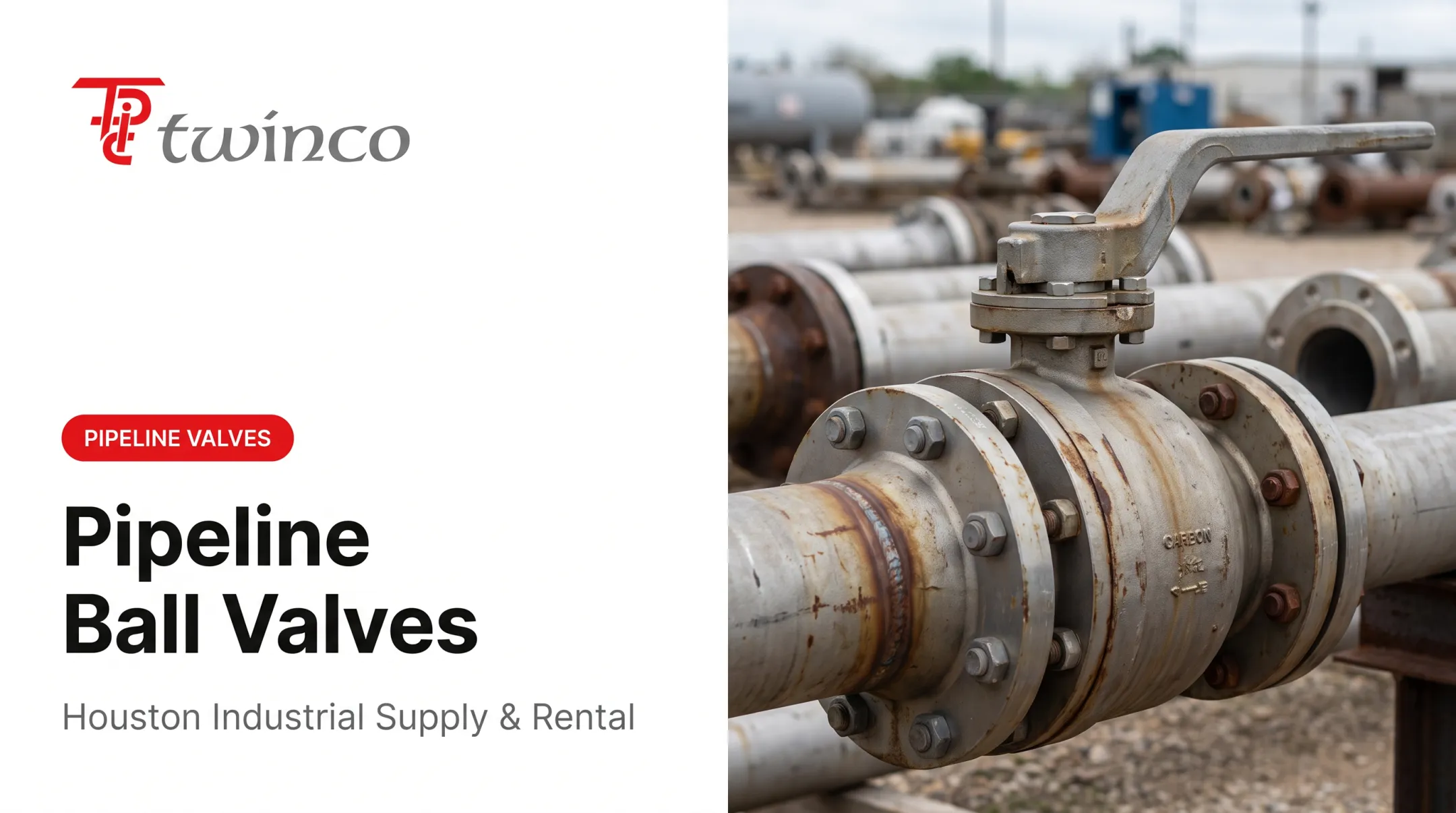
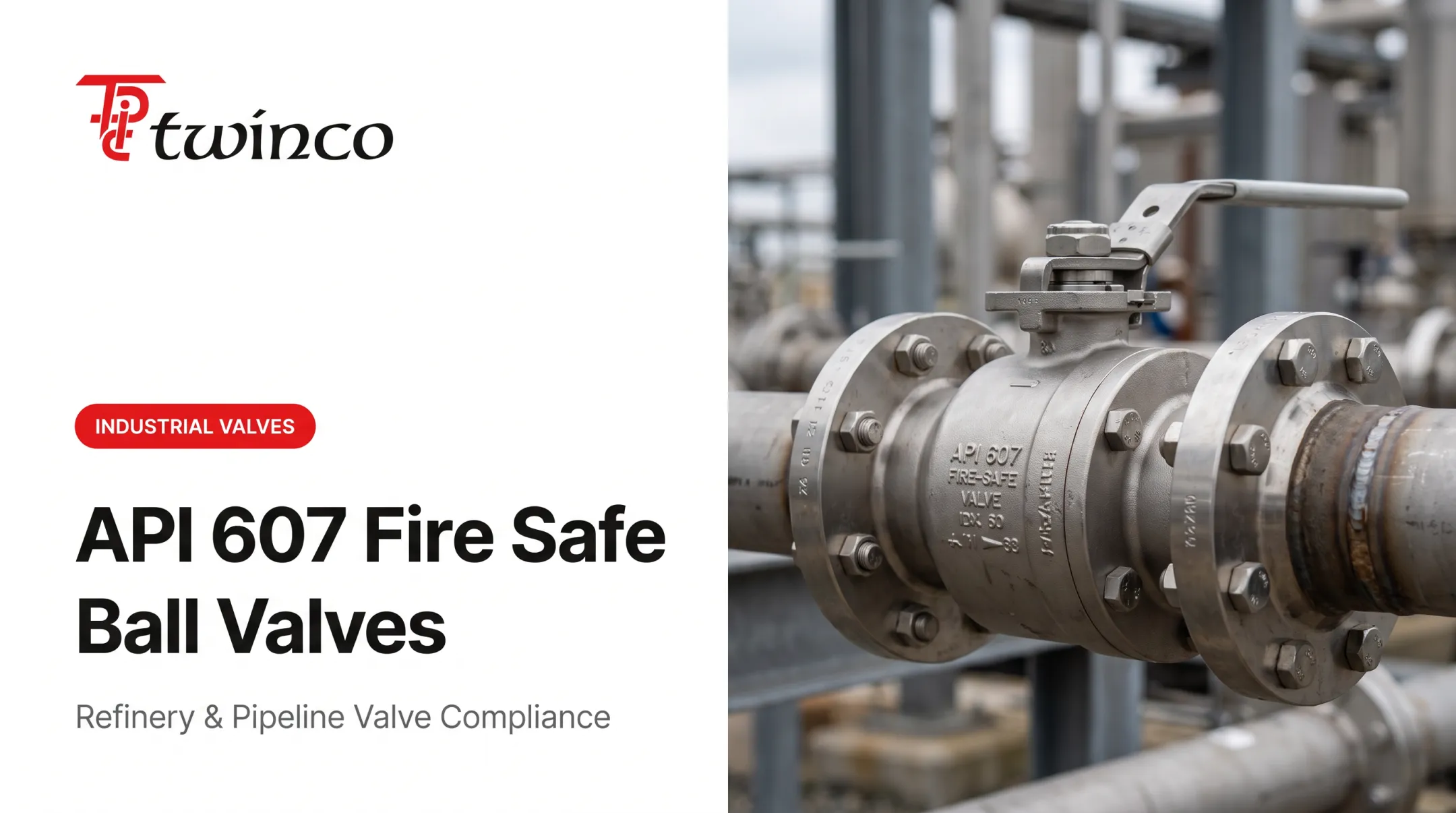
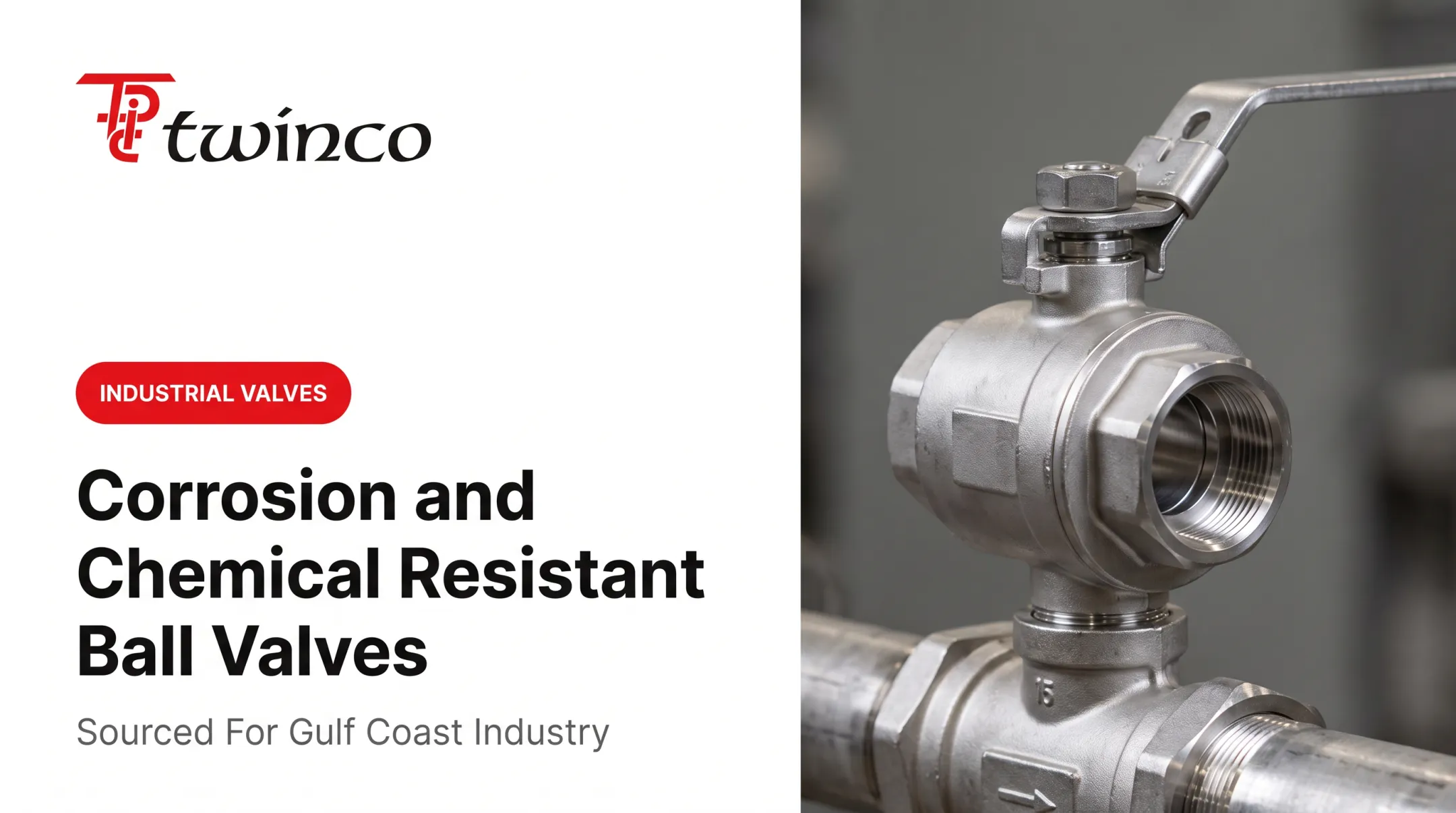
The real challenge is matching a valve to your piping specification and operating conditions, not just the API designation on a spec sheet. Buyers routinely get tripped up by overlapping standards, API 608, API 6D, API 607, ASME B16.34, and don't always know which one actually governs their application.
This guide breaks down what API 608 covers, the technical requirements worth verifying, common configurations, how it stacks up against related standards, and a practical checklist for sourcing the right valve.
Key Takeaways
- Confirm the current API 608 edition before finalizing metal ball valve specs with flanged, threaded, or welding ends.
- Spec pressure class, temperature, materials, seat design, bore, and actuation—not only the API designation.
- Pair API 608 with API 6D, API 607, API 598, or ASME B16.34 when those standards also apply.
- Request traceability, material documentation, and pressure-test records before issuing a purchase order.
What Is API 608 and What Does It Cover?
API 608 is formally titled Metal Ball Valves—Flanged, Threaded, and Welding Ends. It establishes additional requirements for metal ball valves and works in conjunction with base standards, particularly ASME B16.34, rather than standing alone as a complete design code.
API's Monogram Program confirmed that the 7th Edition of API 608 became effective on October 2, 2025, which means any spec sheet referencing an older edition needs a second look.
Scope and End Connections
The standard addresses several end-connection types:
- Flanged ends for bolted, maintenance-friendly connections
- Threaded ends typically used on smaller-bore applications
- Socket-welding ends for compact, permanent installations
- Butt-welding ends for higher-pressure or larger-diameter piping
Which connection applies depends on valve design, size, pressure class, and the piping specification governing the project. There's no universal answer here.
Pressure Classes and Design Basics
API 608 covers pressure classes and pressure-temperature ratings, but the exact tables change between editions. Don't copy figures from an old catalog or a competitor's spec sheet. Pull the current API 608 tables and cross-check against ASME's dimensional and rating requirements for your specific class and size.
Where the Standard's Scope Ends
Here's the part buyers miss most often: a valve manufactured to API 608 requirements still needs separate review for conditions the standard does not cover:
- Fire exposure
- Sour service
- Fugitive emissions
- Cryogenic service
- Oxygen service
API 608 compliance doesn't automatically cover any of those.
Design choices also vary within the standard's scope:
- Floating versus trunnion-mounted balls
- Full versus reduced port
- Manual versus actuated operation
None of these get settled by the API 608 label alone; you still need the manufacturer's detailed data sheet.
One more thing worth flagging: "API valve" is not a universal product category. It generally means a valve designed, manufactured, tested, or documented to meet one or more API standards. Always ask which specific standard and edition applies.

Key API 608 Requirements Buyers Should Verify
A handful of technical requirements come up repeatedly in API 608 specifications. Here's what to check before you sign off on a valve.
Pressure-Temperature Rating Rule
The valve's allowable pressure-temperature rating is limited by the lower rating of two components: the pressure-containing shell or the seat.
Confirm that shell-versus-seat rule against the current standard's wording and tables before you finalize a spec.
Bore, Ball, and Stem Design Requirements
Confirm these design points with your supplier:
- Full-port vs. reduced-port bore — drives flow capacity, pressure loss, piggability, weight, and cost
- Anti-static provisions — electrical continuity between stem, body, and ball; verify the resistance threshold in the current standard
- Hollow ball restrictions — generally not allowed unless the customer accepts them, because they affect pressure integrity and safety
- Stem strength and anti-blowout design — torsional safety factors apply; any stem failure must occur outside the pressure boundary and packing
These aren't cosmetic details. A stem that fails inside the pressure boundary instead of outside it is a safety issue, not a paperwork issue.
Testing and Documentation Beyond Design
Design compliance does not automatically cover testing. Buyers often also need pressure testing, examination, marking, and documentation under API 598, ASME B16.34, or a project-specific purchase specification. Ask which standard governs testing on your order—it is not always the same one that governs design.
Where API 608 Metal Ball Valves Are Used
API 608 metal ball valves are used across petroleum, petrochemical, chemical processing, refining, pipeline, and other industrial piping systems—often for isolation and on/off service on process and utility lines. Service limits still come from the valve’s pressure-temperature rating, body/trim materials, and seat design, not the API 608 designation alone.
End connection type shapes installation in practical ways:
- Flanged valves support bolted connections and easier maintenance access
- Threaded valves suit selected smaller-bore applications where permitted
- Welded-end valves support compact or permanent installations, subject to welding and inspection requirements
Port selection matters next. A reduced-port valve saves weight and cost but narrows the flow path. If the piping design assumed full-port flow—or if pigging is part of maintenance—that mismatch creates real problems later.

Manual and actuated builds each need confirmation before the valve ships:
- Operating torque
- Actuator sizing
- Fail-safe position
- Hazardous-area requirements
Before you finalize selection, screen the application against:
- Fluid composition, temperature, and pressure
- Cycling frequency and solids content
- Corrosion or erosion risk
- Emissions and fire-exposure needs
- Maintenance access
Skipping this step is how valves end up mismatched to service within months of install.
API 608 Compared With Related Valve Standards
Buyers often mix up API 608 with nearby valve standards. Here's how the most common ones differ:
| Standard | Primary Focus | Relationship to API 608 |
|---|---|---|
| API 6D | Pipeline valves (axial, ball, check, gate, plug) for oil, gas, and hydrogen service | Broader pipeline valve spec; not interchangeable with API 608's process ball-valve scope |
| API 607 | Fire-testing for quarter-turn valves | Separate qualification; a valve may need both API 608 construction and API 607 fire-test performance |
| API 598 | Inspection and pressure testing | Covers testing/examination, not design requirements |
| ASME B16.34 | Pressure-temperature ratings, dimensions, materials | Base design standard that API 608 adds requirements onto |
API's Spec 6D announcement covers design, manufacturing, materials, welding, and testing for a wider set of pipeline and hydrogen-gas valve types. That scope is distinct from API 608's process-piping focus.
Selection rule: Choose the base standard for your piping system and service first. Then add fire safety, emissions, sour service, or documentation requirements as the project demands.
Don't take supplier shorthand like "API valve" or "API 608 certified" at face value. Ask for the exact standard, edition, scope of compliance, and the test records that back it up.
How to Select and Source an API 608 Metal Ball Valve
Getting the right valve starts with a complete specification, not just a size and pressure class.
Core specification checklist:
- Nominal size, pressure class, design pressure, operating and design temperatures
- Fluid or media, material compatibility, corrosion allowance
- Seat and seal materials, body and trim materials
- Bore (full or reduced), end connection, face-to-face dimensions
- Applicable piping codes and referenced standards
Operational requirements to confirm:
- Manual or actuated operation, operating torque, actuator type
- Fail-safe position and cycle frequency
- Throttling vs. isolation duty
- Hazardous-area classification and emissions requirements
- Fire-test requirements, if applicable
- Maintenance access
What to request from your supplier:
- Dimensional drawings and data sheets
- Material certificates with heat or batch traceability
- Pressure-test records and inspection reports
- Compliance statements naming the exact standard and edition
- Nameplate details and installation instructions
Be specific about language, too. "API 608 compliant," "manufactured in accordance with API 608," and "certified" don't mean the same thing. Ask which organization performed the testing or verification when third-party certification matters to your project.
When comparing quotes, look past the sticker price. Weigh technical compliance, documentation completeness, lead time, replacement compatibility, and overall project risk.

This is where working with a supplier who understands both the paperwork and the piping matters. Twinco Industrial has supported petrochemical, pipeline, refining, and industrial construction projects out of Houston for over 45 years, with inside sales staff who specialize in valves.
The company keeps a deep inventory of pipe, valves, fittings, flanges, bolting, and gaskets on hand, plus sourcing capability for harder-to-find specialty components. That depth matters when a turnaround schedule doesn't leave room for a six-week lead time.
Ready to request a quote? Share these details so Twinco's team can work from a complete picture:
- Valve size, pressure class, and end connection
- Service conditions and material requirements
- Applicable standards and documentation needs
- Required delivery date
Frequently Asked Questions
What is API 608 standard?
API 608 is the standard covering metal ball valves with flanged, threaded, and welding ends for petroleum, petrochemical, and industrial applications. Always check the current edition and referenced standards, like ASME B16.34, for exact requirements.
What is an API valve?
An API valve is designed, manufactured, tested, or documented to meet a specified American Petroleum Institute standard. It's not a single product category, so identify the exact standard involved rather than relying on the general term.
What is the difference between API 608 and API 6D?
API 608 covers metal ball valves for process and industrial piping, while API 6D applies to a broader range of pipeline valves for oil, gas, and hydrogen service. Verify application, design, and testing requirements against current editions for your specific project.
Are API 608 ball valves fire safe?
API 608 compliance alone isn't proof of fire-tested performance. Fire safety typically comes from a separate qualification like API 607, so confirm whether that requirement applies to your project.
What information is needed to specify an API 608 ball valve?
You'll need size, pressure class, temperature range, media, materials, seat design, bore, end connection, and actuation type. Also confirm testing, documentation, and delivery timeline so the valve matches the application.