Introduction
Reverse flow is expensive. It can slam a pump into rotation it was never built for, push contaminated fluid back into a clean line, or trigger a pressure spike that rattles pipe supports loose.
Becht's analysis of pump trips and check valve closure points out that reverse flow after a pump trip can spin a pump backward and generate transient pressure spikes. That failure mode shows up across petrochemical, power-generation, and boiler-feedwater systems.
A butterfly check valve solves this automatically. No actuator, no operator standing by, no manual valve to remember to close.
This guide covers construction, operating principles, common configurations, application-specific selection, and installation and maintenance basics. It's written for engineers, plant operators, maintenance teams, contractors, and procurement professionals sourcing components for U.S. fluid systems.
Key Takeaways
- Forward flow opens the disc; reverse pressure, gravity, and/or springs close it to stop backflow.
- Dual-plate designs cut footprint, close faster, and lower pressure loss in tight piping runs.
- Size to medium, pressure, temperature, flow direction, layout, materials, and project specs.
- A check valve isn't a substitute for a manual isolation valve; it serves one job: stopping backflow.
What Is a Butterfly Check Valve?
A butterfly check valve is a non-return valve. It lets flow pass in one direction and automatically restricts flow in the reverse direction, with no actuator or manual operator involved. Forward pressure does the opening. Reverse pressure, gravity, or a spring does the closing.
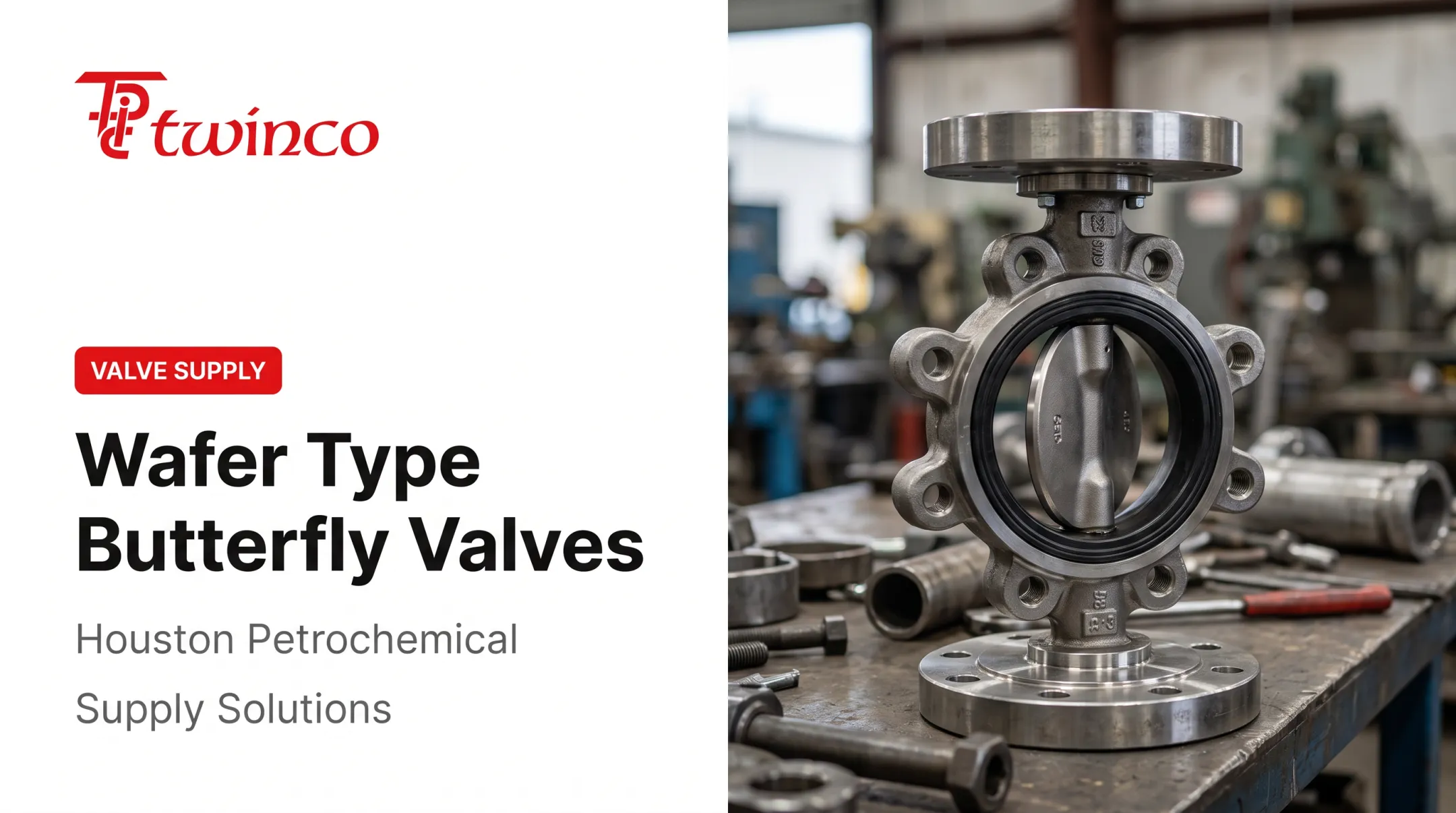
Most designs use a dual-plate construction: two semicircular discs mounted on a central hinge or stem inside a compact body. As documented in Val-Matic's dual-disc check valve manual, the moving parts typically include the two discs and a torsion spring.
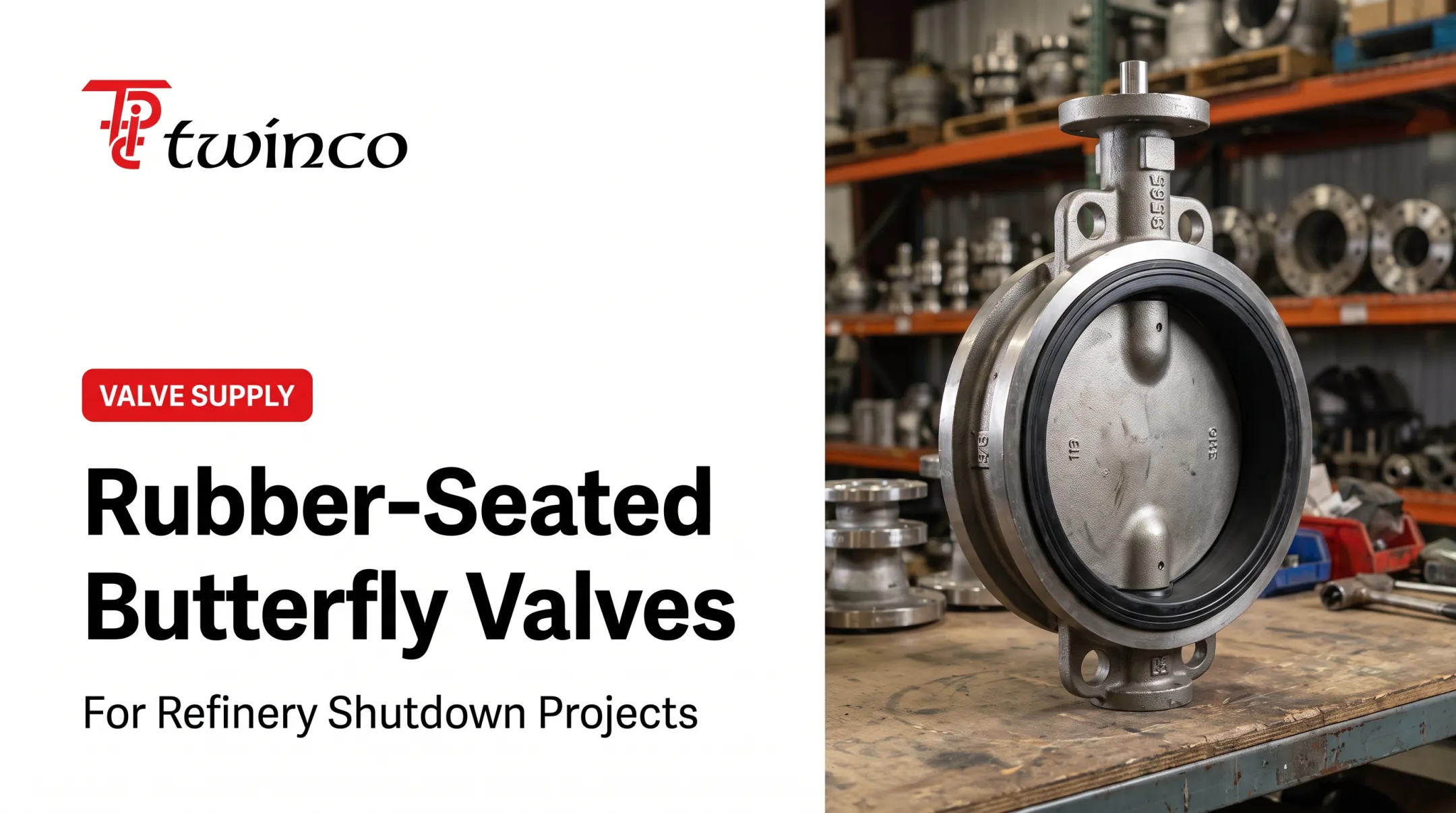
A resilient seat provides tight shutoff when the plates return to the closed position.
Butterfly Check Valve vs. Actuated Butterfly Valve
Don't confuse the two. A butterfly check valve responds automatically to flow conditions. A standard (actuated) butterfly valve uses a rotating disc controlled by a lever, gearbox, or actuator to intentionally start, stop, or throttle flow. Same general disc-in-body layout, completely different function.

Components to Look For in Product Documentation
When reviewing a datasheet or cut sheet, identify these:
- Body style — wafer, lug, or double-flanged
- Plates/discs — material and thickness
- Hinge or pivot — location and design
- Springs — torsion or coil, and their closing force
- Seat — resilient or metal
- Flow-direction arrow — cast or stamped on the body
- Pressure rating and material designation — matched to your service conditions
Material designation is usually the first filter on that list. Twinco Industrial stocks butterfly check valves and related check valves in carbon steel, stainless steel, brass, and alloy options, covering most material decisions plants face on replacement or new-build specs.
How Does a Butterfly Check Valve Work?
Forward Flow: Opening the Valve
When upstream pressure exceeds the closing force acting on the plates, the discs swing open on their hinge and the passage clears for flow. Because the plates are lightweight compared to a single full-diameter disc, they respond quickly to changing flow rates.
Per Val-Matic's operations manual, flow enters from the seat side and forces both discs open until they reach a full-open stop pin. That stop pin matters. It prevents over-travel and keeps the discs from slamming into the body wall.
No-Flow and Reverse Flow: Closing the Valve
As forward flow slows, or downstream pressure exceeds upstream pressure, the plates move back toward the seat. On many designs, torsion springs are engineered to close the discs before reverse flow fully develops, rather than waiting for reverse velocity to build first.
Closure isn't driven by one factor alone. Depending on the design:
- Springs provide a positive closing force independent of orientation
- Gravity assists closure in certain vertical or horizontal mounting arrangements
- Backpressure pushes the plates shut once flow reverses
- Seat geometry determines how tightly the plates seal once closed
The exact combination varies by manufacturer and model, so don't assume one design's closing behavior applies to another.
Cracking Pressure and Sealing Considerations
Cracking pressure is the minimum upstream pressure needed to open the valve enough to allow detectable flow. Too little differential pressure and the valve won't open fully; too much resistance and you lose efficiency across the system.
Cracking pressure isn't a universal number. It depends on spring selection, orientation, fluid properties, and the specific valve design, so pull the certified figure from the manufacturer's datasheet rather than a generic spec sheet.
Delayed closure is where problems start. If the plates don't seat fast enough, reverse velocity can build before the valve fully shuts, contributing to leakage, seat wear, vibration, or water hammer.
Incorrect sizing and poor installation orientation make this worse. Always validate closing behavior against the manufacturer's engineering data for your specific flow and pressure conditions.

Types, Benefits, and Limitations
Common Configurations
| Configuration | Key Characteristic |
|---|---|
| Spring-assisted dual-plate | Independent springs close each plate; common wafer-style design |
| Resilient-seated | Elastomeric seat for drop-tight shutoff |
| Metal-seated | Used where temperature or chemical exposure rules out elastomers |
| Wafer body | Compact, fits between mating flanges |
| Lug body | Bolts independently into piping, allows downstream removal |
The table covers both body styles and seat designs. Terminology varies between manufacturers, so verify exact classifications against the product documentation before specifying a part number.
Benefits
- Compact face-to-face dimensions save space in tight pipe racks
- Lower weight than larger-bodied alternatives, easing installation and handling
- Fast response to flow reversal in properly selected designs
- Well-suited to pump discharge lines and other space-constrained runs
Limitations
- Sensitive to debris and suspended solids, which can hold the seat open
- Seats wear over time, especially in abrasive or high-cycle service
- Strict flow-direction and orientation requirements
- Pressure and temperature limits vary significantly by material and seat type
How They Compare to Other Check Valve Types
Other common check designs trade space and slam risk differently:
- Swing checks: longer disc travel can let reverse velocity build before the disc seats
- Lift checks: tighter clearances and higher pressure drop; a poor fit for particle-laden service
- Ball and axial checks: each has its own orientation and pressure-drop tradeoffs
None of these comparisons hold universally across every manufacturer, so confirm claims against the actual product literature rather than general assumptions.
Twinco Industrial also stocks swing, lift, and wafer check valves alongside butterfly designs. Cast steel options run from 2" to 48" in Classes 150–2500; forged steel covers ¼" to 2" in Classes 150–4500, which helps teams compare options against one project spec.

Applications and Selection Criteria
Where Butterfly Check Valves Show Up
- Pump discharge lines protecting rotating equipment from backflow
- Process and pipeline piping requiring automatic reverse-flow prevention
- Petrochemical and refinery systems
- Power and utility plant process lines
- Water and wastewater equipment (with material limits — see below)
- HVAC circulation loops
- Temporary testing or maintenance setups
Matching Medium to Materials
Liquid, gas, multiphase, abrasive, viscous, corrosive, or contaminated service each demand different seat, plate, body, and spring materials.
Match the medium before you lock the bill of materials:
- Clean water or mild service often suits resilient seats
- Chemical streams can degrade seats that work fine in water
- Solids-heavy or abrasive fluids wear seats built for clean service
- Corrosive or multiphase duty may require upgraded body, plate, and spring alloys
Sizing Factors
Selection depends on a stack of interconnected variables:
- Operating and design pressure — confirm the valve's rated pressure class
- Temperature range — check seat and body material limits
- Flow rate and minimum flow — undersizing restricts flow; oversizing can prevent seating at low flow
- Pipe size and allowable pressure drop — use the product data sheet
- Piping arrangement — wafer or lug style, flange standard, and available space
- Installation orientation — horizontal or vertical, per manufacturer instructions
Applications with frequent pump starts, rapid flow changes, long pipeline runs, or sensitive downstream equipment need a closing-behavior and water-hammer review by a qualified engineer before final selection.
Procurement Checklist
Before placing an order, confirm:
- Size and end connection type
- Body and trim materials
- Seat material
- Pressure and temperature ratings
- Test requirements and documentation
- Delivery timing against your project schedule
- Applicable industry or project standards
Sourcing the valve with matching flanges, gaskets, and bolting adds another coordination step. Twinco Industrial's valve specialists work those combinations daily for pipeline, petrochemical, and plant maintenance projects, and can match a valve spec to what is available and field-ready.
Installation, Maintenance, and Troubleshooting
Installation Basics
- Confirm the flow-direction arrow matches your intended flow path
- Inspect the bore and sealing surfaces for shipping damage or debris
- Remove any packing material or debris before mating the flanges
- Align the mating flanges carefully to avoid stressing the valve body
- Use compatible gaskets and fasteners rated for the service conditions
- Tighten per the manufacturer's torque sequence, not just "snug and go"
Installation quality does not stop at the flanges. These conditions also affect plate movement and closing behavior:
- Pipe misalignment, excessive bolt loading, or weak pipe support
- Placement too close to an elbow, pump, or other fitting
- Orientation outside the valve's rated position (some designs allow only horizontal or vertical-up)
Inspection and Maintenance
Routine checks should cover:
- External leakage at the seat or body joints
- Unusual noise, banging, or vibration during operation
- Corrosion or fouling on plates and body
- Worn seats or damaged springs
- Restricted plate movement
- Signs the valve has allowed reverse flow
Diagnosing Common Symptoms
| Symptom | Likely Cause |
|---|---|
| Leakage | Seat damage or debris on the sealing surface |
| Banging or chatter | Rapid closure or water hammer |
| Restricted flow | Incorrect sizing or internal obstruction |
| Valve won't open | Insufficient differential pressure or mechanical fouling |
Safe Troubleshooting Boundaries
Isolate, depressurize, drain, and verify the line before opening a valve for inspection.
OSHA's lockout/tagout standard, 29 CFR 1910.147 governs hazardous-energy control during equipment servicing and applies directly to check valve work on pressurized lines. Follow the manufacturer's maintenance instructions alongside your site's documented energy-control procedure.
Document every inspection: valve identification, service conditions, replacement parts used, and test results. That record makes it much easier to trace recurring failures back to operating conditions, installation error, or an original selection mistake.

Frequently Asked Questions
How does a butterfly check valve work?
Forward flow pressure pushes the two plates open against a hinge. As flow slows or reverses, springs, backpressure, and seat geometry return the plates to the closed position automatically, with no operator input.
What are two types of butterfly valves?
Butterfly check valves prevent reverse flow automatically using spring and pressure-driven plates. Actuated butterfly isolation or control valves are operated manually or with an actuator to start, stop, or regulate flow.
What is the difference between a butterfly check valve and a butterfly valve?
A butterfly check valve is a non-return device that closes automatically against reverse flow. A standard butterfly valve uses a rotating disc controlled by a lever, gearbox, or actuator for intentional flow isolation or throttling.
Where are butterfly check valves commonly used?
They are common wherever automatic backflow prevention is required: pump discharge lines, process and pipeline piping, water and wastewater equipment, and utility systems. Petrochemical and HVAC circulation loops use them as well.
What information is needed to select a butterfly check valve?
Start with process medium, pipe size, flow direction, pressure, temperature, and flow conditions. Then match installation orientation, connection standard, body and seat materials, sealing requirements, and any project specifications.