The gap between these two facings isn't cosmetic. It changes how bolt load transfers into the gasket, what gasket style is even acceptable, and whether the mating equipment can survive the connection at all.
For pipeline crews, petrochemical maintenance teams, and hydrostatic testing contractors across the US, getting this wrong means rework, downtime, or worse. This article breaks down the difference and gives you a practical framework: identify the mating flange and material, confirm service conditions and the governing standard, then match the face to the correct gasket, bolting, and installation method.
Key Takeaways
- RF flanges concentrate bolt load on a smaller gasket area, making them common in higher-pressure process service.
- FF flanges spread load across the full face, protecting brittle mating components like cast iron or FRP.
- Face type has nothing to do with material grade, pressure class, or overall flange quality.
- Ring-style and full-face gaskets are not interchangeable. Match the gasket to the face and service.
- Never mate RF to FF without checking the applicable code and engineering requirement first.
Raised Face vs Flat Face Flange: Quick Comparison
Both facings show up constantly in ASME B16.5 and ASME B16.47 flange inventories, and the difference boils down to one thing: where the gasket sits relative to the bolt circle.
| Aspect | Raised Face (RF) | Flat Face (FF) |
|---|---|---|
| Face geometry | Gasket seating area sits above the bolting circle, creating a defined raised sealing surface | Gasket surface and bolting circle sit in the same plane |
| Gasket coverage | Ring-style gasket sits on the raised area only | Full-face gasket with bolt holes covers the entire face |
| Load distribution | Compressive force concentrates on a smaller gasket footprint | Load spreads across the whole flange face |
| Typical service | Process piping, oil and gas, petrochemical, power generation (verify actual rating) | Waterworks, HVAC, fire protection, pump connections |
| Key caution | Not automatically right for every high-pressure job—confirm class, material, and gasket | Not just a "cheaper" RF—may be required to protect brittle equipment |
A few things worth flagging before you order anything:
- RF isn't a pressure guarantee. A raised face can be found across a wide range of classes; the pressure rating comes from the flange class and material, not the facing style.
- FF isn't a downgrade. It's frequently the correct engineered choice, not a cost-cutting substitute.
- Facing and gasket type travel together. Choosing one without confirming the other is how mismatches happen on the job site.
Raised Face and Flat Face Flanges Explained
What Is a Raised Face (RF) Flange?
An RF flange has a gasket seating surface raised above the bolting circle. That elevation concentrates the compressive force from the bolts onto a smaller gasket contact area, which supports a tighter seal in demanding service.
ASME B16.5 governs RF dimensions, pressure classes, and surface finish for NPS ½ through NPS 24, across Classes 150 through 2500. ASME B16.47 covers the same logic for large-diameter flanges from NPS 26 through NPS 60.
Neither standard uses one universal RF height or diameter. Dimensions are tabulated by size and class, so always check the licensed table for your specific flange.
Gasket options for RF service typically include:
- Spiral-wound gaskets for high-temperature or high-pressure joints
- Kammprofile gaskets for higher-pressure RF joints that need better recovery
- Compressed fiber or soft-cut gaskets for lower-severity RF applications
Twinco Industrial's flange inventory covers ASME B16.5 and ASME B16.47 Series A and B flanges in RF and FF configurations, with materials spanning carbon steel, stainless, alloy steel, duplex, and nickel alloys. That range matters because the right RF face on the wrong material grade still fails the job.
Use Cases of RF Flanges
RF flanges show up across the project lifecycle: engineered material take-offs, process piping fabrication, equipment tie-ins, maintenance swaps, and hydrostatic test setups. Common environments include:
- Petrochemical plants and refineries
- Power generation facilities
- Pipeline construction projects
- Industrial fabrication shops
Always verify the face and pressure class called out on the project drawing rather than assuming RF because it's the "default" in process work. The drawing and piping spec are the final word, not habit.
What Is a Flat Face (FF) Flange?
An FF flange keeps the gasket seating surface level with the bolting circle. A full-face gasket then contacts the entire flange face, spreading compressive load evenly instead of concentrating it.
That distribution matters most when the mating component is brittle. Garlock's gasket technical manual specifically calls out FRP and CPVC flanges as needing full-face rubber gaskets with limited torque to avoid cracking.
It also flags cast iron, aluminum, bronze, and lightweight plate flanges as full-face-gasket applications to prevent bending stress.

FF selection depends on:
- Equipment material (cast iron, FRP, aluminum, bronze)
- System pressure and temperature
- Applicable standard (AWWA, ASME, or manufacturer spec)
- Engineering requirement, not pressure alone
The full-face gasket needs to cover the correct sealing area and match the bolt-hole pattern exactly. A gasket that's slightly off on either dimension won't seal properly, no matter how well the bolts are torqued.
Use Cases of FF Flanges
FF flanges are the standard choice for:
- Municipal and industrial water systems
- Pump connections
- HVAC installations
- Fire protection systems
- Equipment built with brittle mating materials
Here's a scenario that plays out constantly on maintenance jobs: a water treatment plant needs to replace a flanged connection on ductile iron pipe. The existing flange is FF.
Swapping in a readily available RF flange "because it's in stock" risks cracking the iron fitting under concentrated load. Matching the original FF face and full-face gasket matters more than convenience here.
RF vs FF: What Is Better for Your Application?
Neither face wins outright. RF suits demanding process service where a concentrated gasket seal is the goal. FF suits systems built around full-face load distribution or equipment that can't tolerate concentrated stress. The right answer depends entirely on what's already installed and what the service demands.
Selection process:
- Identify both mating faces and materials before ordering anything. Guessing here is how mismatches happen.
- Confirm operating conditions: pressure, temperature, fluid chemistry, cycling, and leak consequence.
- Verify the standard: flange size, pressure class, material grade, and whether ASME, AWWA, or a project spec governs.
- Select gasket, bolt material, lubrication, and torque procedure together, not the flange face in isolation.
- Inspect the face finish, bolt holes, and alignment for damage before installation.

Direct RF-to-FF mating shouldn't be treated as a routine substitution. Manufacturer guidance ties this restriction to ASME B31.1, citing the risk of bending stress that can crack brittle materials like cast iron.
If a conversion is genuinely required, ASME B16.5 allows machining the raised face off an RF flange only while maintaining the required minimum flange thickness. That's an engineered modification, not a field workaround.
A full-face gasket can sometimes bridge an RF-to-FF connection, but only when its dimensions, material, and pressure rating are documented for that specific application. Don't use a gasket swap to paper over a mismatch that a piping engineer hasn't signed off on.
Real-world pressure: on active pipeline and turnaround projects, the deciding factor is rarely just pressure class. It's usually a combination of material compatibility, gasket availability, and schedule. When a hydrotest is scheduled and the wrong face shows up on a delivery, the job stops until the correct blind flange or gasket is sourced.
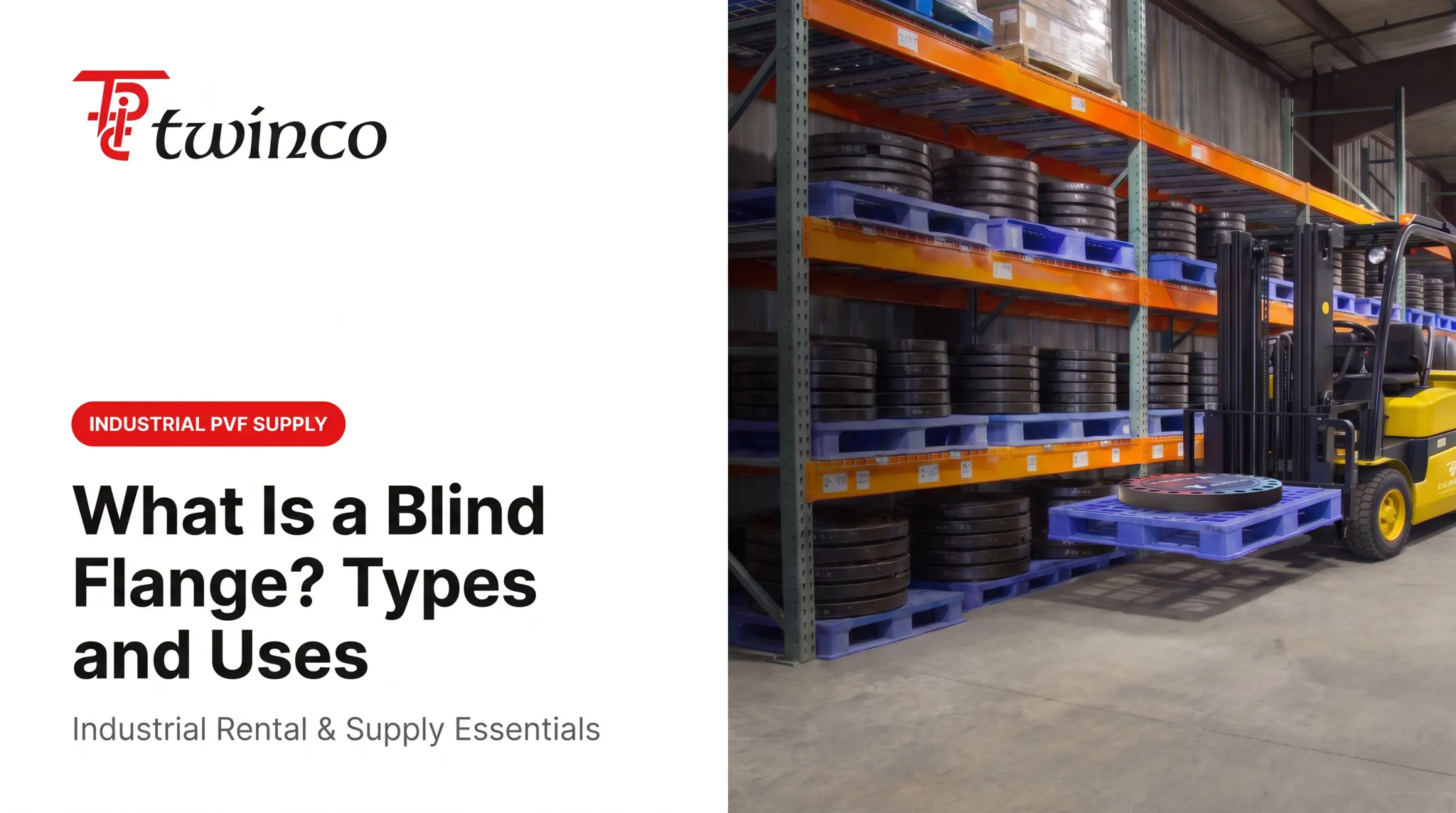
That's the gap Twinco Industrial fills for pipeline, petrochemical, and construction crews across the US: rental blind flanges in RF, FF, RTJ, and seal ring groove configurations, backed by matching gasket and bolting inventory.
If you need a replacement flange, a complete gasket-and-bolt assembly, or testing equipment on short notice, Twinco's team can help confirm specs and availability. Final approval always rests with your project's engineering authority.
RF and FF Gaskets, Compatibility, and Installation
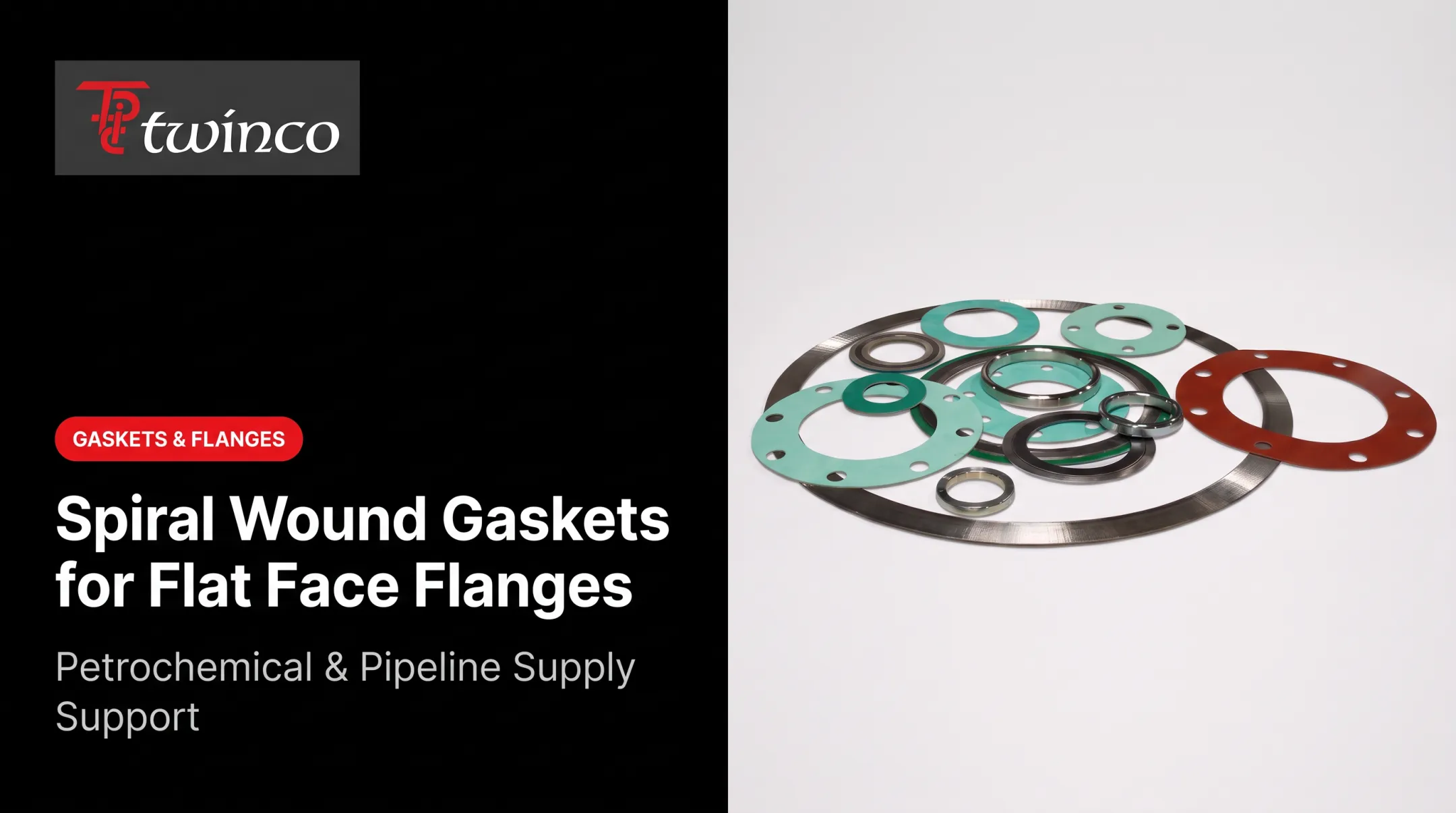
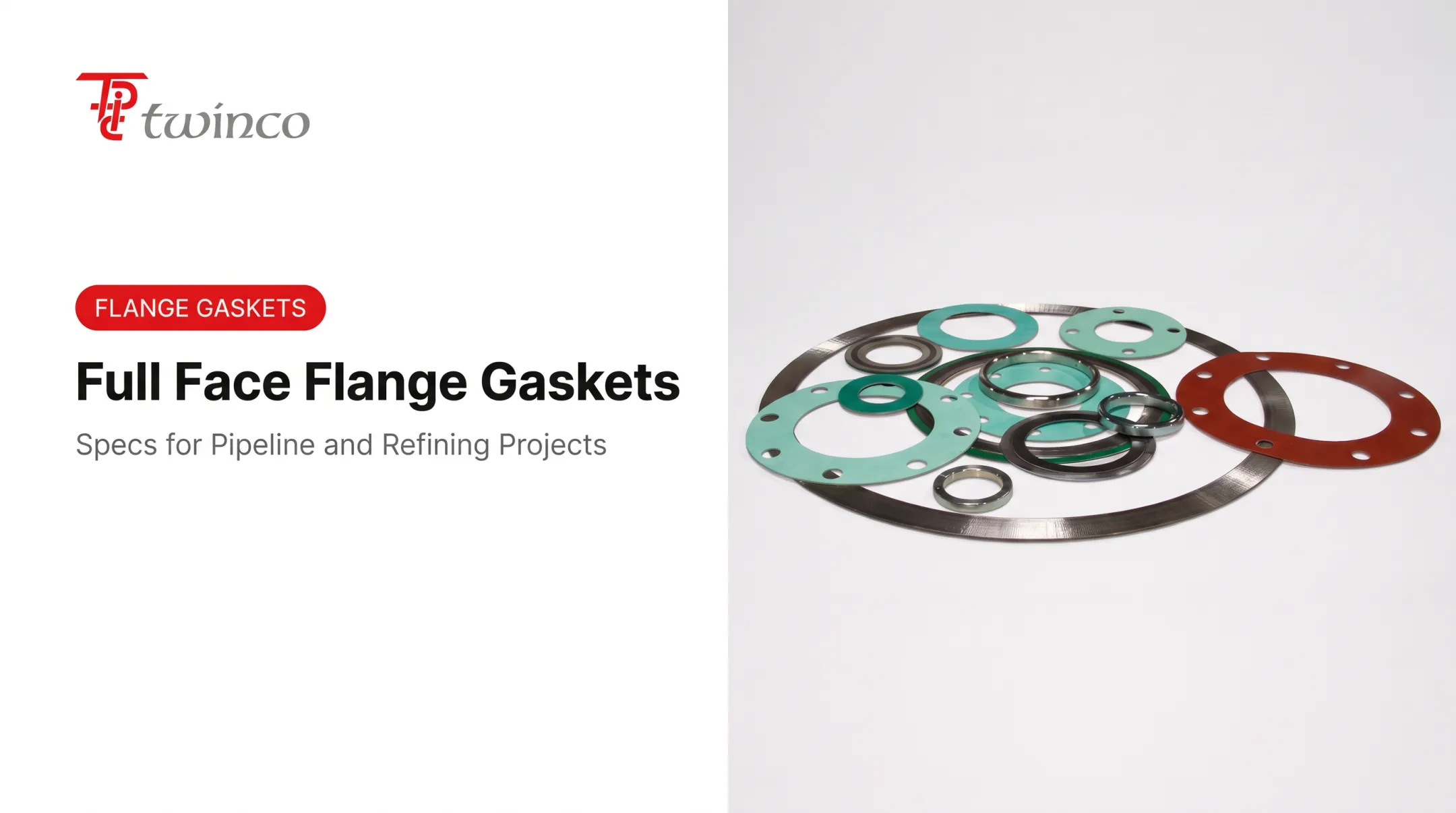
A ring gasket seats entirely within the raised area of an RF flange. A full-face gasket extends across the entire FF surface, including the bolt-hole region. Both designs require gaskets—the flange face alone, RF or FF, never creates a seal by itself.
Match gasket material to:
- Pressure and temperature rating
- Fluid chemistry and corrosivity
- Flange face finish and material
- The applicable gasket standard (ASME B16.20 for metallic, B16.21 for nonmetallic)
Common gasket options include:
- Spiral-wound with graphite or PTFE filler
- RTJ in oval or octagonal cross-sections for extreme pressure
- Compressed fiber or soft-cut for general service
RTJ gaskets typically run 1/2 inch through 36 inches in standard inventories.
Correct gasket choice only holds if the joint is assembled with the same care.
Installation controls that actually prevent leaks:
- Clean and inspect both flange faces before assembly
- Confirm alignment before inserting bolts
- Use a new, undamaged gasket—never reuse a compressed one
- Lubricate bolts consistently and tighten in a cross-bolt (star) pattern, in stages
Torque matters as much as gasket selection. A 2024 Valve World review of PVRC survey data found improper installation caused 26% of flange leaks, flange damage caused 25%, and gasket issues accounted for another 22%. Under-torquing leaves leak paths open. Over-torquing crushes the gasket or overstresses brittle flanges. Use the manufacturer or engineering torque spec, not a generic number pulled from memory.

Pre-commissioning checklist:
- Face compatibility confirmed (RF-to-RF or FF-to-FF, not mixed)
- Gasket dimensions match the bolt-hole pattern and sealing area
- Bolt grade and condition verified (ASTM A193 B7 studs with A194 2H nuts is a common hydrotest pairing)
- Flange alignment checked, no visible surface damage
- Torque applied in stages and recorded
- Pressure-test requirements confirmed before startup
Conclusion
Choose RF when the system calls for concentrated gasket seating and process-service performance. Choose FF when the design distributes load across the full face or protects a brittle mating component. Match the face type to the system design rather than treating either option as a default.
Face type is one piece of a safe connection. Confirm the standard, material, pressure class, gasket, bolting, and installation procedure before you buy or assemble anything. Bring in qualified engineering review whenever the connection is uncertain.
Frequently Asked Questions
What is the difference between a flat flange and a raised flange?
A raised face (RF) flange has its gasket seating surface elevated above the bolt circle. A flat face (FF) flange keeps that surface level with the bolt circle. This geometry changes gasket coverage and how bolt load distributes across the joint.
When should you use a flat face vs raised face flange?
Use RF for process piping and higher-severity service where concentrated gasket sealing is required. Use FF for brittle mating materials or systems designed around full-face gaskets. Project standards and service conditions always control the final call.
Can you use a flat face flange with a raised face flange?
Not by default. Direct RF-to-FF mating risks uneven loading and can crack brittle components. Check the applicable code and get sign-off from a qualified engineer before assuming any conversion is acceptable.
Do raised face flanges need gaskets?
Yes. RF flanges rely on a correctly specified gasket to seal. The raised surface alone doesn't create a seal. Gasket type, material, and dimensions must match the service conditions.
What is a raised face flange?
An RF flange has a raised seating ring above the bolt circle that concentrates gasket compression into a smaller area. It's common in process and industrial piping, though it isn't universally the "better" option.
What is the difference between a full face and a raised face flange gasket?
A full-face gasket covers the entire flange face, including bolt holes, and is used with FF flanges. A ring-style gasket sits only on the raised area of an RF flange. The flange design and governing standard determine which one applies.