Introduction
A soft rubber gasket does one job: it compresses into the gaps between two mating surfaces and blocks fluid or gas from escaping. That flexibility makes rubber gaskets useful on equipment covers, access doors, flange joints, and process piping during maintenance and turnarounds.
Here's the problem. A gasket that feels soft in your hand isn't automatically the right choice for your fluid, temperature, pressure, or flange type. Many maintenance teams assume "rubber" means "safe for anything." It doesn't.
This guide covers common elastomer types, how Shore hardness works, and the selection criteria that matter more than softness alone. It also covers installation practices that prevent early failure—and what causes gaskets to leak, swell, or blow out—so you can spot trouble before it becomes a shutdown.
Key Takeaways
- Gasket selection depends on chemical compatibility, temperature, pressure, and flange design, not softness alone.
- Silicone, EPDM, nitrile, and neoprene behave differently in service; always verify against manufacturer data sheets.
- Shore A hardness measures indentation resistance, not compressibility or service life.
- Confirm dimensions, documentation, and material certs before ordering any replacement gasket.
What Are Soft Rubber Gaskets?
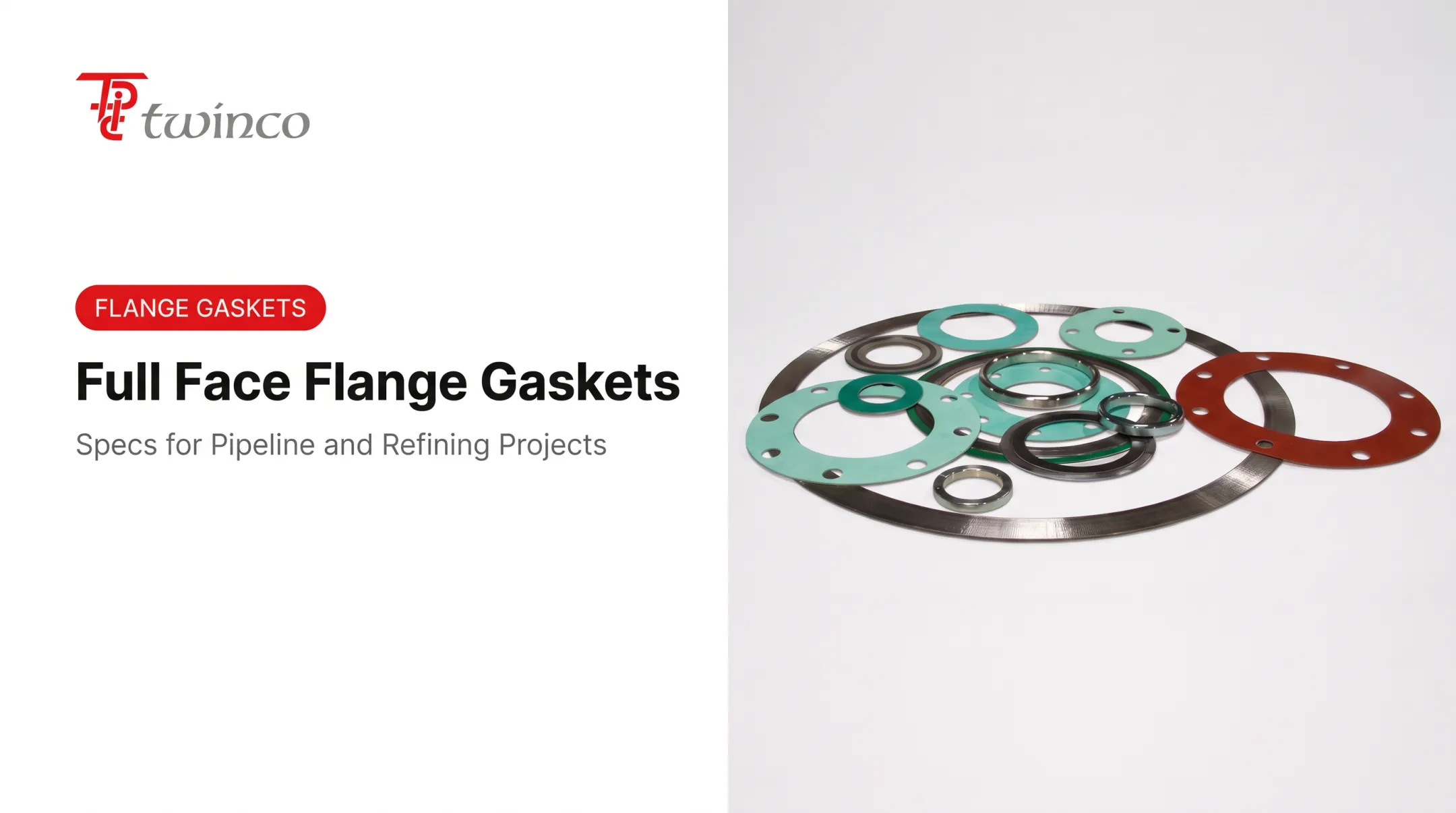
A soft rubber gasket is an elastomeric sealing component that deforms under bolt load and fills the microscopic imperfections between two flange faces. Solid metal surfaces are never perfectly flat, so the gasket has to do the work of closing those tiny gaps.
Soft rubber gaskets belong to a broader family known as non-metallic or "soft" gaskets. The Fluid Sealing Association's Gasket Handbook groups gaskets into three main categories: non-metallic (soft), semi-metallic, and metallic, with soft gaskets generally suited to low-to-medium fluid pressures, depending on the specific material.
Rubber is just one type of soft gasket. Others include:
- Compressed fiber: general-purpose, lower-cost service
- PTFE: broad chemical resistance
- Graphite: high-temperature service
- Foam: cushioning over pure sealing force
"Soft" doesn't mean interchangeable. A PTFE gasket and a nitrile rubber gasket may both feel pliable, but their chemical resistance and temperature ranges differ significantly.
Why Shore Hardness Matters (and Its Limits)
Durometer, measured on the Shore A scale for most soft elastomers, describes how much a material resists indentation. It's governed by ASTM D2240, the standard test method for rubber hardness.
Softer Shore A ratings generally conform more easily to rough or uneven flange surfaces.
ASTM itself notes that D2240 is an empirical control test: there is no simple link between the hardness number and seal performance under your pressure, temperature, and process fluid.

Soft Rubber Gasket Materials and Types
Different elastomers bring different strengths. No single compound is universally best—check the manufacturer's technical data sheet against your media, temperature, and pressure before ordering.
Common Elastomer Families
- Silicone — Wide temperature range; strong weathering, ozone, and UV resistance. Common in food, medical, and outdoor service. Confirm chemical compatibility and load before pressurized use.
- EPDM — Strong with water, steam, weathering, and many acids. Poor with hydrocarbons; oil and fuel exposure can degrade it quickly.
- Nitrile (Buna-N) — Go-to for oils and fuels in industrial service. Temperature range and chemical tolerance still vary by compound, so match the formulation to operating conditions.
- Neoprene — General-purpose weathering resistance; sometimes used against chemicals, oils, and fuels. Solid all-around choice, rarely the top pick for one extreme condition.
Solid, Sponge, and Foam Construction
Cell structure changes how a gasket behaves under compression:
| Construction | Behavior |
|---|---|
| Solid rubber | Dense, minimal cell structure, relies on compound properties for sealing |
| Open-cell sponge | Interconnected cells, compresses easily, but generally not resistant to oils or solvents |
| Closed-cell sponge/foam | Cells don't connect, blocking gas and liquid passage, often used for weatherproofing |
Form Factors: Sheet, Die-Cut, Molded, and O-Rings
The way a gasket is manufactured affects tolerance and sealing performance:
- Sheet-cut/die-cut gaskets — Cut from extruded or calendered stock; watch thickness tolerance so stacked variation does not starve compression
- Molded gaskets — Formed in a precision mold for tighter dimensional control
- O-rings — Circular cross-section, molded or cord-based; common for static and rotating seals
- Cord-based seals — Flexible stock cut to length for custom openings and field fit-up
Rubber gaskets are only one part of the joint. Flange face condition, bolt load and lubrication, surface finish, and joint movement all decide whether the seal holds in service.
How to Choose the Right Soft Rubber Gasket
Selecting a gasket correctly means working through several variables in order, not just picking a familiar material name off a shelf.
Start With the Service Medium
Identify exactly what the gasket will contact: liquid, gas, chemical, oil, fuel, steam, or particulate. Then check that against a manufacturer's chemical compatibility chart. Lab-tested compatibility data doesn't always translate directly to field conditions, so when in doubt, verify with the manufacturer or a gasket specialist.
Evaluate Operating Conditions
Consider:
- Minimum and maximum temperature (including short-duration excursions)
- Operating pressure and any pressure cycling
- Vacuum exposure
- Flow conditions and risk of rapid decompression or extrusion
Match Geometry to the Joint
Confirm inside and outside diameters, thickness, bolt-hole pattern, and flange face type. Full-face and ring-style gaskets aren't interchangeable, and dimensional standards like ASME B16.21 exist specifically to keep nonmetallic flat gaskets consistent with standard pipe flanges.
Check the Flange and Sealing Surface
Look for flatness, corrosion, damage, and alignment issues. An uneven flange gap may call for a more conformable material, but that's a decision based on measured conditions, not guesswork.
Weigh Hardness Against Compression Needs
A softer gasket conforms better to rough surfaces. Too soft, though, and it may extrude, deform, or lose sealing force under the wrong pressure or temperature. Match Shore hardness to flange condition and the compressive load the joint will see.

Ordering checklist:
- Material and Shore hardness
- Dimensions and thickness
- Temperature and pressure requirements
- Media compatibility documentation
- Applicable standards and certificates
- Quantity, delivery date, and replacement history
When media is hazardous, containment consequences are high, or specifications are unclear from legacy documentation, bring in a gasket specialist or engineering team before proceeding.
Twinco Industrial keeps rubber and non-metallic gasket materials, including EPDM, NBR, neoprene, and silicone, in ready-to-ship inventory alongside compatible flanges, studs, nuts, and valves.
When a testing window or shutdown schedule is tight, sourcing gaskets and mating hardware from one place cuts delays from waiting on a mismatched part.
Applications, Installation, and Failure Prevention
Soft rubber gaskets are used on equipment covers, access doors, enclosures, water systems, and moderate-demand piping joints. Pipeline and petrochemical support service is also common when material compatibility is verified.
Typical applications include:
- Equipment covers, access doors, and enclosures
- Water systems and moderate-demand piping joints
- Pipeline and petrochemical support joints with confirmed chemical compatibility
Correct installation keeps those joints sealed. Poor prep or uneven compression is what turns a soft gasket into a leak path.
Installation Basics
Before installing a replacement gasket:
- Isolate and depressurize the system completely
- Clean and inspect mating surfaces for corrosion or damage
- Remove the old gasket entirely and clear all residue
- Confirm dimensions match the new gasket before assembly
- Check alignment of the flange faces
Compression and Torque
Use the specified bolt pattern and torque sequence. Uneven tightening displaces the gasket and creates localized leak paths. Follow the flange or equipment manufacturer's torque instructions rather than tightening by feel.
Common Failure Modes
| Failure | Likely Cause |
|---|---|
| Leaking or weeping | Flange damage, misalignment, uneven or insufficient compression, wrong dimensions |
| Swelling, softening, cracking, hardening | Chemical attack, temperature exposure, ozone, aging, poor storage |
| Extrusion, tearing, blowout | Excessive compression, excessive clearance, pressure cycling, gasket too soft for the service |
DuPont's troubleshooting guidance notes that rapid depressurization after high-pressure service can cause dissolved gas to expand inside the elastomer, producing blisters or splits. Slow, controlled depressurization and correct groove design help prevent that kind of damage.

Storage and Replacement
Use new gaskets unless reuse is expressly approved. Keep elastomers away from heat, sunlight, ozone, and oils during storage. For critical applications, retain traceability documentation on every gasket installed.
Safety note: Follow your site procedures, equipment manuals, and applicable codes. This guide provides general information, not engineering approval for a specific installation.
Frequently Asked Questions
What are the types of gaskets?
Gaskets generally fall into three categories: soft/non-metallic, metallic, and semi-metallic/composite. Rubber gaskets are one subgroup within the soft/non-metallic category, alongside PTFE, graphite, and compressed fiber.
Which type of gasket is better: silicone or rubber?
Silicone is itself a type of rubber elastomer, so the choice is not silicone versus rubber. The better material depends on your temperature range, chemical exposure, pressure, and dimensional requirements.
What is a soft rubber gasket used for?
Soft rubber gaskets create conformable seals between mating surfaces on equipment, enclosures, and flanged piping joints. Suitability always depends on verifying compatibility with your specific service conditions.
How do I choose the right rubber gasket material?
Evaluate the fluid or gas involved, operating temperature and pressure, flange design, exact dimensions, and hardness requirements. Cross-check all of it against manufacturer compatibility data before ordering.
What is Shore hardness in rubber gaskets?
Shore hardness measures a material's resistance to indentation, with Shore A commonly used for softer elastomers. It's one data point among several, not a standalone measure of gasket suitability.