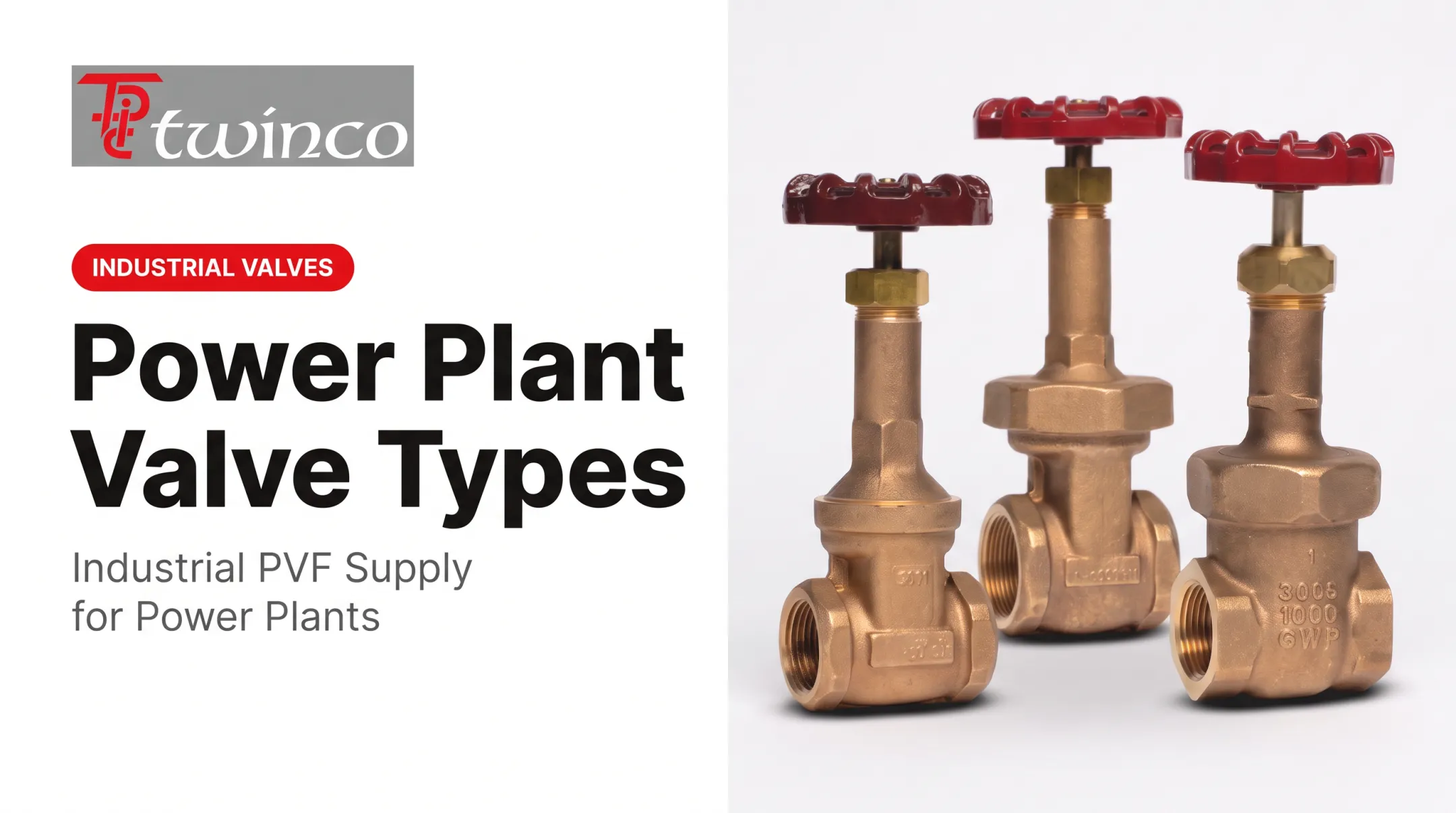
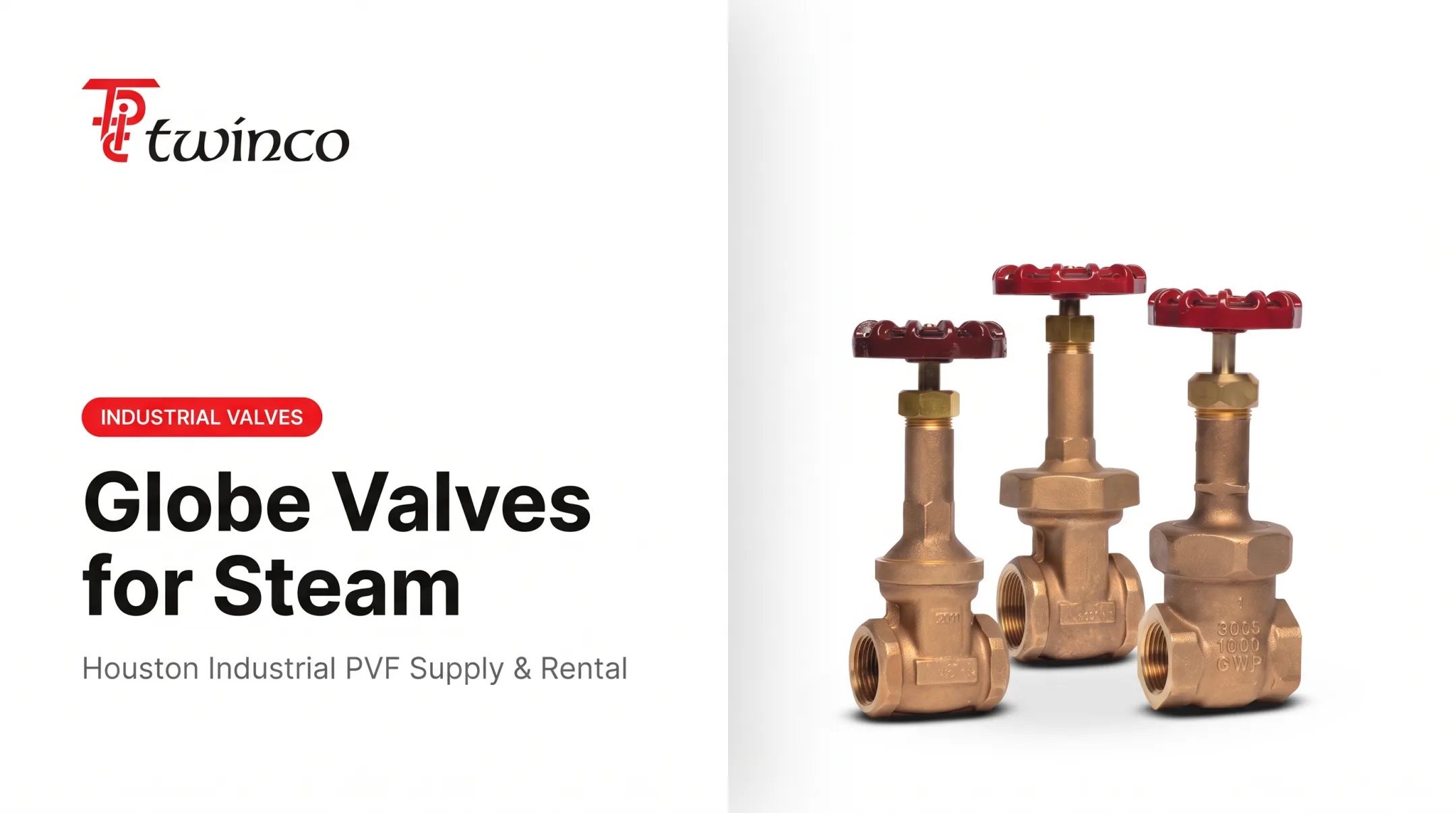
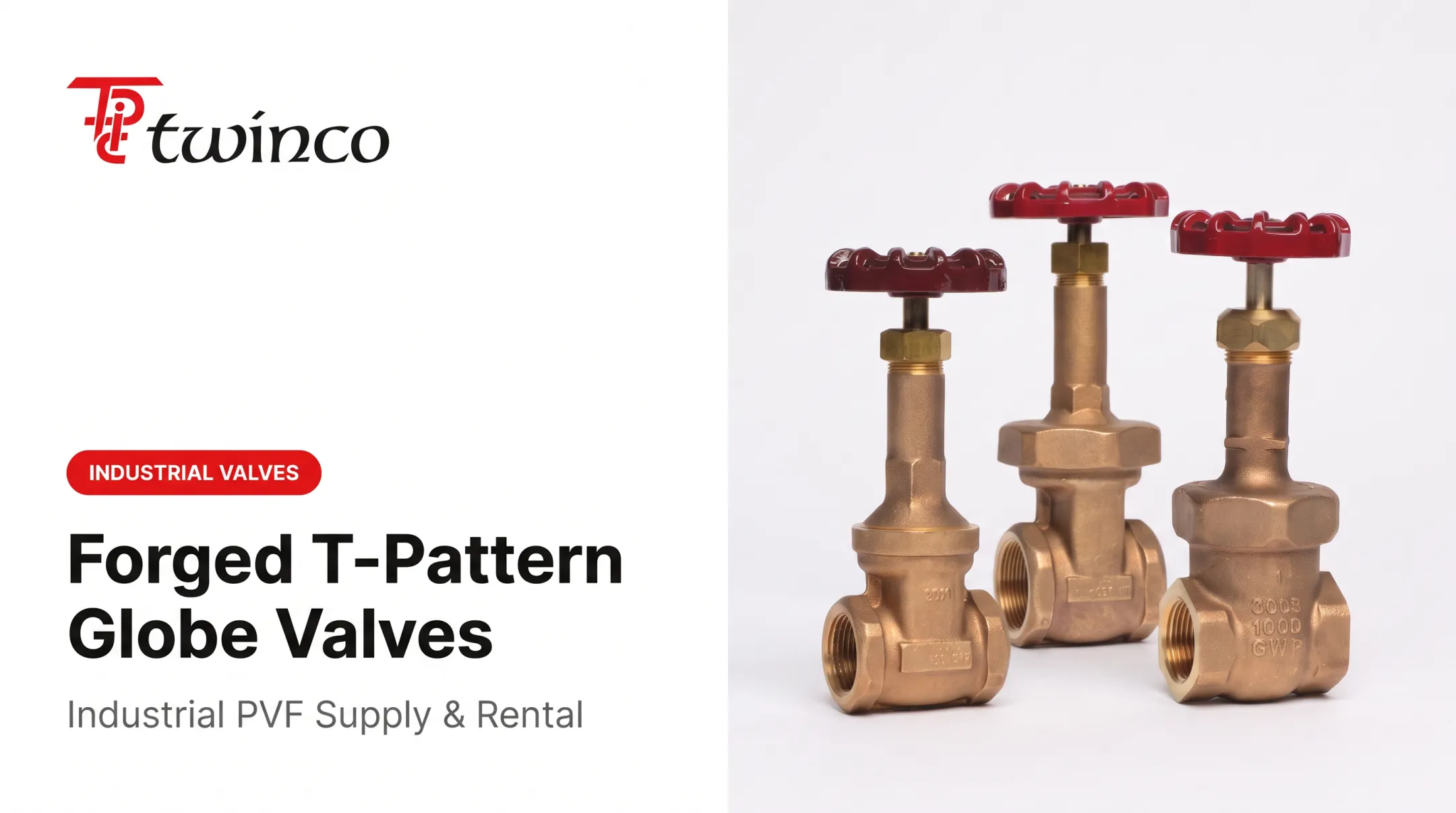
It's a linear-motion valve that uses a movable disc or plug pressing against a stationary seat. Turning the handwheel raises or lowers that disc, which opens or closes the flow path in small, repeatable increments.
That's the whole point of a globe valve. It's not designed to be the fastest valve on the line or the one with the least resistance when fully open. It's designed to throttle — to let an operator dial in exactly how much fluid moves through the pipe, and KITZ notes that fluid resistance actually increases when a globe valve is fully open because of its internal flow path.
This guide covers how globe valves operate, the three common body patterns, where they get used, how to select the right one, and what to check during routine maintenance.
Key Takeaways
- Globe valves excel at repeatable throttling, not unrestricted full-bore flow
- Choose disc, seat, trim, body pattern, and actuation to match the control duty—not just the line size
- Precise control costs more pressure loss and turbulence than most quarter-turn or gate valves
- Select on process conditions, pressure class, materials, and the standards your service requires
How Does a Globe Valve Work?
A globe valve is built from a handful of core parts: the body, bonnet, stem, disc or plug, seat, backseat, packing, and a handwheel or actuator. Each piece plays a specific role in regulating flow.
The operating logic is simple:
- Raise the stem — the disc lifts away from the seat, opening the flow path
- Lower the stem partway — the gap between disc and seat narrows, throttling flow
- Seat the disc fully — flow stops
That linear stem movement is what makes globe valves strong at incremental adjustment. Unlike a quarter-turn ball valve locked into open or closed, you can hold any position between the two.

Why Globe Valves Create More Pressure Drop
The internal flow path in a globe valve changes direction as it moves through the body, creating friction and turbulence even when the valve sits fully open. This is the tradeoff for precise control.
Engineers size globe valves using the flow coefficient, or Cv — a number that describes how much flow a valve passes at a given pressure drop. Emerson's sizing methodology relates flow, Cv, pressure differential, and specific gravity to determine whether a specific valve will hit the required control range. Getting this number wrong is one of the most common ways an otherwise good valve ends up underperforming.
Disc and Plug Designs Matter
Not all discs behave the same way:
- Conventional discs — short, tapered profile matched to the seat; good general-purpose closure
- V-port designs — offer a wider throttling range with finer control at low flow
- Needle-style plugs — suited to very precise, low-flow adjustment
Match the disc to the throttling range and control resolution the service actually requires.
Manual Valves vs. Actuated Control Valves
A handwheel is enough for occasional manual adjustment. Process systems that need continuous, automated regulation typically pair the valve with an actuator and positioner instead, letting a control system make micro-adjustments without an operator standing at the valve.
Caution: Running a globe valve partially open for extended periods raises local velocity and turbulence, which accelerates trim erosion over time. Always confirm partial-open service limits with the manufacturer before committing to that duty cycle.
Globe Valve Types and Key Components
Globe valves come in three standard body patterns. The right one depends on flow resistance tolerance, piping layout, and how much control precision the application demands.
T-Pattern Globe Valves
The T-pattern (sometimes called Z-pattern) is the classic globe valve shape, with the stem sitting perpendicular to the pipeline. It's the most widely used configuration for general-purpose throttling and isolation.
The tradeoff is a more indirect flow path than the other two patterns. You get familiar construction and easy maintenance access at the cost of higher pressure loss. Always verify application-specific pressure-drop expectations against current manufacturer data rather than assuming a universal figure.
Y-Pattern Globe Valves
A Y-pattern globe valve angles the stem and seat roughly 45 degrees off the pipeline axis. That angle creates a straighter flow path than the T-pattern design.
According to Emerson's Control Valve Handbook, the 45-degree stem inclination gives Y-pattern valves very little flow restriction. That is why they show up more often in high-pressure, continuously operating lines where reduced pressure loss matters.
Angle Globe Valves
An angle globe valve arranges its inlet and outlet at roughly 90 degrees, letting one component handle both flow control and a change in piping direction.
That can simplify layout and reduce the number of joints in a piping run. The final call still depends on flow direction and overall system design, not layout convenience alone.

Bonnet, Trim, and End-Connection Considerations
Beyond body pattern, three more decisions shape how a globe valve performs in service:
Bonnet type:
- Bolted bonnets for easier maintenance access
- Welded bonnets for higher pressure-temperature service
- Pressure-seal bonnets on larger, high-pressure valves where the seal tightens under system pressure
Trim materials: Trim includes the seat, disc, stem, and related closure components. Material selection has to account for:
- Corrosion resistance for the specific fluid
- Erosion resistance under high-velocity or particulate-laden service
- Temperature and pressure limits
- Chemical compatibility
End connections: Common options include flanged, threaded, socket-weld, and butt-weld. Match the connection type to the piping specification and any applicable project standards.
Twinco Industrial stocks globe valves in angle, straight, and stop-check configurations. Cast steel options run 2 inches through 48 inches across Classes 150 through 2500. Forged steel options cover ¼ inch through 2 inches in Classes 150 through 4500 for higher-pressure, higher-temperature service.
Globe Valve Applications
Globe valves show up wherever a process needs fine control rather than a simple on/off switch. Common services include:
- Steam and condensate systems
- Cooling water and utility loops
- Chemical processing and feed systems
- Power generation (boiler feedwater, turbine lube oil)
- Refining and petrochemical process lines
- Industrial water systems
That throttling capability maps to practical work: controlling steam flow, managing process-fluid rates, and reducing velocity at branch connections. Globe valves also regulate pressure-sensitive operations where a sudden full-open or full-closed swing would cause problems downstream.
For pipeline, petrochemical, and turnaround teams, material compatibility, pressure-temperature rating, and control requirements all need confirmation for each specific service. A valve rated for one chemical feed line won't necessarily suit another.
Globe Valve vs. Other Valve Types
No valve type wins across every application. The right choice depends on what the process actually needs:
| Valve Type | Best Suited For |
|---|---|
| Globe valve | Controlled throttling and modulation |
| Gate valve | Full-open or full-closed service where low resistance matters |
| Ball valve | Fast quarter-turn operation and tight shutoff |
| Butterfly valve | Compact, lightweight installations on larger lines |
Ball valves, for instance, use a rotating ball with a bore through it. A quarter-turn provides quick, dependable shutoff, but they don't offer the same fine-grained throttling range as a globe valve. If the job calls for isolation speed over control precision, choose a different valve type.
How to Select the Right Globe Valve
Start with the process itself, not the valve catalog. Identify:
- Fluid type, flow rate, pressure, and temperature
- Viscosity, corrosiveness, and solids content
- Fluid phase (liquid, gas, or mixed)
- Whether service is clean, abrasive, hazardous, or erosive
Match Pattern to Application
- T-pattern: general-purpose throttling with familiar maintenance
- Y-pattern: when reducing flow resistance is the priority
- Angle pattern: when the piping layout needs a 90-degree turn
Treat these as starting points, not fixed rules. Always verify against current manufacturer data for the specific valve line under consideration.
Size, Materials, Trim, and Standards
Line size alone doesn't determine correct valve size. Sizing inputs include:
- Required flow rate and allowable pressure drop
- Cv and shutoff differential pressure
- Required control range
Undersizing restricts flow. Oversizing can hurt control resolution at low flow rates.
Twinco stocks globe valve materials in carbon steel, stainless steel, brass, and alloy options to match a range of corrosive and high-temperature services.
Depending on the application, relevant standards may include ASME B16.34, API 602 or 623, MSS SP-42 or SP-80, and NACE MR0175 for sour-service materials. Only apply the standards that are actually relevant to the selected valve and service. Don't assume every project needs every certification.

Inspection and Maintenance Checks
Once installed, monitor:
- Leakage at the packing or seat
- Stem condition and closure torque
- Corrosion or unusual noise/vibration
- Actuator response time
- Signs of cavitation or erosion on the trim
Sourcing Support from Twinco Industrial
Specifying and sourcing globe valves on a live project timeline is a different problem than researching them. Twinco Industrial's valve specialists review application details, specs, and delivery requirements alongside the flanges, fittings, gaskets, pipe, and bolting most projects need to round out the order.
When requesting a quote, have this information ready:
- Valve type or pattern (T, Y, or angle)
- Nominal size and pressure class
- Body and trim materials
- End connection type
- Fluid, operating pressure, and temperature
- Actuation needs (manual or actuated)
- Quantity and applicable standards
- Delivery location and required documentation
Frequently Asked Questions
What type of valve is best for flow control?
Globe valves are commonly selected for precise throttling, but the best choice still depends on fluid conditions, control range, pressure drop tolerance, and shutoff needs.
How does a globe valve work to control fluid flow?
A stem moves a disc or plug toward and away from a stationary seat, varying the size of the flow opening. Fully seating the disc stops flow entirely.
What are the typical sizes of globe valves?
Globe valves are manufactured across a broad range of nominal pipe sizes, depending on body pattern, pressure class, and manufacturer. Twinco, for example, stocks cast steel globe valves from 2 to 48 inches and forged steel versions from ¼ to 2 inches.
Why use a globe valve instead of a ball valve?
Globe valves excel at throttling and fine modulation, while ball valves offer faster quarter-turn operation with lower flow resistance and strong full-open/full-closed shutoff. The choice depends on whether the application prioritizes control or speed.
What are the three types of globe valves?
T-pattern, Y-pattern, and angle globe valves. T-pattern is the common general-purpose design. Y-pattern lowers flow resistance with an angled seat, while angle valves throttle and turn flow 90 degrees.