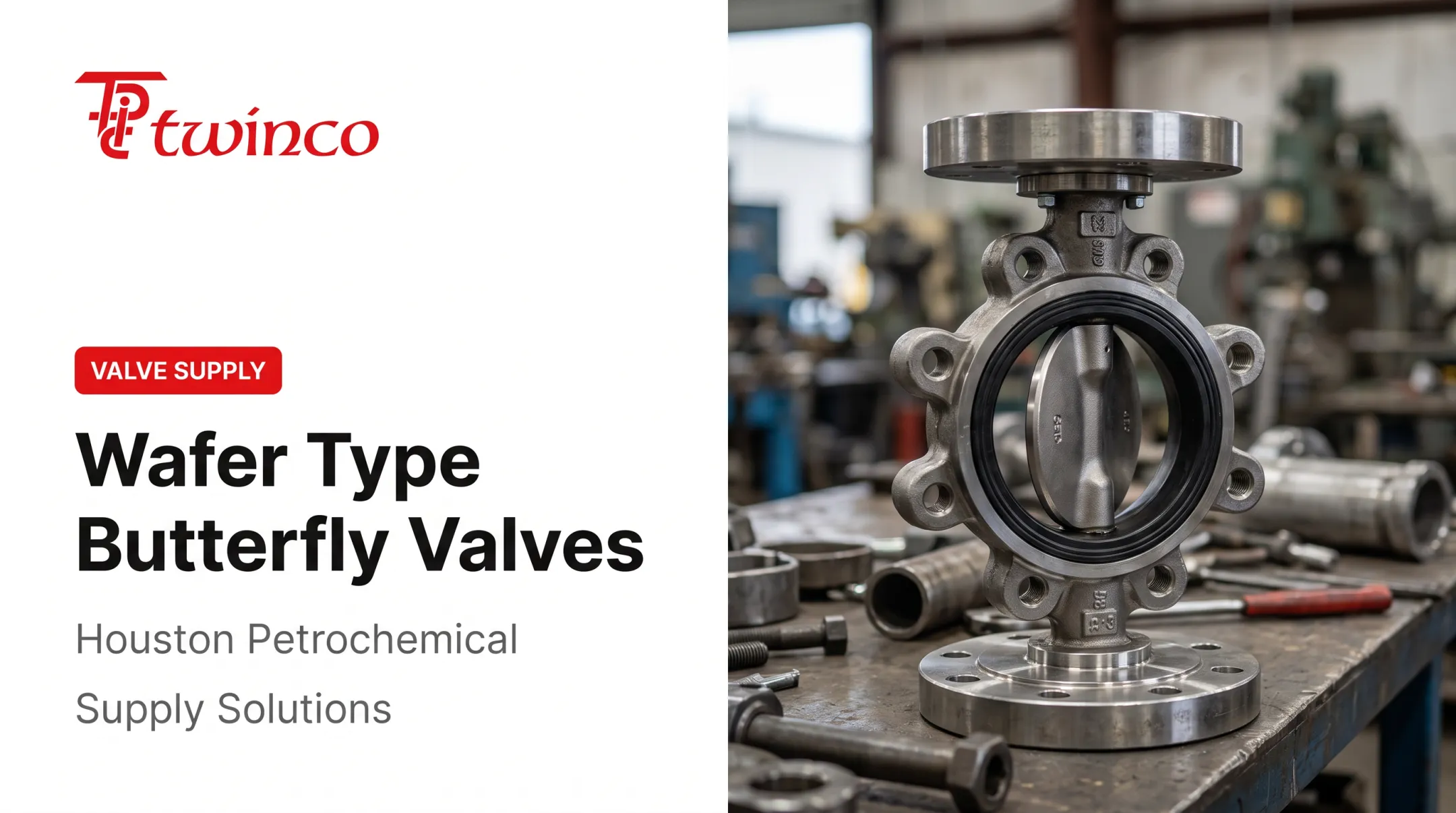
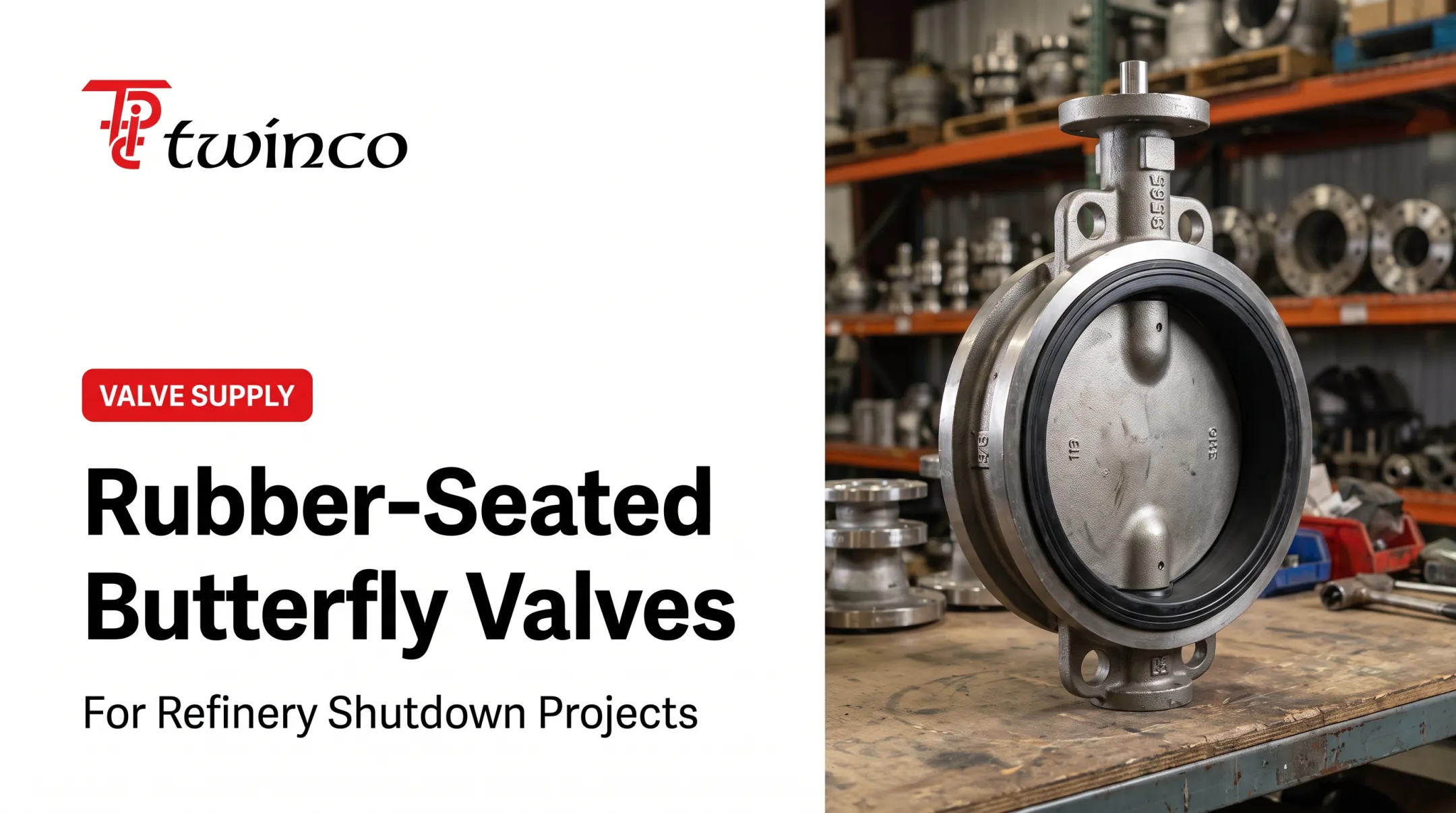
Introduction: Steam Control Butterfly Valves
Can a butterfly valve actually handle steam? It's a question that comes up on pipe racks, in maintenance shops, and during MTO reviews for new construction.
The short answer: sometimes, but only when the design, seat, and materials match your steam conditions.
Butterfly valves offer compact construction, quarter-turn operation, and high flow capacity in a lightweight package. But steam service isn't forgiving. Temperature swings, pressure spikes, condensate formation, and thermal cycling can open leak paths or damage seats on a poorly matched valve fast.
This guide walks through valve types suited to steam, the selection criteria that actually matter, common limitations, and what to gather before you order. If you're speccing a steam isolation or control point, you'll want this checklist in hand before you call a supplier.
Key Takeaways
- Match resilient-seat, high-performance, and triple-offset designs to their own steam temperature and pressure limits.
- Confirm steam condition, pressure class, and shutoff needs against the manufacturer data sheet before you buy.
- Use butterfly valves for isolation and general throttling; keep globe valves for precision flow control.
- Favor butterfly valves on larger steam lines for a compact footprint and fast quarter-turn shutoff.
Understanding Steam Control Butterfly Valves
A butterfly valve is a quarter-turn rotary valve. A disc mounted in the flow path rotates roughly 90 degrees to start, stop, or regulate steam movement. Manual gear operators, pneumatic actuators, or electric actuators drive that rotation depending on your system's automation needs and available utilities.
In steam systems, these valves typically serve two distinct duties:
- Isolation — stopping steam flow completely for maintenance, equipment separation, emergency shutdown, or rerouting.
- Control — adjusting steam flow to manage heating demand, process temperature, pressure drop, or equipment output.
Why Steam Is a Different Animal
Water and ambient-temperature applications give a valve some margin for error. Steam doesn't. These conditions stack up against valve internals at once:
- Elevated temperature and high pressure
- Thermal cycling and condensate formation
- High-velocity flow and water-hammer risk
A valve that performs fine on a cold-water line can fail quickly on a steam header.
There's no single "steam control butterfly valve." The term describes an application, not one universal product. The right design depends on whether you're dealing with saturated or superheated steam, your operating range, your shutoff expectations, and how much control precision you actually need.
Comparing the Three Main Designs
| Design Type | Seat Contact | Best Suited For |
|---|---|---|
| Resilient-seat (concentric) | Full rubbing contact, elastomer seal | Lower-temperature service within seat limits |
| Double-offset / high-performance | Reduced rubbing, offset seat | General isolation and moderate throttling |
| Triple-offset (metal seat) | Minimal rubbing, cam-like seating | High-temperature, frequent-cycling steam duty |
API 609 governs butterfly valve design and testing. It splits valves into two categories:
- Category A: typically concentric and rated by manufacturer CWP
- Category B: ASME Class and pressure-temperature rated with an offset seat
Seat rating can also run lower than body rating. Buyers who spec by body class alone often miss that gap.
Twinco Industrial stocks butterfly valves in lug, wafer, and double-offset configurations from ½" to 54", covering a wide range of these design categories.
Why Butterfly Valve Design Matters in Steam Service
Seat Material and Sealing Design
Resilient seats work fine in plenty of applications, but steam pushes them to their limits fast. Bray's own McCannalok resilient-seated line, for example, is rated from -62°F to 500°F (-52°C to 260°C), according to Bray's published technical data. That's a real number from one manufacturer's product line, not a universal ceiling for every resilient seat on the market.
Metal-seated designs, including high-performance and triple-offset configurations, are the stronger choice for hotter or more demanding steam duty. Before you assume any seat type is appropriate, check:
- The manufacturer's pressure-temperature chart at your actual operating temperature
- Fire-safe provisions, if required by your hazard analysis
- The valve's shutoff/leakage classification
Offset Geometry: Why It Matters
Concentric, double-offset, and triple-offset constructions handle seat contact differently:
- Concentric — the shaft sits on the pipe centerline, so the disc rubs the seat through the full rotation.
- Double-offset — shifting the shaft off-center reduces rubbing and wear during operation.
- Triple-offset — adds an inclined seat/seal cone centerline on top of the two shaft offsets. Emerson describes this third offset as eliminating rubbing between seat and seal entirely.

That geometry makes triple-offset valves attractive for high-temperature or frequent-cycling steam service. Offset design alone does not establish suitability. Evaluate the complete valve—body, packing, actuator, and documentation—as one package.
Materials, Pressure Class, and Temperature Derating
Body, disc, shaft, seat, packing, and fasteners all need to account for steam temperature, corrosion exposure, erosion risk, and thermal expansion. A few non-negotiables:
- Verify the valve's pressure-temperature rating at your actual operating temperature, not just the nominal pressure class stamped on the body.
- Confirm flange, gasket, and bolting ratings match the valve and the adjoining pipe.
- Don't assume a Class 300 valve performs the same at 600°F as it does at 200°F — it won't.
Twinco's valve inventory spans carbon steel, stainless steel, brass, and alloy materials, which helps narrow options once pressure-temperature limits are defined.
Actuation Requirements
Manual, pneumatic, and electric actuation each bring different considerations: fail-open or fail-closed logic, available plant utilities, response time, and cycling frequency.
Size the actuator from the manufacturer's torque data—not a generic rule of thumb—and account for:
- Breakaway and seating torque
- Differential pressure across the disc
- Packing friction under operating temperature
Selecting the Right Butterfly Valve for a Steam System
Start With Process Conditions
Before you look at a single catalog, nail down:
- Steam type — saturated or superheated
- Normal, minimum, and maximum pressure and temperature
- Design pressure and design temperature
- Line size, flow rate, pressure drop, and expected velocity
- Operating frequency and thermal/pressure cycle count
Define the Duty: Isolation vs. Throttling
Decide whether the valve needs to isolate, provide on/off control, handle emergency shutdown, or throttle continuously. That choice drives seat selection, actuator sizing, and how hard the valve works in service.
Partially open butterfly valves face increased velocity, erosion, noise, vibration, and seat wear. If continuous throttling is the plan, review the manufacturer's published control characteristics and any cavitation or flashing guidance for that specific product line.
Mechanical and Connection Details
Confirm these before ordering, not after the valve shows up:
- Nominal size, end connection, and flange standard
- Face-to-face dimensions and pressure class
- Body, disc, and shaft materials
- Seat construction and allowable installation orientation
- Fit within existing piping, supports, insulation, and actuator envelope
Layout Considerations
Installation layout affects real-world performance. Check:
- Upstream and downstream straight-run requirements
- Nearby reducers, elbows, strainers, and separators
- Drains, steam traps, and condensate takeoff points
Condensate management deserves special attention. Poor drainage upstream of an isolation valve commonly contributes to water hammer during startup and low-load operation.

Documentation to Request
Before purchase, ask your supplier for:
- Manufacturer data sheet and pressure-temperature chart
- Materials of construction
- Leakage/shutoff classification and test records
- Installation instructions and actuator torque calculations
- Maintenance guidance and applicable certificates
For safety-critical, high-energy, or automated steam applications, bring in an engineering review before you buy. Selecting by line size or price alone is how avoidable failures happen.
Applications, Limitations, and Operating Practices
Where These Valves Show Up
Steam control butterfly valves show up in:
- Steam distribution headers
- Process heating and heat exchangers
- Jacketed vessels
- Refinery and petrochemical systems
- Power-generation support systems
Triple-offset designs have a documented track record here too. Score Valves reports TRICENTRIC triple-offset butterfly valves installed for more than 25 years in turbine fuel-gas isolation and steam-extraction service for GE Power plants across the USA, Canada, Japan, China, Spain, and Algeria, in sizes up to 24" Class 600.
Advantages Worth Noting
- Compact face-to-face design fits congested pipe racks and equipment areas
- Fast quarter-turn operation supports rapid isolation and shutdown
- Lower weight and often lower installed cost than alternatives in larger line sizes
- Pairs well with pneumatic or electric automation when properly specified
Limitations to Respect
- Standard resilient seats may not hold up at higher steam temperatures
- Butterfly valves generally throttle less precisely than globe valves
- High-velocity steam, particulate contamination, and thermal cycling accelerate wear
- Wrong packing or actuator components can cause leakage even when the valve body itself is properly rated
Condensate and Water Hammer
Spirax Sarco explains that heat loss along steam mains causes condensate to form, and high-velocity condensate slugs can strike fittings and equipment hard enough to fracture piping and release live steam.
Opening isolation valves slowly during startup lets lying condensate clear through drain traps. That simple step protects both the valve and the system.
Commissioning and Maintenance Basics
Before placing any steam butterfly valve in service:
- Confirm correct flow direction and orientation per the manufacturer's instructions
- Protect the disc from impact and contamination during installation
- Verify flange alignment, gasket compatibility, and proper bolt torque
- Run required pressure, leakage, and functional checks

Once in service, watch for external leakage, abnormal torque, vibration, corrosion, and incomplete travel. Recurring leakage or rising operating torque means investigate the system—not keep tightening the packing gland.
Valve choice still has to match the duty. For fine flow regulation, a globe valve remains the better tool. For full-bore isolation, gate valves are often preferred because they leave an unobstructed path when open.
Sourcing and Specifying Steam Butterfly Valves
Delays in steam valve procurement almost always trace back to incomplete inquiries. Send your supplier the full picture upfront:
- Service conditions and line details
- Specifications, drawings, and actuation needs
- Delivery timeline and documentation requirements
That single step cuts the back-and-forth significantly.
Twinco Industrial has supported petrochemical, pipeline, construction, maintenance, and testing projects from its Houston, Texas base for over 45 years. The team works with customers across the US, Canada, and Mexico on both routine maintenance orders and urgent replacement needs.
A few ways Twinco supports steam valve sourcing:
- Valve specialists on staff: Shane Holmes reviews pipeline, petrochemical, and industrial valve applications and helps match specs to service conditions.
- Broad inventory: Butterfly valves stocked from ½" to 54" in carbon steel, stainless, brass, and alloy, plus specialty sourcing for hard-to-find configurations.
- Complete piping support: Flanges, fittings, gaskets, studs, nuts, and other PVF components to finish the steam piping job, not just the valve.
If you're specifying a steam isolation or control point, share your steam conditions, valve size, pressure class, connection details, and timing. Twinco's team can map a sourcing path. Call (713) 733-8946, or (832) 754-6831 for weekend and after-hours needs.
Frequently Asked Questions
What type of valve is best for steam?
It depends on temperature, pressure, control duty, line size, and shutoff requirements. A metal-seated butterfly valve may suit isolation on larger lines, while a globe valve fits precise throttling and a gate valve suits full-bore isolation.
What is the purpose of a butterfly valve?
A rotating disc within the flow path starts, stops, isolates, or regulates flow with a simple quarter-turn motion. The compact, lightweight design makes it a practical choice for larger-diameter piping.
Can a butterfly valve be used for high-pressure steam?
Some high-performance or triple-offset metal-seated designs are suitable, but only when their manufacturer-verified pressure-temperature ratings and materials match your specific system. Always confirm with the actual data sheet, not assumptions based on pressure class alone.
What is the difference between a double-offset and triple-offset butterfly valve?
Double-offset valves shift the shaft off-center to reduce seat rubbing. Triple-offset designs add an inclined seat cone that further cuts friction and wear, so they are often preferred for high-temperature or frequent-cycling steam service.
What information is needed to select a steam butterfly valve?
Gather these specs before you select:
- Steam type, pressure, temperature, and line size
- Flow rate, pressure class, and isolation or control duty
- Cycling frequency, connection type, and actuator needs
- Pressure-temperature charts and material certificates