Valves control, isolate, redirect, and protect the movement of process media throughout a generation facility. Get the wrong valve design or material into a critical line, and you're looking at leakage, pressure loss, reverse flow, equipment damage, or an unplanned outage.
This guide breaks down the common power plant valve types by function, walks through their real-world applications, and gives you a practical checklist for choosing the right one. Whether you're specifying equipment for a new project or replacing a failed component during a scheduled outage, the goal is the same: match the valve to the service, not the other way around.
Key Takeaways
- Valve selection starts with duty: isolation, throttling and control, pressure relief, or reverse-flow prevention.
- Gate, ball, and butterfly valves handle isolation duty; globe and control valves handle regulation.
- Check valves stop reverse flow; safety and relief valves protect boilers and pressurized systems from overpressure.
- Media, pressure, temperature, materials, actuation, and maintenance access decide whether a valve holds up in service.
What Are Power Plant Valves and Why Are They Important?
A power plant valve is a mechanical or automated device that starts, stops, redirects, regulates, or protects the flow of process media in generation equipment and piping systems. That's a broad definition on purpose, because valves show up everywhere in a plant.
You'll find them across:
- Boiler systems and main steam lines
- Turbine piping, feedwater, and condensate systems
- Cooling water loops and fuel supply lines
- Blowdown systems, auxiliary equipment, and sampling stations
Each of these systems has different pressure, temperature, and media characteristics, which means each one demands a different valve approach.
Design and function are two different things. A globe valve is a physical design commonly used for throttling. A gate valve is a physical design generally used for full-open or full-closed isolation.
Neither term tells you the whole story about how a valve should be applied. Isolation valves are meant to be operated fully open or fully closed for maintenance, emergency protection, and equipment isolation, according to Emerson's isolation valve documentation.
How Valve Performance Connects to Plant Outcomes
The right valve, installed and operated correctly, supports:
- Safe isolation during maintenance and turnarounds
- Stable pressure and temperature control across process systems
- Efficient fluid movement with minimal energy loss
- Equipment protection from surges, reverse flow, and overpressure
- Reduced leakage at seats, stems, and connections
When valves fail to do their job, the consequences are specific and costly. Seat and stem wear, erosion, cavitation, corrosion, water hammer, actuator malfunctions, and failure to achieve tight shutoff are all documented failure modes in power plant service.

Steam-valve leakage in particular can produce downstream temperature spikes, cracked piping, and water hammer, according to a 2023 Valve Magazine report on control valve erosion.
Any safety, efficiency, or reliability claim tied to a specific valve type deserves scrutiny. Confirm it against the manufacturer's documentation, the plant's engineering specifications, and applicable industry standards before it drives a purchasing decision.
Common Types of Power Plant Valves
Valve types aren't interchangeable. The right choice depends on whether the service calls for isolation, modulation, one-way flow, overpressure protection, or a specialized plant function.
Isolation Valves
Isolation valves stop or permit flow. They're built to operate fully open or fully closed, not to sit halfway open regulating a stream for hours at a time.
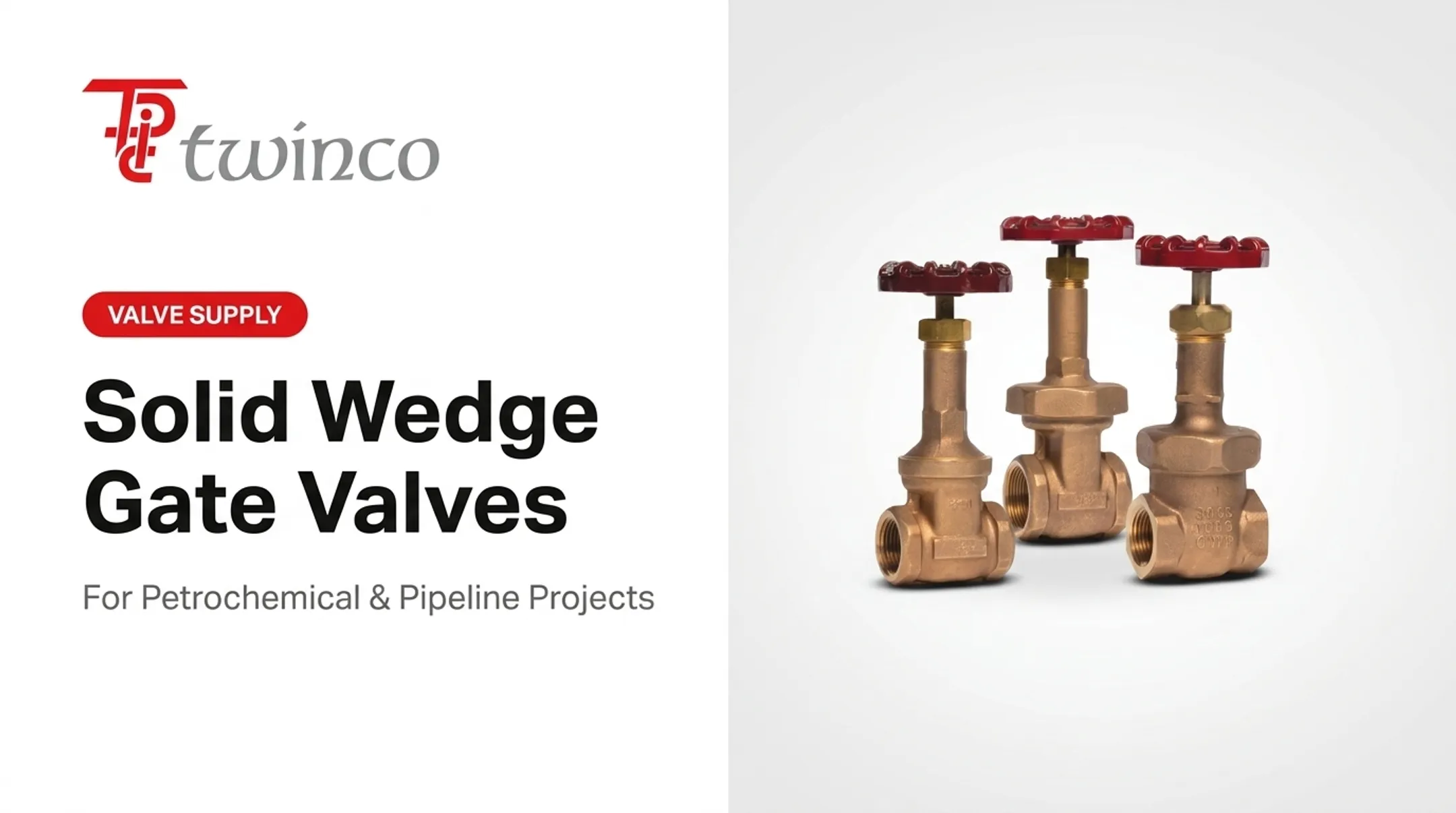
Gate valves use a sliding wedge or gate that lifts clear of the flow path when fully open, which means minimal resistance and pressure drop. That makes them a common choice for steam and feedwater isolation in high-temperature, high-pressure service.
Twinco Industrial stocks cast steel gate valves from 2 to 48 inches (Class 150 to 2500) and forged steel versions from ¼ to 2 inches up to Class 4500. One caution: throttling with a gate valve instead of isolating with it tends to damage the disc and seat and produce unstable, chattering flow.
Ball valves operate with a quarter-turn, giving rapid shutoff and compact actuation compared to multi-turn designs. Soft-seated ball valves suit cleaner, moderate-temperature services; metal-seated designs handle hotter, more demanding conditions.
Twinco offers ball valves from ½ to 24 inches, Class 150 to 1500, in full-port, reduced-port, and high-pressure configurations with floating, flanged, threaded, and socket-weld connections.
Butterfly valves bring a lightweight, compact footprint to large-diameter applications like cooling water, circulating water, and air handling systems, typically in lower-pressure service. Wafer, lug, high-performance, and triple-offset variations exist to address different sealing, connection, and service-life requirements.

Comparing isolation valve choices:
| Factor | Gate | Ball | Butterfly |
|---|---|---|---|
| Shutoff speed | Slow (multi-turn) | Fast (quarter-turn) | Fast (quarter-turn) |
| Pressure drop when open | Very low | Low | Moderate |
| Best line size range | Small to large | Small to mid | Large diameter |
| Typical pressure/temp | High | High (metal seat) | Lower |
Control and Throttling Valves
Control valves modulate flow continuously in response to a manual, pneumatic, electric, or digital signal, maintaining flow, pressure, level, or temperature at a target setpoint.
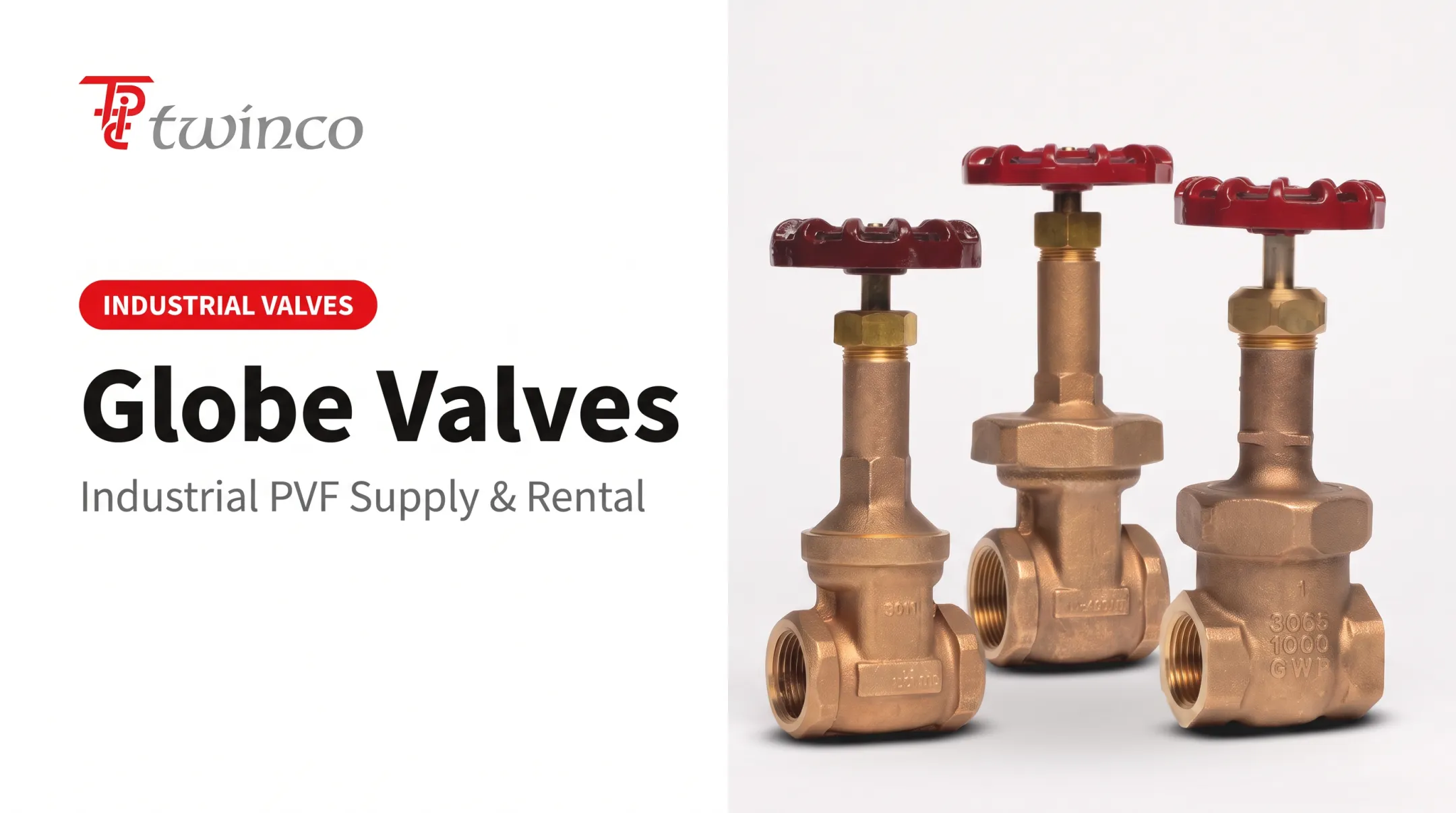
Globe valves use a plug-and-seat arrangement that supports precise throttling across a wide range of openings. The trade-off is a higher pressure drop and, in some cases, a larger actuator than a straight-through isolation design would need.
A complete control valve assembly includes the valve body, actuator, positioner, and feedback into the plant control system. Positioners automatically adjust actuator output to hold the commanded position.
Common actuator types include pneumatic diaphragm, pneumatic piston, electric, and electro-hydraulic designs, per Emerson's Control Valve Handbook. Sizing must reflect actual operating and design conditions, not just line size.
Common power plant control applications include:
- Feedwater regulation
- Deaerator level control
- Condensate pump recirculation
- Attemperator spray
- Sootblower header pressure
- Boiler feedpump recirculation
Severe-service concerns show up often in these applications. Cavitation and flashing occur when pressure drops below the fluid's vapor pressure and then recovers. Bubble collapse produces noise and surface erosion, and high pressure drop, high velocity, and frequent cycling make the damage worse.
Emerson's sizing guidance recommends targeting roughly 60% to 80% open at maximum required flow and at least 20% open at minimum flow. Travel below 10% or above 90% usually signals a sizing problem. When those conditions are present, specialist sizing and manufacturer review are worth the extra step.
Check, Safety, and Pressure Relief Valves
Check valves allow flow in one direction and close automatically when flow reverses, protecting pumps, turbines, and piping from backflow damage.
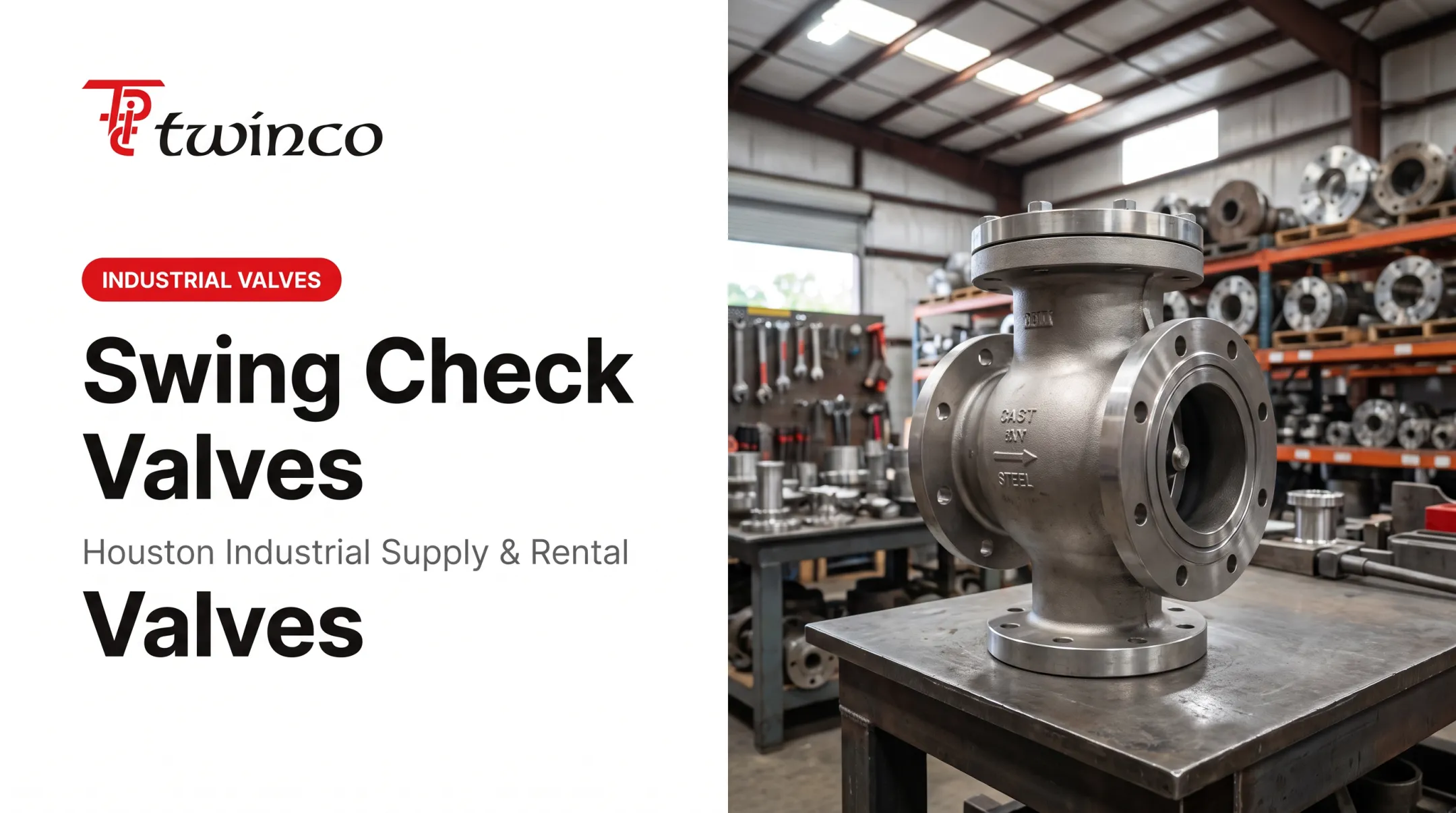
- Swing checks: Straight-through waterway and low pressure drop, but long disc travel makes them a weaker fit for rapid reversal or pulsating flow.
- Lift checks: Shortest disc travel and fast response to reversal, typically with higher pressure drop.
- Dual-plate checks: Compact backflow prevention; still size for reversal speed and water-hammer risk.
- Nozzle checks: Short-stroke, spring-assisted disc closes quickly as velocity falls, cutting water hammer while keeping pressure loss low.
Safety and pressure relief valves open automatically at a defined set pressure to protect boilers, steam drums, superheaters, and other pressure vessels from overpressure. That function is fundamentally different from normal flow control.
ASME BPVC Section I governs construction rules for power boilers. The National Board's inspection guidance is explicit: set pressure on a relief device's nameplate must never exceed the equipment's maximum allowable working pressure, according to the National Board's Pressure Relief Device Inspection Guide.
Verify set pressure, discharge routing, inspection intervals, and testing with qualified personnel. Terminology and code requirements vary by application, so confirm against current specs.
Specialized Power Plant Valve Applications
A handful of applications don't fit neatly into isolation, control, or check-valve categories.
- Turbine bypass valves divert steam around the turbine during startup, shutdown, load changes, or trip conditions, coordinating pressure and temperature as they do.
- Sootblower valves control the steam or air used to clear ash and deposits from boiler heat-transfer surfaces. These see frequent cycling and often require tight, Class V shutoff.
- Sampling and needle valves provide controlled, low-flow access for steam and water analysis, protecting sensitive instruments from process conditions.
- Boiler blowdown and drain valves remove concentrated water or drain equipment, often handling high-temperature fluid loaded with dirt, sediment, and scale.
These services usually need application-specific trim, body materials, and actuator sizing—not a generic catalog valve. When standard options fall short, Twinco Industrial sources specialty designs, high-alloy materials, and valves rated for extreme operating conditions.
How to Choose the Right Power Plant Valve
The right valve comes down to service conditions and required outcomes, not brand popularity or the lowest purchase price on the quote.
Start With the Valve's Function
Decide first whether the valve needs to isolate, throttle, prevent reverse flow, relieve pressure, divert flow, drain, blow down, or support sampling. Then establish the duty cycle:
- Occasional operation – opened or closed rarely, such as maintenance isolation
- Frequent cycling – regular on/off duty, like sootblower service
- Continuous modulation – ongoing throttling to hold a setpoint
- Automatic emergency response – must actuate reliably without operator input
Confirm Process and Mechanical Conditions
Gather the hard numbers before shopping for a valve:
- Line size and connection type
- Pressure class
- Operating and design pressure
- Operating and design temperature
- Flow rate, pressure drop, and fluid phase
Then look at the media itself. Is it clean, corrosive, abrasive, contaminated, erosive, flashing, or prone to cavitation? That answer drives your choice of body, trim, seat, gasket, and stem materials.
Also confirm whether the service demands bubble-tight shutoff, bidirectional flow capability, fire-safe construction, or emissions control. These project-specific requirements can eliminate otherwise suitable designs.
Match the Valve to Operation and Maintenance Needs
Actuation choice depends on more than preference:
- Manual – low-cycle, easily accessible locations
- Pneumatic – fast response, common where plant air is available
- Electric – precise positioning, good control-system integration
- Hydraulic – high torque for large or high-pressure valves
Factor in fail-open or fail-closed requirements, available utilities, and response time. Evaluate access for inspection, packing or seat replacement, actuator servicing, and isolation during maintenance.
Confirm face-to-face dimensions, end connections, and weight against the existing piping before anything ships.
Validate Documentation and Supply Requirements
Confirm the pressure-temperature rating, materials of construction, test requirements, inspection records, and traceability documentation before finalizing an order. Check the selection against the plant's engineering standards, procurement specs, process diagrams, and equipment data sheets.

This is where lead time becomes a real constraint. Power plant maintenance and operations teams often work against a fixed outage window, and a missing valve holds up the whole schedule.
Twinco Industrial supports these timelines with a deep stock of ball, gate, globe, check, wafer, and butterfly valves from ½ inch to 54 inches in carbon steel, stainless steel, brass, and alloy materials, plus specialty sourcing for oversized or hard-to-find components.
Availability and documentation should always be confirmed against your specific inquiry rather than assumed from a catalog listing.
What to Check Before Finalizing a Valve Type
A few final checks catch the mistakes that show up after installation, when they're far more expensive to fix.
- Confirm any gate, ball, or butterfly valve used for throttling is rated for partial-opening or continuous service. Standard isolation designs wear out fast under that duty.
- Size control valves from flow conditions, pressure drop, cavitation or flashing risk, and control range, not pipe diameter alone. Line-size selection is a common error per Emerson's control valve sizing guidance.
- Match materials to operating conditions, not design conditions alone. A cold-water grade may not hold up to high-temperature steam, corrosive chemistry, or abrasive media.
- Weigh total cost of ownership, not purchase price alone. Installation, actuation, inspection, spare parts, downtime exposure, and service life all factor in.
- Cross-check the valve tag against the P&ID, valve schedule, and equipment data sheet before ordering, along with required testing or certification documents.
Conclusion
Power plant valves boil down to four fundamental jobs: controlled flow, reliable isolation, reverse-flow prevention, and pressure protection. Gate, globe, ball, butterfly, check, control, safety, relief, and specialized valves each serve different operating conditions and different systems within the plant.
Verify service data, documentation, maintenance requirements, and total lifecycle costs before you finalize a selection. The valve that works perfectly in one line can fail fast in another with different pressure, temperature, or media conditions.
During a tight outage window, a supplier who stocks the right sizes and materials—and can source specialty components on short notice—makes the difference between staying on schedule and losing days to a part search. Twinco Industrial supports power plant maintenance teams with industrial valve inventory, specialty sourcing, and fast fulfillment when outage windows leave little room for delay.
Frequently Asked Questions
What types of valves are commonly used in power plants?
Power plants use five main functional groups: isolation, control, check, safety/pressure relief, and specialized valves. Common examples include gate, globe, ball, butterfly, check, turbine bypass, and sootblower valves.
What are the three types of control valves?
The three most common control valve designs in power service are globe, butterfly, and ball. Control valves can also be grouped by actuator type or trim configuration, depending on the application.
What does a power valve do?
A power plant valve controls, isolates, redirects, regulates, or protects the flow of steam, water, gas, fuel, or other process media within generation equipment and piping. This differs from any specific product branded as a "power valve" in other industries.
What are the five parts of a valve?
Most valves share five core components: the body, bonnet or cover, closure element (disc, plug, or ball), stem, and seat. Exact terminology and part count vary depending on the valve design and manufacturer.