Introduction
Opening a line that still has pressure in it can hurt someone. That's the practical problem block and bleed valves solve. They isolate a section of piping or equipment so maintenance, testing, or repair can proceed without unwanted flow or trapped pressure.
"Block and bleed" isn't one universal valve design. It's a combination of isolation and pressure-release functions that can be built from separate components or purchased as an integrated assembly.
This article covers how block and bleed arrangements work, common isolation valve types, selection criteria, typical applications, and the safety steps that turn a closed valve into a verified isolation boundary. The right configuration always depends on your fluid, pressure, temperature, piping design, and a qualified engineering review.
Key Takeaways
- Block valves stop or restrict flow; bleed valves release or verify trapped pressure between isolation points
- Double block and bleed is available as separate valves or one integrated assembly
- Choose by service conditions, materials, pressure class, and site standards
- A closed valve is not proof of isolation without proper verification procedures
What Is a Block and Bleed Valve?
A block valve stops flow and isolates a section of piping, equipment, or an instrument line from an upstream or downstream source. A bleed valve provides a controlled outlet for pressure or fluid trapped between two isolation points, with discharge routed according to site procedures.
Combine both functions and you get a way to stop process flow while checking for leakage, relieving trapped pressure, or confirming a maintenance section is actually depressurized before anyone breaks containment.
Block-and-Bleed vs. Integrated DBB
There's a real difference between "block and bleed" as a functional arrangement and a commercially supplied double-block-and-bleed (DBB) valve. According to API 6D, an integrated DBB valve is a single valve with two seating surfaces that seal against pressure from both ends, plus a way to vent the cavity between the seats.
A separate-valve train achieves the same functional result using two independent block valves and a bleed connection.
Why One Closed Valve Isn't Always Enough
A single closed valve may not deliver the isolation you need. Common reasons include:
- Seat leakage past a closed valve
- Pressure rebuild from thermal expansion
- Valve type mismatched to the service
That's why many facilities specify two barriers with a monitored bleed point in between.
Closing valves is not the same as verifying zero energy. Isolation is a mechanical position. Verification is a documented process that confirms pressure has actually been released and isn't returning, following an approved permit-to-work procedure.
How Does a Double-Block-and-Bleed Configuration Work?
The basic sequence is straightforward:
- An upstream block valve shuts off incoming flow.
- A downstream block valve isolates the maintenance section from the opposite direction.
- A bleed valve between them releases or monitors pressure trapped in the cavity.

Operators use the bleed path to check for leakage across either isolation valve or confirm pressure isn't building back up. The bleed outlet still needs to discharge to an approved, safe destination — it's a diagnostic and release point, not automatically a safe-to-open connection.
Separate Valves vs. Integrated Assemblies
| Arrangement | How it works | Trade-off |
|---|---|---|
| Separate valve train | Two independent block valves plus an intermediate bleed connection | More flanged or welded joints; easier to replace one valve without disturbing the whole assembly |
| Integrated DBB | Two seats and a cavity bleed in one body | Smaller footprint and less weight; tighter access to seats and bleed for maintenance |
| Bypass loop | Diverts flow around the isolated section rather than depressurizing it | Keeps the process running, but doesn't fully depressurize the work area |
A bypass loop is worth considering when process continuity matters more than a fully de-energized work zone. Just don't confuse the two: bypassing flow keeps the system live elsewhere, while a DBB arrangement is built to depressurize a specific section for work.
Before finalizing any configuration, walk through these questions:
- Where exactly is isolation needed?
- Can the process tolerate a shutdown?
- Where could trapped fluid collect?
- How is the bleed routed, and how will pressure be verified?
Then check the answers against the process hazard analysis, P&IDs, manufacturer instructions, and your company's isolation standard.
Common Types of Block Valves
Several valve families get used for isolation duty. None of them is universally "the safe one." Suitability comes down to pressure class, temperature, media compatibility, and the specific service — not the valve name alone.
| Valve type | Operation | Isolation role | Typical fit |
|---|---|---|---|
| Ball | Quarter-turn | Fast, positive shutoff | General isolation across many services |
| Gate | Multi-turn | Full-open flow path, minimal pressure drop when open | Isolation where straight-through flow matters |
| Globe | Multi-turn | Throttling and flow control | Regulation more than positive isolation |
| Plug | Quarter-turn | Compact rotary shutoff | Space-constrained isolation points |
| Butterfly | Quarter-turn | Compact rotary shutoff | Larger lines, moderate pressure |
| Needle | Multi-turn | Fine flow adjustment | Small-bore isolation or bleed service |
Ball and Gate: The Common Isolation Pair
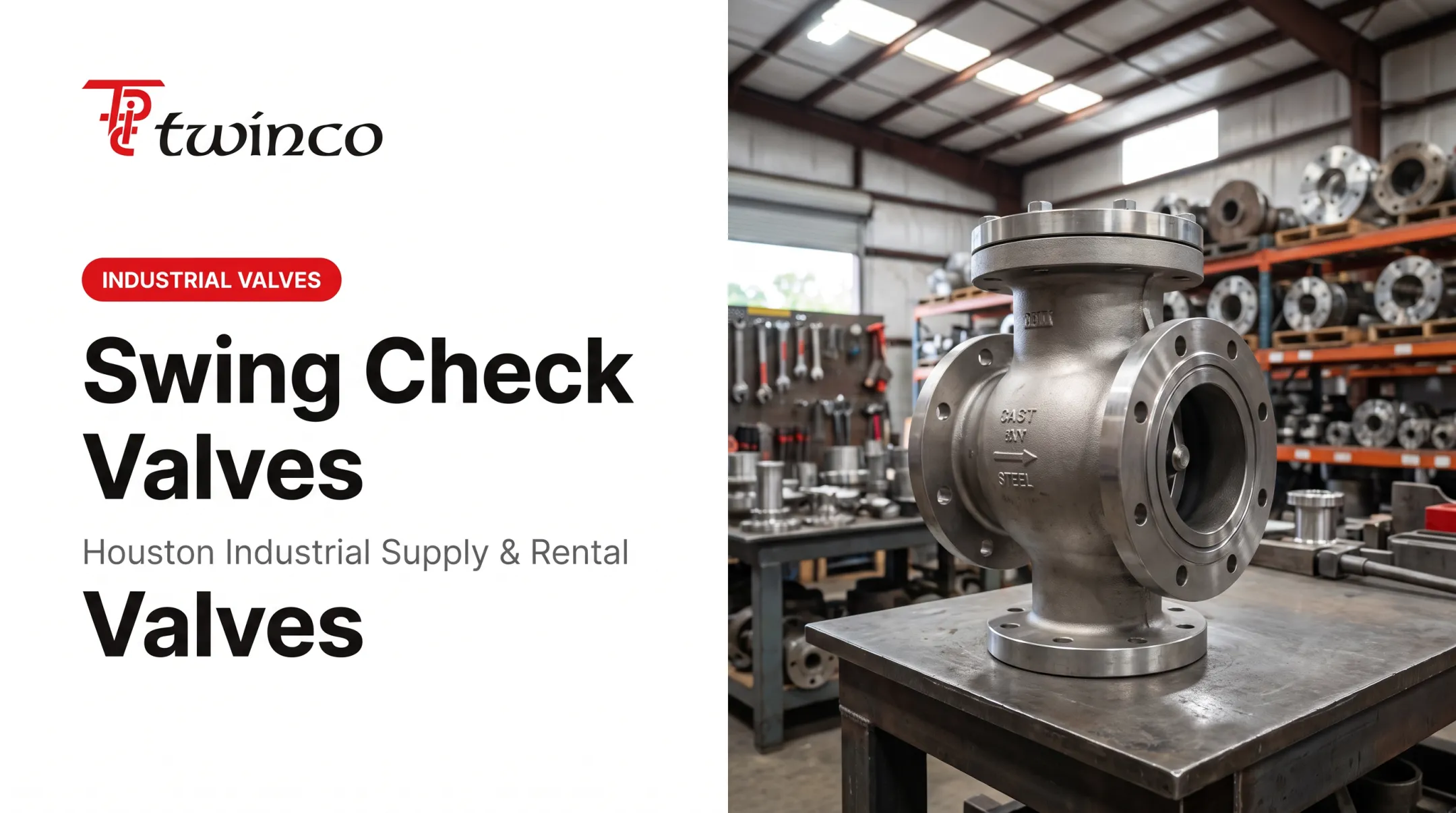
Ball valves use a rotating ball with a bore through it. A quarter turn takes you from full flow to full shutoff. Gate valves take multiple turns to raise or lower a gate out of the flow path, and their retracted-gate design gives minimal pressure drop when fully open.
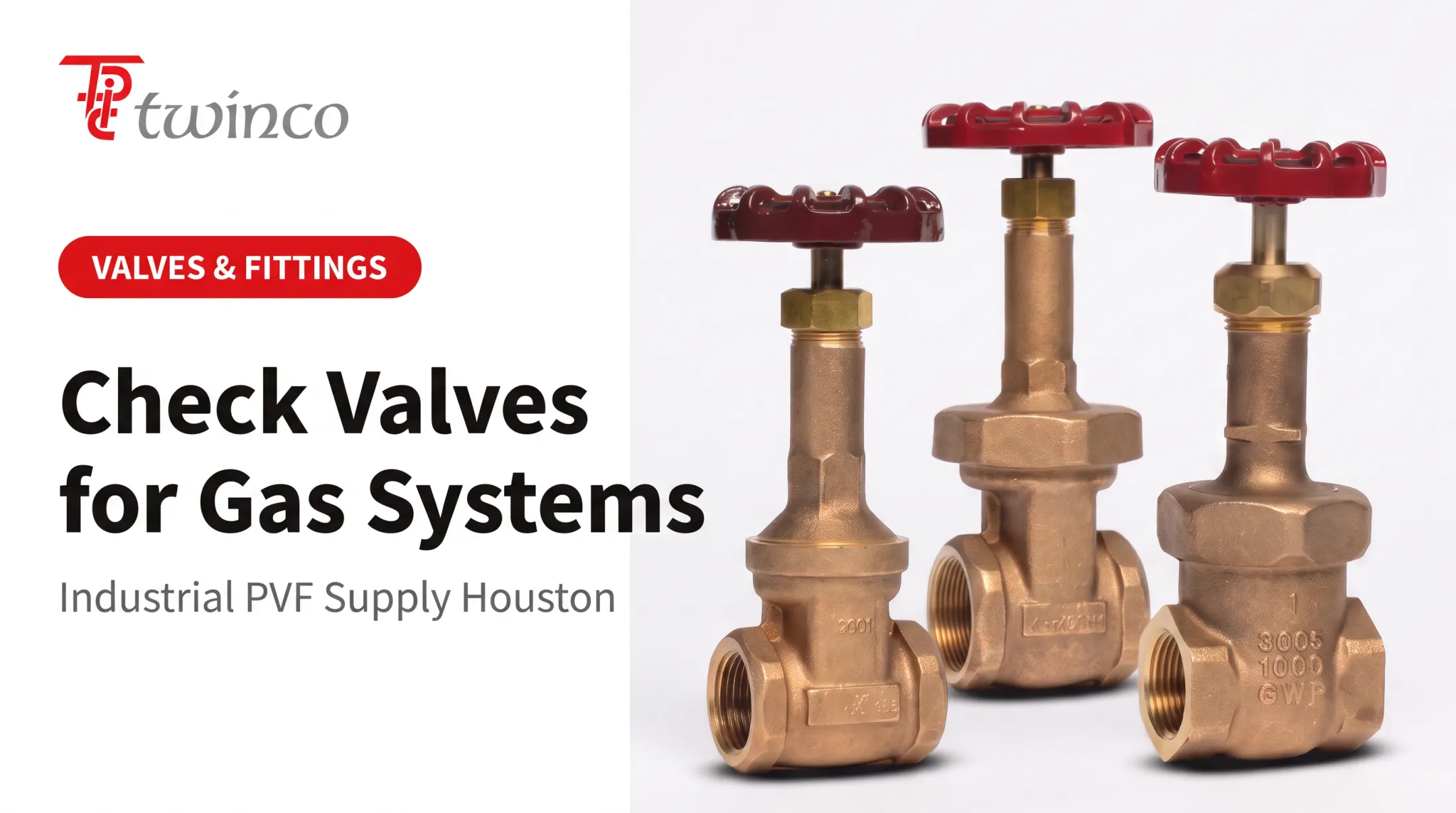
Twinco Industrial stocks cast steel gate valves from 2 inches through 48 inches (Class 150–2500) and forged steel gate valves from ¼ inch through 2 inches (Class 150–4500), covering most refinery and pipeline isolation needs.
When Globe or Needle Valves Make Sense
Globe and needle valves are built for controlled throttling, not necessarily positive shutoff. A valve designed for gradual flow adjustment is not automatically the right block valve for an isolation boundary. When a globe valve appears in a DBB train, it is usually there for a process reason, not as a default stand-in for a gate or ball valve.
Plug and butterfly valves cover compact rotary isolation where line size or limited space rules out a heavier gate valve:
- Butterfly valves: lug, wafer, and double-eccentric designs
- Size range: ½ inch to 54 inches
- Plug valves: lubricated designs for tight spaces
- Materials: carbon steel, stainless steel, brass, and high-alloy options
Twinco stocks these configurations for plant, pipeline, and turnaround isolation work.
How to Select the Right Block and Bleed Valve
Start with the service conditions before you look at a single catalog page. Work through conditions, materials, fit, isolation level, and documentation in that order so the valve matches the line—not just the catalog description.
Identify Service Conditions First
Confirm the basics:
- Process medium and phase (liquid, gas, slurry)
- Corrosiveness and toxicity
- Solids content
- Operating and design pressure
- Temperature range
- Expected flow conditions
Check Material Compatibility
Every wetted and load-bearing part has to hold up against the fluid you're isolating:
- Body and trim
- Seat and stem
- Seals and gaskets
- Bolting
A valve rated for one chemical service can fail fast in another. Sour service (NACE MR0175/ISO 15156) and high-temperature duty need a closer look at material certs.
Confirm Mechanical Fit
Confirm the valve will physically work in your piping run:
- Line size and pressure class
- End connection and face-to-face dimensions
- Available space and orientation
- Bleed outlet access
- Manual versus automated operation
Match the Isolation Objective
Your required isolation level determines the architecture:
- Single block valve: lower-risk, non-critical isolation
- Two block valves with a bleed: stronger isolation for maintenance or testing
- Bypass configuration: when process continuity outweighs full depressurization
- Integrated DBB valve: compact footprint with built-in double-barrier design
Documentation and Procurement Checks
Before ordering, verify:
- Datasheets and pressure-temperature ratings
- Test requirements and leakage class (where specified)
- Material documentation and traceability
- Manufacturer installation instructions
Skipping this step is how the wrong valve ends up on a critical line.

When the service is hazardous, the isolation boundary is safety-critical, or your project spec calls for a specific DBB design, bring in a qualified valve specialist.
Twinco Industrial's inside sales team, including a dedicated valve specialist, helps customers identify available ball, gate, globe, and butterfly valves by size, material, pressure class, and delivery timeline. Reach out at (713) 733-8946 or info@twincoindustrial.com to talk through project specs.
Where Are Block and Bleed Valves Used?
Block and bleed arrangements show up anywhere a section of a pressurized system needs to come out of service temporarily.
Process and Plant Applications
Isolation arrangements are standard across:
- Refineries and petrochemical plants
- Chemical processing units and pipelines
- Power generation facilities
Teams use them for inspection, repair, calibration, testing, and equipment replacement. Instrumentation work is especially common: isolating transmitters, gauges, sampling points, filters, and manifolds, with the right arrangement varying by connection type.
Pipeline and Turnaround Work
Pipeline and construction projects rely on isolation for tie-ins, pressure testing, commissioning, and sectional work, all governed by an approved test and isolation plan. Turnaround and shutdown teams evaluate DBB arrangements specifically to reduce pressure exposure and keep work inside a planned outage window.
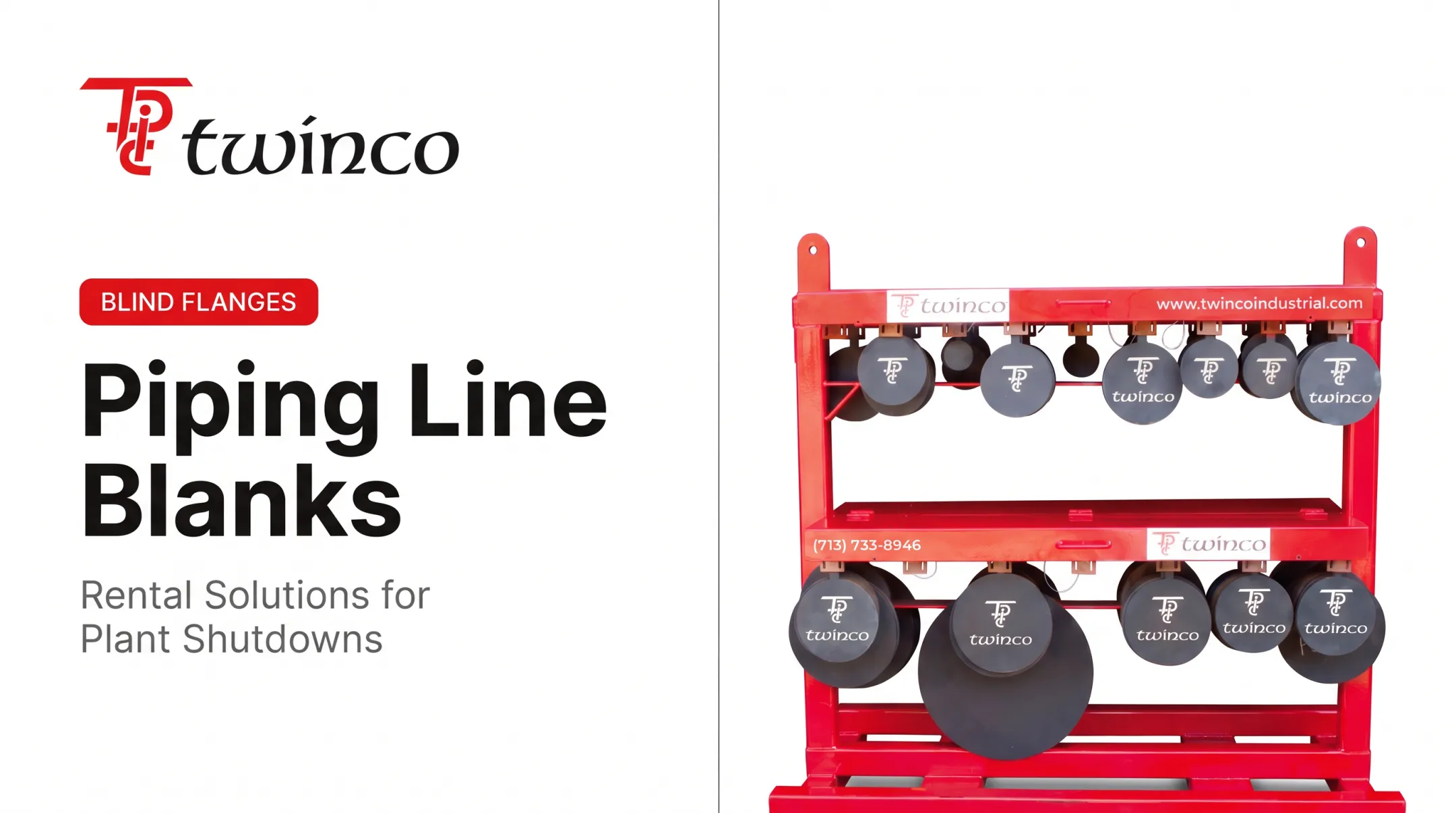
Testing contractors creating a controlled test boundary often need complementary equipment alongside the valves themselves: blind flanges, gaskets, bolting, and pressure-testing accessories that match the approved procedure.
Twinco Industrial supplies and rents that full range of piping components and testing gear, including rental blind flanges from ½ inch to 72 inches, plus studs, nuts, gaskets, and chart recorders for pressure and temperature documentation. The company supports maintenance, testing, construction, and isolation projects across the USA, Canada, and Mexico.
Key Safety and Installation Considerations
Closing a block valve is one step in an isolation procedure, not the whole thing. A complete isolation plan addresses shutdown sequence, lockout/tagout, draining or venting, bleed routing, pressure verification, and formal authorization to break containment.
Hazards to Plan For
- Trapped pressure and hazardous or toxic media
- Hot fluids and thermal expansion
- Flammable discharge at the bleed point
- Hydraulic shock
- Incorrect valve orientation
- Unverified or miscalibrated gauges
The CSB's guidance on preparing equipment for maintenance notes that simply closing valves ranks as the least effective isolation method, since valves can leak. DBB arrangements, blinds, or physical disconnection offer stronger protection.
Verification Isn't Optional
OSHA's lockout/tagout standard requires authorized employees to verify isolation and de-energization before work begins. Route the bleed outlet to an approved collection, recovery, flare, drain, or vent system, not just wherever is convenient.

Installation quality matters as much as valve selection. Before the system returns to service, confirm:
- Proper support and torque
- Cleanliness and gasket selection
- Correct orientation and accessibility
- Functional testing
This article is a starting point, not a substitute for your facility's permit-to-work system, isolation plan, manufacturer instructions, or applicable codes.
Frequently Asked Questions
What is the function of a block valve?
A block valve stops or restricts flow to isolate a section of piping, equipment, or instrumentation. Closing it alone does not verify zero pressure; that requires a separate confirmation step.
What is the purpose of a block and bleed valve?
The block valves isolate flow from both directions, while the bleed valve releases or monitors pressure trapped between those two isolation points. Together, they create a checkable isolation boundary.
When should you use a double block and bleed valve?
DBB arrangements suit situations needing stronger isolation, pressure verification, maintenance, or testing, especially where hazardous process conditions are involved. Always confirm against your site's engineering and safety procedures.
What is the difference between a block valve and a gate valve?
"Block valve" describes an isolation function, while "gate valve" names a specific valve design. A gate valve can serve as a block valve in the right service, but so can a ball, plug, or butterfly valve.
What is the purpose of a bleed valve?
A bleed valve gives operators a controlled path to release, drain, vent, or monitor pressure trapped between two isolation points. It's also used during hydrotesting to vent trapped air before pressurization.
What are the different types of block valves?
Common types include ball, gate, globe, plug, butterfly, and needle valves. Service conditions, pressure class, and project specifications determine which one actually fits your application.