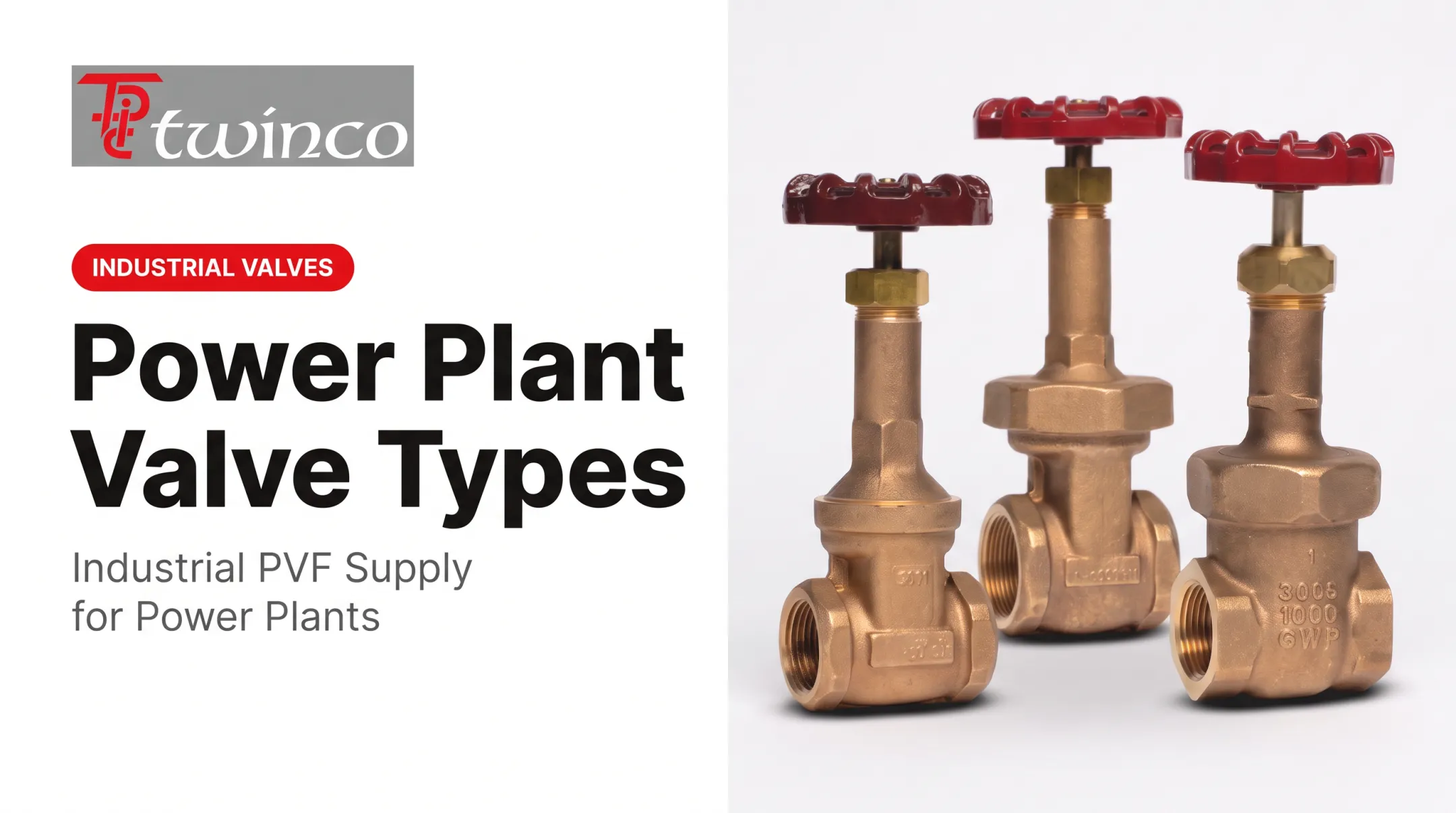
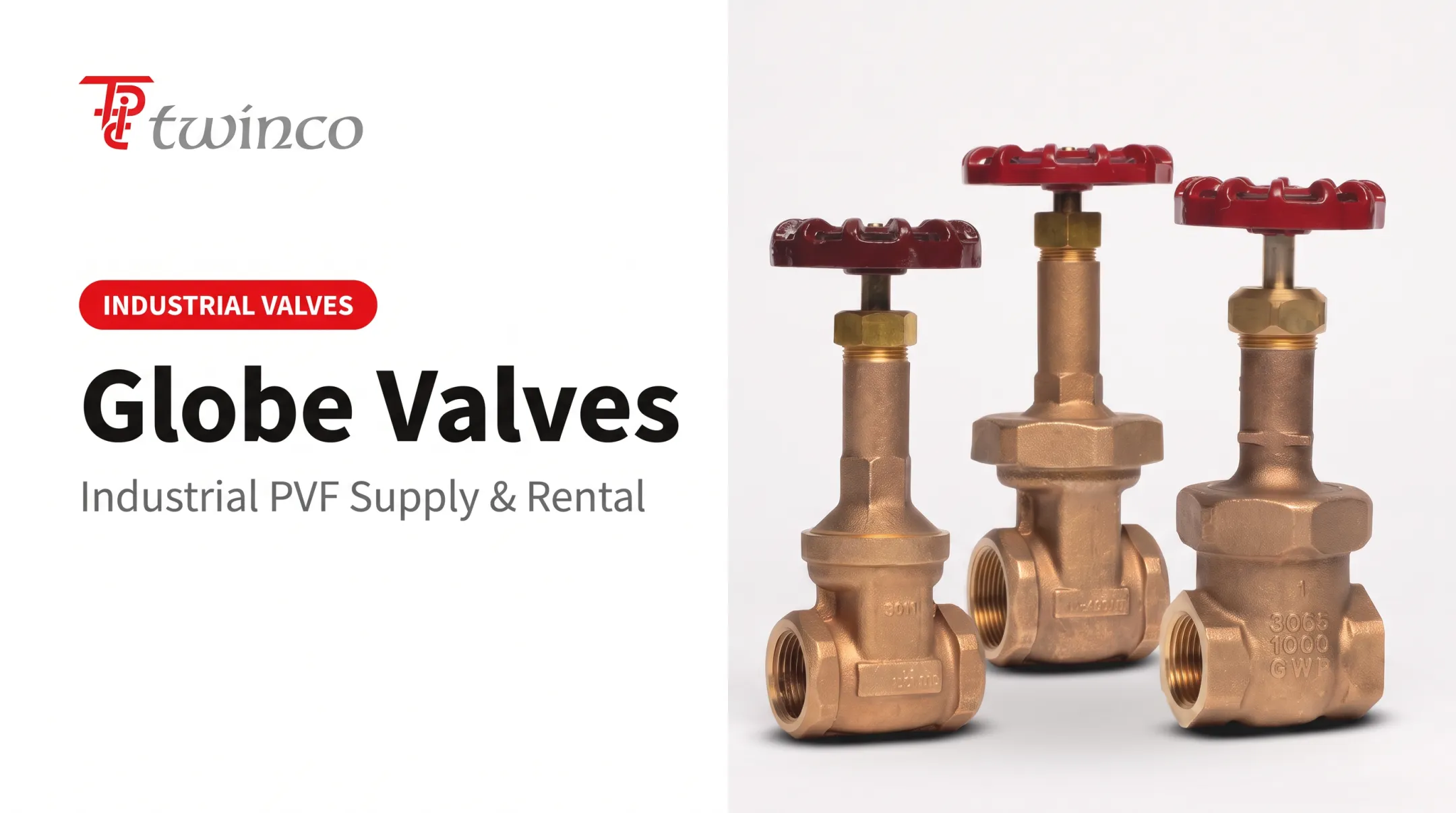
A globe valve is a linear-motion valve. A disc moves up and down against a stationary seat to throttle or stop flow. That's the easy part. The harder part is confirming that the specific body, trim, and packing you're installing are actually rated for your steam conditions rather than just "a globe valve that fits the flange."
This guide covers how globe valves function in steam service, how to select the right one, how they stack up against gate and ball valves, and what to check before and after installation.
Key Takeaways
- Choose globe valves for frequent throttling and repeatable flow regulation—not minimum pressure drop.
- Match body, trim, packing, bonnet, end connections, and pressure class to steam pressure and temperature.
- Use gate valves for full-open isolation; rated ball valves for fast shut-off with limited throttling.
- Base the final pick on steam condition, flow rate, cycling frequency, and leakage tolerance.
How Globe Valves Work in Steam Service
A globe valve throttles steam through a disc-and-seat arrangement. The stem raises or lowers the disc, changing the opening area between disc and seat. This gives operators (or an actuator) precise control over flow rather than a simple open/closed state.
The conventional T-pattern (sometimes called Z-pattern, depending on the manufacturer) forces steam through a winding path. That tortuous route is exactly what makes throttling possible, but it also means more pressure loss than you'd get from a full-bore gate valve. Spirax Sarco confirms that globe-valve pressure drop runs higher than gate-valve pressure drop as a trade-off for that regulation capability.
Key Components and What They Must Withstand
Every globe valve in steam duty relies on the same core parts, each facing its own stress:
- Body and bonnet – absorb pressure loading and thermal cycling across start-up and shutdown
- Disc or plug – must resist erosion, especially near-seat during throttling
- Seat – needs a tight, repeatable seal despite repeated thermal expansion
- Stem and packing – the most common leak path; packing must handle steam temperature without hardening or extruding
- Gland and handwheel/actuator – provide the mechanical force to compress packing and move the stem
- Body-bonnet gasket – seals the pressure boundary through repeated cycling
Comparing Body Patterns
| Pattern | Flow characteristic | Typical use |
|---|---|---|
| T/Z-pattern | Strong throttling, higher resistance | Conventional throttling duty |
| Y-pattern | Lower resistance, smoother path | High-pressure lines needing less pressure loss |
| Angle | Redirects flow 90°, moderate restriction | Piping layouts needing a direction change |
Emerson's Control Valve Handbook notes that the Y-pattern's 45-degree stem angle gives it a smoother path than a T-pattern, which is why it shows up in high-pressure applications. Don't rely on generic percentages for pressure drop between patterns — pull the manufacturer's flow coefficient (Cv) data for your specific valve and size.
Pattern choice still depends on the right trim for steam. That means metallic seating rather than soft seats, high-temperature packing, and hard-faced trim where erosion risk is high. If stem emissions are a compliance concern, bellows-sealed construction adds a secondary barrier beyond standard packing.
A globe valve is not a substitute for a steam trap, pressure-reducing valve, check valve, or condensate-management equipment. Each of those does a specific job a globe valve alone will not cover.
Selecting the Right Globe Valve for a Steam Application
Before comparing brands or body styles, nail down your service conditions:
- Steam type – saturated or superheated
- Operating and design pressure/temperature
- Flow rate and acceptable pressure drop
- Steam quality and cycling frequency
- Intended function – throttling, isolation, or both
Pressure Class and Materials
Match body and trim materials to the manufacturer's pressure-temperature rating tables and your piping specification—ASME B31.1 for power piping or B31.3 for process piping.
Carbon steel, alloy steel, and stainless steel all have their place. Confirm temperature, corrosion, and erosion limits for the specific grade before you lock it in.
Don't default to brass, bronze, elastomers, or soft seats just because they're common in lower-temperature water service. Those materials that work fine on a cold-water line can fail quickly in superheated steam.
Trim Selection for Throttling Duty
Standard shut-off trim isn't the same as control-oriented trim. Linear trim gives proportional Cv change with stem travel; equal-percentage trim gives larger Cv changes as the valve opens further. Choose based on your control loop's needs, not just what's in stock.
Watch for:
- Erosion and wire drawing at the seat
- Flashing or damaging velocity through the trim
- Extended near-closed operation on an oversized valve, which accelerates seat wear
Once trim and duty are set, decide how the valve will be operated and what belongs on the RFQ.

Actuation and RFQ Prep
Manual handwheels work for infrequent adjustment. Pneumatic, electric, or hydraulic actuators make sense for frequent cycling, remote control, or automated steam loops.
Factor in fail-safe position, available plant utilities, and maintenance access. Automated control may also need a positioner, limit switches, a solenoid, or feedback devices.
When you're ready to request quotes, gather:
- Nominal size and pressure class
- End connection type
- Body and trim material
- Steam pressure, temperature, and flow rate
- Cv or flow-capacity requirement
- Leakage class
- Actuator requirements
- Test certificates and standards
- Delivery schedule
Twinco Industrial stocks globe valves across a wide size and pressure-class range, plus the pipe, fittings, flanges, gaskets, and bolting that usually go with a steam-line job. Valve specialist Shane Holmes and the inside sales team can confirm body pattern, trim, and material against your pressure-temperature envelope before you order.
Reach the team at (713) 733-8946 or info@twincoindustrial.com.
Globe Valves Compared With Other Steam Valves
Globe vs. Gate
Globe valves handle frequent throttling well. Gate valves are built for full-open or full-closed isolation with minimal flow resistance when fully open. Partially opening a gate valve to throttle flow is a common mistake — Valve Magazine warns that partial-open gate operation can damage the disc or the body seat rings, leading to vibration and unstable control over time.
Globe vs. Ball
Ball valves offer quarter-turn operation and fast shut-off, which makes them attractive for emergency isolation. But not every ball valve belongs in a steam line. Only a valve specifically rated for your steam pressure and temperature should even be considered.
Characterized or V-port ball valves can work for some control applications. Verify that against the manufacturer's application data rather than assuming a standard ball valve will do the job.

When Angle or Y-Pattern Makes Sense
An angle valve can simplify piping layout by combining a direction change with flow control. A Y-pattern globe valve reduces pressure loss compared with a T-pattern, which matters more as line pressure climbs.
Quick Decision Framework
- Globe valve: controlled throttling or gradual adjustment
- Gate valve: full-bore isolation as the primary need
- Rated ball valve: fast, tight shut-off over fine throttling
- Dedicated equipment: use check valves, control valves, or steam traps for those jobs instead of one multi-purpose globe
Base any pressure-drop, cycle-life, or leakage comparison on current manufacturer data or a recognized standard—not a generic rule of thumb.
Steam Globe Valve Applications and Limitations
Globe valves are common in power, process, and utility steam service. Typical applications include:
- Boiler and utility steam lines
- Heat exchangers, reboilers, and process heaters
- Turbine bypass systems
- Steam tracing and drain service
The right trim and actuator depend heavily on duty type:
- Continuous modulating service demands control-grade trim and a responsive actuator
- Intermittent regulation allows more standard trim with periodic maintenance checks
- Occasional isolation may tolerate simpler manual actuation
Limitations to Plan Around
- Higher pressure loss than full-bore isolation valves
- Slower manual operation since multiple handwheel turns are often required
- Accelerated seat and trim wear from incorrect sizing or prolonged near-closed operation
- Stem, bonnet, or seat leakage risks that drive safety, energy, and maintenance costs
Valve selection and installation should always follow your project's piping specification, applicable codes, manufacturer instructions, and a qualified engineering review. Skipping that review often shows up later as rework, leakage, or unplanned downtime.
Installation, Inspection, and Maintenance
Before Installation
- Confirm the valve tag and ratings match your spec
- Check for shipping damage or debris inside the body
- Verify the flow arrow points the right direction
- Double-check end connections against the piping design
Installation Practices That Prevent Problems
- Maintain correct orientation, support, and alignment
- Select the right gasket for the service and torque bolts to spec
- Account for thermal expansion in the line
- Keep the line clean before start-up
- Warm up gradually rather than shocking the system with full pressure
Condensate drainage and water hammer prevention are part of the broader steam-system design, not something the valve handles on its own.
Maintenance Checklist
- Inspect packing, bonnet, flange, and seat areas for leakage
- Listen for abnormal noise or vibration during operation
- Note any difficulty operating the handwheel or actuator faults
- Check for visible erosion on internal surfaces
- Document operating conditions, findings, repairs, and test results
Before any maintenance work, follow proper depressurization, isolation, cooling, and lockout/tagout procedures. Confirm the testing, pressure-rating, and inspection standards that apply to your project. One standard rarely covers every situation.
Frequently Asked Questions
What type of valve is best for steam service?
It depends on the duty. Throttling calls for a globe valve, isolation favors a gate valve, and fast shut-off often points to a properly rated ball valve. Pressure reduction and condensate removal need their own dedicated equipment.
Can you use a globe valve on steam?
Yes, provided the pressure-temperature rating, materials, trim, and seals are verified against your specific steam conditions. Confirm correct installation direction and manufacturer approval before putting it in service.
Which type of ball valve is best for steam systems?
Only a ball valve specifically rated for your steam pressure and temperature should be considered. Characterized or metal-seated designs may suit control or severe service, but verify limits against the manufacturer's data first.
What is the difference between a globe valve and a gate valve for steam control?
Globe valves throttle and regulate flow gradually; gate valves are built for full-open or full-closed isolation. That control capability comes with a trade-off — globe valves impose more flow resistance.
How do you select a globe valve for a steam application?
Start with steam condition, pressure, temperature, flow rate, and pressure drop. Then match size, materials, pressure class, end connections, actuation, leakage class, and applicable standards to those conditions before requesting quotes.